Nimalia Review - Chairman of the Board
Games in This Video
1 game is featured in this video — it unlocks as you watch.
Transcript
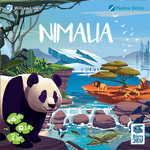
hey everybody today I'm taking a look at this small box game here called nomalia this accommodates two to four players and takes around 30 minutes to play on average now before I share my thoughts on nomalia I want to give a shout out to the show sponsor keyienda dot Co dot UK who are my go to online retailer and if you use the link in my show notes or the QR code then you can get five percent off your first order okay so nomalia is a puzzly game as you'll be trying to build a nature reserve out of these Square cards you can see that these cards are divided up into four quarters and each time you play one into your own personal Reserve you have to cover at least one square below it you can completely cover if you wanted to but at a bare minimum you have to do at least one quarter you also have to stay within the confines of a six by six grid so you can see here that I actually have got six going sideways so I couldn't go any wider but I got a little bit more leeway to go upwards we'll talk more about this later and what we're trying to build but the game comes with a ton of these Square cards so you're not always going to see the same cards uh pop up you've got this score track which has been I'm kind of divided up into these separate cars just to make sure it all fits in this small little box which is a nice touch and you also have this little scoring setup where you have these variable score objectives of the four different colors and these also come in four different or sorry three different difficulty uh categories so you've got the blue ones the green ones the yellow ones and the red ones which is just the
different types because you cannot have two of the same type you can see that there's thick spots that have for having all the different types there um but they are completely variable they're double-sided and you come with a ton of them in the box here but for this particular game you can see that the objectives are these ones where we are trying to have these otters on these Rivers connecting to these little um ponds or oceans you are trying to have penguins or individual penguins in each column and each time you do that you're gonna get three points and you're gonna want to try and have exactly four squares of these savannas and each time you do that you're gonna get six points and the final red card here says I want to have the most crocodiles or alligators and the fewest amount of the flamingos and if I achieve that and I'm the first player then I'll get Five Points second place will get two points now the numbers here are relevant because it's going to show which different categories score each round so you can see in the first round the blue card and the green card here are going to score because again the line connects the two in the second round it's going to be the yellow and the green card in the third round it's going to be the red and the blue card in the fourth round it's going to be the red the yellow and the green card and then the fifth round is going to be the blue the red and the yellow card so the term structure of the game is very simple where each round each player is going to draw three cards from the stack they're going to choose one to keep so let's just say without thinking I'm gonna choose this one here and then I'm going to pass the remaining ones on to the next player and once everybody selected the card you're gonna reveal
them simultaneously then add them to your own nature reserve of course trying to achieve as many of those objectives as you can so after a few rounds your board might look something like this and of course once the round is over you're going to have a look which round you are in and they're going to score those relevant categories but let's just for example looks like let's score them all here so you can see the first category here I want my otters to be connecting the um the water areas now I've done that one we've done it twice we've done it three times it looks like we've done it four times in total each time we do that I'm going to get two points that's two times four that is going to be eight points on the track up here the next card is going to want individual penguins in each of the columns looks like I've only done that two times therefore that is going to be six points because each time that is going to score three so that's going to take us up to 14 points there the yellow category category here says I'm going to get six points but each time I have a block of four Savannah I've only done that once here with these four squares here therefore that's going to score me six points gonna take me up to 20 and then the final one here is going to be in relation to the other players because you know I want to have the most alligators and the fewest flamingos I don't think I've done too much too good of a job there because I've got quite a few flamingos on show so maybe that wouldn't do me so well but my alligators are pretty good so that there so I may have got some points there but of course depending on the round some cars would or would not score so after five rounds
of that you are going to calculate your final score and the player with the most points is the Victor now something else that's minor but important to note is that each other round uh the Drafting order is going to change so you can see in the first third and fifth round it's going to go clockwise whereas in the second and fourth round the Drafting order is going to go counterclockwise so before moving on I'll just show you a few more examples of these scoring cards so you can see this one here relates to the size of your grid so if you only have a two by two complete you'll get three points but if you have a massive six by six complete then you'll get 20 the one point and that's not always easy because of course you are always overlapping cards and this one here you want the gorillas next to the water this one here you want pandas on the edge of your reserve this one here you want to try and have as few of these drafts as possible because if you have nine you'll get a mass of eight points but if you have you know three plus you're gonna score zero this one you want all four of the train types in each of your rows and each time you do that you'll get three points this one here is going to give you points based on who's got the longest river in their reserve and it looks like this one here looks it's going to score in groups of the polar bears okay so you can see from the overview there this game is not terribly complex it's pretty straightforward so it's not going to take me too long to share my thoughts about it but the thing I like about games like this is that they do a great job of leveling the playing field because it doesn't matter how experienced you are at board games the
puzzle is still there and it's still pretty difficult to try and optimize and how to place each of your pieces or each of your cards and you're always trying to overlap one thing is going to sabotage another thing see it's very difficult thing to map out and that is Amplified by the scoring mechanism which I happen to love you know other games have used this system before games like cartographers games like Isle of Skye you know we have variable objectives and they trigger at the end of different rounds but this again adds a little kind of tactical element to it where you might think you know what um yes I have a few flamingos on display but that isn't going to score until the third and fifth round so I can kind of ignore this and maybe have those flamingos on display which is going to optimize my other scoring categories and then when it comes to that round I'll start covering them up and that will hopefully help amplify the other scoring categories so you always can zigzag here you can focus on one thing then divert your strategy onto the next thing you can keep things on the back burner I think you know what yeah I've got all my penguins in position I want to try to keep them there because I know it's going to score now and later even a couple more times so therefore I'll try to keep it up there and um you know know I've got those points in the bank so that's a scoring system I love and it adds a lot of longevity into the game as well considering you have got so many of these different cards to score from and it's really going to change the feeling and pacing of the game each time you play another nice touch with the scoring cards is that they do come in varying complexities now you've got very simple
ones like this where you're just going to score based on the kind of ground land you've got there but you've got the more complex ones you know with the three lead systems which are gonna make it a bit more tricky to um you know to maximize those so you can really tailor this to who you're playing with if you are playing with younger kids who are definitely going to understand this you can stick to the lower complexity cards and still have a great time I really appreciate how easy this game is to teach you know you can easily teach this in around a minute all it is is a simple three card pass and draft place your cards in front of you and then score the categories at the end of the round if you understand that you understand the entire game so it's a very easy game to get to the table I think the time and investment for this game is right on the money it is lightning quick to set up lightning quick to play and pack away again and you know considering how quick the game is to play there is still those you know brain burnery decisions about how you are going to place these cars so even though it is a fast game it is not a throwaway game and you are going to be rewarded for being careful about your placements the player interaction in this game is fairly minor I think when it comes to the car drafting you are going to be really focusing on trying to take the best card for you rather than trying to think about what other players are doing and but of course some of these objectives do depend on the other players for the majorities ETC so that may force you to try and prevent a player taking a certain card and you might draft that just to stop them having it but when I've played this I've kind of focused on my own little Reserve I'm not really worried about too much about what other players are doing
I think the replayability for this game is pretty excellent because as I mentioned there are so many of these variable objective cards and they do change the feel of the game quite drastically and again because it is so quick and simple you can quite easily rack up a lot of plays here because it simply does not have those obstacles preventing getting it to the table I think the production for this game is absolutely perfect and as it should be you've got these nice quality Square cards that are the perfect size and where each Square isn't too small but not too big that it's going to be a massive uh table hog all the terrain types are crystal clear there's no ambiguity on any other symbology the actual objective cards are pretty clearly laid out and even if you have a little bit of confusion referring to the little Rules book our leaflet is um very simple and you've got a quick reference guide there um so yeah I've got no issues with the production at all and it's really nice that it fits in this rather small box and it's not going to take up much space on your shelf at all and of course this being such a small box game it is very affordable so you've got quite a lot of game here for a very low price okay so let's share some final thoughts on nomalia and this game caught me quite off guard you know I took a bit of a punt on this one I wasn't quite sure what to expect but I do like puzzly games and I do like this overlapping mechanism I've played quite a few games with this mechanism such as agropolis a spiralopolis a circle the wagons
Hokkaido and I can quite confidently say this is my favorite out of all of them I think this goes hand in hand so well with this variable score um system you know I do love this scoring system it's such an underutilized mechanism and I've never really disagreed with it being in a game I think it's so cool and it adds a little extra wrinkle to the decision making where you can temporarily ignored objective um and replace it with another one knowing that it's going to cut back out later and then you can worry about it um and those extra little restrictions you know I'm always having to overlap one card having to stay within the confines of that six by six grid um very simple rules but effective rules I like the way that this game did not do anything to get in its own way just a simple three-car draft uh the scoring objectives and the and the kind of card or link whatever you want to call it those three different moving parts of the game are more than enough but still so digestible but again this is a great game that levels the playing field and that's what I love about it because you can play this with anybody you can play with it two or four players you know most of the gameplay is simultaneous so it scales well um and it's versatile and that's what I really love about it so definitely one that's going to stay on my shelf uh for sure takes up very little space but a really nice kind of sometimes um stressful little puzzle that is still a hell of a lot of fun to play so definitely a candidate for kind of surprise of the Year for me really and because this one really did come out of nowhere and I think it's a great example of what it does and probably one of the
best of its genre so that is nomalia definitely gets a Chairman's commentation