Kokopelli Review - Chairman of the Board
Games in This Video
1 game is featured in this video — it unlocks as you watch.
Transcript
hey everybody today i'm talking about cocopelli which at the time of this recording is the latest release by queen games by one of my favorite designers stefan feld this one accommodates two to four players and takes around 45 minutes to play now if you're a fan of stefan feld you're probably aware that his games follow a certain pattern they're normally very dry very mechanical games where you can get points in a bunch of different ways and i will say that cocopelli has slightly a different turn of pace for feld and if i didn't know this was a failed game i probably wouldn't have guessed that this was by him so unlike a lot of fell games this one is pretty much a card driven game as you have there's a big deck of cards you have this bunch of ceremony selection tiles in the center of the table which is going to dictate which cards are in your decks and these are going to be ways that you can get points so as you can see um each of these tiles allocated a number four token and a number three token below it which are going to be points um if you manage to get those so all of all these different ceremonies you're going to pick three matching cards of each of these and you're going to shuffle them into a massive deck with some of these coco pelle cards which are basically going to be counted as wilds and the objective is that by the time all these end game tokens come onto the board or once a player has gone through their entire deck then points are going to be calculated and um the winner is going to be determined so let's talk about how you're actually going to get points in this game and what your actions available are so the first thing you're going to do is you're going to have five cards in your hand and this is going to change throughout the game but you are you are capped at five cards
and the first option is to draw a card from your deck so you can just draw a card from your deck and um and add it to your hand um and again you are capped at five cards you would have to discard one um if that was the case the second action you can do is you can start a ceremony so to start a ceremony you're gonna pick one of your cards and you're gonna put them on one of your um spots i'm allocated to your board so in a in a two player game you've got five slots as in one two three four five but in a three or four player game you've only got the four slots where this middle one is ignored now the cool thing about this game is that as soon as you allocate a card to one of these slots then a an ability is going to be available to you so for example when i've played this kind of archer card from now on i'm whenever i take the draw card action i'm actually going to draw two cards and all these cards do lots of different things when they are on your board face up the second action i can take is to play a card onto an existing ceremony so i've advanced the game somewhat here where i've played all these um all these cards out here and started all these different ceremonies so let's say i play a card and i'm going to play this one here onto this slot here so as you can see i've matched the slot here with this one being a kokopelli card which is a wild now as soon as the fourth card of a certain type is played on one of these ceremonies then that player is going to take the highest point token available of that matching ceremony so for example here the four pointer and then these cards are going to be discarded onto the bottom of my discard pile and eliminated from the game
essentially now what's something something that is interesting about this action is that you are not actually limited to only playing it on your side of the table so uh in a two-player game let's say i use my wild coca-cola card i can actually play on any of my opponent's slots here like so and there are reasons why i might want to do that so for example someone might have three cards and you want to get the fourth card down so you can get one of these points tokens but additionally you might want to stop them having a certain power because as soon as that fourth card's played of course is going to be removed from your area meaning that that ability is no longer available to that player once the second points token is taken from a certain ceremony then one of these end game tokens is going to be placed on the matching spot here which means that whenever anybody finishes that from now on they're only going to get one point but this also acts as an endgame trigger because as soon as all these have been placed onto these um selection tiles then that is going to trigger the end of the game players also have the option to cancel a ceremony so for example if i started this um this ceremony here i can just take that one because i might think that i don't want this power anymore or i don't think i can complete it then i can just simply put that on my discard pile and move on and the final action is to exchange your cards where you'll take the cards in your hand you'll then put them at the bottom of your discard pile in any order you want to sort of draw a pile in any order you want and then you'll draw that matching amount of cards again ready to be used so for example here i've improved my hand quite a bit so they are essentially the basic rules of the game play is going to
continue until as i said all these endgame tokens are put onto these ceremonies or until a player has depleted their entire deck and the person who's played through the most cards is going to get a few additional points at the end of the game so as you can tell the rules themselves are extremely basic but it is all about how these cards interact with one another and how these are going to generate you points and what they actually do so let's take a look at some of these in a bit more detail and you can get an idea about how the basic rules are going to be manipulated and kind of transformed as you uh play out your cards so as i've already covered this some archery card here when you draw a card you can store an additional card so you can really get your cards into your hand a lot quicker the tassel guard here that means that when you complete a ceremony whether that's your own or somebody else's you get a victory point and you've got the feather card here that means if your hand is ever empty you draw five cards instead of the regular three cards and you actually get three victory points so this is a really good one if you want to keep um depleting your hand of cards uh you've got this kind of warrior card here that means you can play two cards to two different ceremonies as a single action which is great so you get to do things a lot quicker and i should say you actually get the ability to take two actions on your turn um if i didn't mention that already um and the uh the bear paw here it says that when you play your card to another player ceremony you get awarded one victory point so another reason why you want you might want to play cards on another player's side of the table uh the drummer here means that you um your ceremonies are completed with only three cards so you have a lot smaller columns there
and you can get things completed a lot quicker to get those big chunk of points and the dancers here that means that your coca-pedic cards count as two coca-cola cards uh only the moment you play them so if you want to get a quick grab and just play two cards or pay a single card as two cards to finish your ceremony then this card grants to the grants you the ability to do that and this is just a um just a touch on really what these cards can do because there are actually ten in any game and there are six not in any game so you've always got some variability there so there are 16 of these tiles and only 10 are used in each game so as i mentioned earlier if you like failed games this is probably something that you've not recognized from him before and i quite like that turn of pace it's something a bit different from him and it's um just a new dimension and a new layer to his um kind of designing prowess so there's quite a lot of things i like about kokopelli the first thing of course is when you play these cards you unlock an ability for yourself that's really cool and of course these all synergize with each other they mesh and intertwine and you can really ramp up a nice little engine but i like the way that the other players can actually interact with that and try to stop you getting those engines by playing cards on your side of the table which will not only kind of you know finish your ceremony but it can award them points it could potentially reward you points depending on the card you have available and you know it's always in flux this game you're always changing your strategy and i like the way that the punch is generated in this one because you've never got that big chunk and big smash of points it really is about creating a nice streamlined funnel and getting that
constant income of points from time to time because you always want to make sure you're generating something and just getting a nice trickle of points coming into your supply i actually really love that decision of how much you're going to exploit these player powers before you cash in for the points because that can actually create some nice tension where you might have a really good power here that you want to keep using from start to finish but of course there's only two opportunities to get those points and if your opponent's gonna get them then you're gonna get fewer points in return so i love that ability of when you've got a push and pull when to keep hold of these powers and when to choose to lose them i also tend to appreciate games that are streamlined because this game actually is boiled down into five extremely simple actions one of them just being as simple as drawing a card but the fact that all the flavor all the kind of interaction and the interlacing mechanisms are on the cars themselves mean that the rules are so easy to explain and to relay to another player even if they're really inexperienced but there's still some depth here you know all about these cards and how you're going to use them to maximum benefit while the rules themselves are so digestible and just easy to explain and one of those games that you're never going to actually have to revert back to the rule book i also enjoy that you can get a game of coco pedi done in about 30 to 45 minutes now especially at that two player account i don't see this going to that 45 minute mark you can quite comfortably get it done in that 30 minute mark but it does scale pretty well you know you can get this done at three or four players in that 45 minute mark which is great and you know if you ever just have a spare hour to play you can get this one set up pretty quickly just by shuffling a bunch of cards
and get rolling so yeah i do like the fact that you can get this done in a pretty succinct amount of time meaning that it's going to get to the table more regularly the uptime itself is very good as well because you know these actions are pretty simple and you've only got two of them meaning that you can just draw a card or maybe play one and you're not going to get bored when it's another player's turn your turns are snappy and you're just taking one of those very simple actions or two of those simple actions which to be honest there's not much scope for ap here either because it's all pretty simple what these cards do and um you know it's all about playing what's in your hand because you haven't got all the options available to you you've of course only got the options available what's in your hand or of course drawing new cards into your hand so it's not a game that's going to get bogged down with other people kind of over analyzing things or overthinking you are pretty much just um you know subject to what you can do and have to weigh up your options and have the ability to work your options very quickly additionally the replayability of cocopelli is strong because as i mentioned earlier you have 16 of these selection tiles and only 10 are used from game to game so you've got the variability there to have different setups and these these ceremonies are going to mix with each other in different ways but also the fact that you know at any time you've only got five or five or so or even four in a three or four player game um kind of abilities available at any time so that's always going to be dynamic and always changing and you're going to find new combinations and the way these cards mix together so i do like the way this game is quite tactical but has the variability to keep you coming back to it
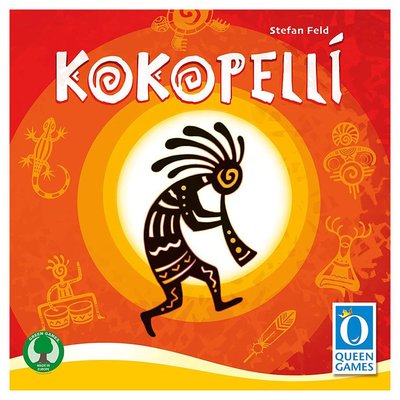
the interaction in coca peli is also quite interesting because of course you can play cards on your opponent's board which is really interesting and in a two-player game you know you can play in four of these slots and one of them is kind of protected but in a three or four player game you can play to the neighbors left or to the left or to the right of you but only on your side of the table so you know if i was um if i had a player to the left of me i could play on their right two slots on the player on the right of me i can play on their left two slots and that can create some pretty cool interaction there and give you more options to not only shed cards and try to finish their ceremonies but um also just to kind of stopped from getting powers etc so i do like the way that the extra layer of plant interaction is used but of course there is also that tension of only getting the scoring points available to you because you know there's only two opportunities to get those big bulk of points and um tension to get to those quicker is going to be packable i think the production of coca-pedi is also up to standard you know these cards are pretty good quality and they're nice and durable the player boards are good all these um ceremonies are really good quality as well so i've got no issues at all with the production now we'll say that you won't get these acrylic um cocopelli end game markers um if you didn't back the kickstarter you you just get regular tokens but these are these are a nice addition if you did get that kickstarter version but um in addition to the actual physical production the artwork i think is a good fit for this game you've got this nice clean artwork and very easy symbology you know if you want to look at the symbology you can but also the actual words um in terms of
what these cards do is also crystal clear so i do like this nice striking bright artwork and i think is a good fit to the kind of feel of the game and it works well for me i suppose the only criticism i could have with cocopelli is the fact that there isn't really an engine or isn't really a massive game arc of the game because of course once you play these cards down and those are the abilities available to you and as soon as one is finished then that's going to get taken off and you're going to be back to where you began so unlike a lot of failed games this one doesn't really have that engine building it doesn't have that compounding effect but the fact that it is a quicker it's a lighter and a more tactical game that isn't really a disconnect for me so that is a very minor thing i'm going to mention and i will say that i don't think many people are going to really notice that and i think it does actually fit well with the tempo and pace of the game so you know a very very minor nitpick there so overall i'm actually really happy with coco kelly i love how digestible this game is with just those five simple actions and the fact that there's so much flavor on these cards and how they mesh with each other what they can give you and ways to generate points and i also love the fact that you know normally i wouldn't be able to teach a failed game to somebody who's not used to playing heavier more involved mechanical euros whereas something like cocopelli i certainly could because as i said the rules themselves are so bare bones and so easy to explain and um you know you can really drip feed in what these cards can do and how to exploit them so i love the fact that that trying to kind of change the direction is opening so many doors
to different types of gamers i'm really excited to try different combinations of these ceremonies to see what synergies i can come up with and how they work together and i also love that the framework itself just welcomes the ability to inject new life into this game by constantly adding new ceremonies and adding new expansion content should they wish to do that so yeah i love the way this um actual um system is so open it's so bad bones but with the ability to add so much flavor with these cars themselves so yeah i'm really enjoying this one at the moment i think it's a lovely kind of family weight plus game that a lot of people are going to enjoy if they get their hands on it and certainly one that is going to turn a few heads even for the most felt skeptic type of players because i think this is something that even they can enjoy so that concludes my final thoughts on coco peli a really nice change direction for for um failed with some nice card mechanisms and some fun card play so this one gets my shield of quality i'm excited to get some to the table more and uh yeah that concludes my my thoughts on coco pedi so if you have enjoyed this review please hit like and subscribe to my channel and check out my other videos too for everyone else i'll see you next time on chairman of the board bye