Theocratia - Board Game Review
Games in This Video
1 game is featured in this video — it unlocks as you watch.
Transcript
Welcome to Allies or Enemies. I'm Jess
and I am Sean. And today we are talking about Theo Croatia. And our copy was provided, but the thoughts in this video are all our own.
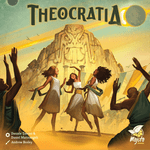
Theocratia is a one to four player game designed by Danielle Tacini and Daniel Marinelli. And in Theoatia, you are aliens who have wagered a bet to see who can be worshiped the most by the civilization on a different planet. Whoever is the most venerated at the end of the game wins. Let's take a look at how it plays. This will be a brief overview as this is a big game, but you start the game with a few markers on the temple track, a power card, a conversion tile in your color, and a board full of civilizations just waiting to be manipulated. On your turn, you choose an available dice from the left side of the board and then place it in an empty slot on the right side, getting a bonus if the dice matches the space. Where you place the die on the right side affects what civilization you will impact. What dice you take from the left side affects what you do. The actions include taking the first player token, sparking wars, and converting sections of the board to your color, expanding by building houses in new regions, upgrading those houses into factories to produce crystals, or to barracks to add warriors, or further upgrading to pyramids to gain worship.
One-time use special tokens and advanced chronicles. And finally, throwing holidays, which spends crystals to advance chronicles and gains worship for you and your competition. The point of all of this is to be woripped, which you do by moving the priests up your part of the temple track and advancing the appropriate chronicles. At the end of the game, you will score for your three lowest priests, multiplying the highest multiplier that they reached on the temple by the page reached in the corresponding chronicle. Then you add to this a few points for your Cosmo tracker and perhaps lose some points for your malice tracker and then add it all together and the most woripped is named.
So, that was obviously a very kind of light surface level overview of this game. And it is a game that's a little hard to get your head around because it just it plays so different from most games that you're going to play.
Yeah. Cuz usually if there are like four faction colors, you would choose one of the faction colors and you would be that faction. Whereas here, nobody owns the factions. instead you own like pieces of the land that all of the different colors are going on. So it is interesting but counterintuitive.
Yeah, it is that you just have a color of land that I'm lava and really your only player pieces are two little wooden circles. Your two circles that are moving up and down or you're one circle that moves up the worship board and your one that maybe gives you negative points and that's it. And so that is really weird to get your head around. And maybe if you've played games like um some of the PAX games I know have this or the king is dead have this kind of idea that you are like this mastermind kind of moving different factions. So maybe you've got a bit of an idea but for us it was it was difficult. But I do like that theme. I think it's a creative interesting theme that you're aliens and you've got a bet going on about who can make people on this poor planet follow them. That's really it's just something different.
Yeah. No, it definitely is something different. But because of that, I think it took us about three games before we really wrapped our head around how to play because you're influencing everything and everyone is influencing everything. So, you've just got to really be mindful of what that means on your turn for what you want to do because everything you do, you're either like using other people's pieces or creating opportunities for others.
Yeah. Well, you're not using other people's pieces because they're everyone's pieces, but yeah, you you are constantly creating opportunities. There's a lot lot lot of interaction here. Most of it is indirect. You can just attack other people's pieces or not other people's, but you can attack pieces and you can steal actually other people's pieces. So, you can put your land on top of their land. You can only do that a few times, but you can do that as well. And they do get stuff from it. So, I like that too. that none of the bad stuff in this feels too bad because you are always getting benefits. Usually it's moving up that word oh always it's moving up that worship track and that's points that's you want to do that but I like that so much of what you're doing is moving people up that worship track when you have holidays you are going to have to use their cubes and that's going to move them up that track when you battle them or you don't really battle but when you just get rid of their things that's going to move them up that track. So you there's so much kind of positive interaction, but it's kind of indirect positive interaction.
Yeah. So it it can be challenging to know what is best for you turn to turn because it's more about like playing out the long game because you're going to be trying to increase the different factions on your own track, but as you mentioned, everything you're doing is also increasing others. And then the I really like the concept of the book because throughout the game you're turning these pages of the book and what that's going to do is that's going to increase the multiplier for each of those factions. So ideally you're going to want obviously the one where you have that faction second highest to be really far in that book and it's a it's a really a long game planning.
Yeah. And that's an important part too that you want the second highest because whatever you do the best on is gone. You not you're not going to score that at all. So you can't just run away with one of them and decide, you know what, I'm mostly influencing the light pink faction. And we'll get back to light pink and dark pink and our feelings on that in a sec. But you can't just do that. You do have to at least kind of interact with all of them. We found that kind of our second and third like focus on three maybe one not as much but also we're certainly not pros so I wouldn't trust us on how to actually play this game the best but it is interesting that you do like the game forces you to play how you're supposed to play to play that you are influencing all these different things or else you are going to lose
and I think just because it's a bit different from so many other games it is hard to onboard and what also makes it challenging is I think the rule book too because everything is in the rule book, but you really have to read it closely.
Yeah. Yeah, you really do. And there are certain times when I feel like the rule book could have just kind of held your hand a little bit though, like this is a little bit weird. Like there's a bit in the setup that has uh choose one of the colors, place a house from or place a house of that color onto one of your regions. And just because I like the first time I played this, I'm like, "Okay, when are we taking one of these colors? Are these going to be our player colors?" And then it's like, "Choose one of the colors." And I'm like, "Great. Here we go. Now I do this." And then I think we got a little further in the rules and went, "Oh, wait. I see what it meant." And so like it's just a little thing where if it had said pick a pick a building from one of the colors and these are not your colors that would have been really helpful. So it's just it is a rule book you're going to have to read closely and I do wonder if some of it gets lost in translation because I know the rule books translated into English and I wonder if in the original language it's a little bit more clear.
Yeah, it could be part of that. But I I think like like you say the key thing just is this plays differently and so you have to be aware of that and if you aren't aware of it going in it is a challenge but after a few games you do wrap your head around it.
So let's talk a little bit about the components because I know that this is a little bit divisive because it's got these kind of big chunky wooden pieces. It's got these chunky pyramids and it's got these weird dice. And I know some friends were like, I didn't really want to play it because it kind of looked like kids toys. I didn't see that. I did think like it was fine. It it kind of reminds me, well, not kind of, it very much reminds me of Terrammystica. Even some of the gameplay elements kind of sort of like a little tiny bit. Um, but the buildings definitely do.
Yeah, the buildings do. And I also like them. I like wood buildings and I know like wood kind of makes it more simplified but I don't mind that. Um I do think the colors though could have been a bit more different because as we're playing I'm like oh okay I'm going to you know do this for the pink one and you're like well which pink there's light pink, dark pink like
and then purple.
Yeah.
Yeah.
And like a blue gray but I get that that probably makes it easier for people who are color blind because of the different hues. Yeah, it's interesting. It's like colorb blind friendly, but I'm not sure that it's particularly color sighted friendly or whatever you would call that. If you're not colorb blind, you're you maybe will have a harder time. And it's not necessarily telling the buildings apart. It's just that communication and just, hey, can you move that pink building and then which because no one says magenta. So I I don't know, maybe if it was red instead of pink, but it does look pretty together. So I get that part of it. It's just a kind of a small nitpick. Another thing though that is a slightly bigger nitpick is the iconography because I think this is a game where if you know the rules, you can then figure out what the icons mean mostly. But those icons are not going to teach you without the rules. There's just stuff like for the um for the barracks and the factories.
The factories when you play those produce a cube in every one of your factories in any color. the barracks produce the soldier cubes for all of the barracks in that color, but both of the icons just say play this, get a cube. And so that could definitely be clear. And there's other little bits that are just kind of missing. And it's like we said with the rule book, everything is in there. Everything is in the rules if you really read it, if you read it closely. And so it it it just it just doesn't hold your hand quite enough. But if you're dedicated, you are going to find all that stuff.
Yeah, the iconography is tricky. And I think it would have really been helped by a player aid that could have really spelled out each of the actions cuz there are just a couple like things that are missed that are important. Like every time you build a temple, you have to flip one of the pages of the books and that's not clear from the icons.
Yeah. And you do after you've played, you remember that because it is such an important part of the game. And I think most of the stuff you kind of internalize and I don't really need the icons anyway. But your first game it it is not going to help you and you just it's going to be a little bit of a steep learning curve. There's also some other little things like the um the bag that the dice go in. Speaking of little things is far too little for those dice. There's no way that you can randomize because you can only take the dice out of the top of that bag. But there are also some real positive things. Like I really like the little books. They remind me of the books in Books of Time, which I think was a cool thing in there. And I think just how that whole thing works where you're adding the cubes to the book, it fills up the page, you flip the page, you add more cubes to the I think that is really satisfying. It's a really nice mechanic and I think it's an interesting way of showing that that faction is progressing as well. Yeah, the books work really well and it's a clever system that you need fewer cubes as you move along and uh the table presence is large which was one thing I was originally worried about but as a player you need very little space cuz all you have are a couple of small cards and that's it. So we found that even though there was like you know a big board and another board it wasn't an issue to fit it all on the table.
So, this game plays for one to four players, and we've played it at two and four players, and it plays quite a bit differently at those player counts. At four players, there is obviously going to be a lot changing and a lot happening between your turns, and everybody is changing the board states and influencing all of the different factions. So it can feel a little bit more chaotic but also potentially a little bit more interesting in some ways just because things are changing.
Yeah, it's interesting because I really think this is going to depend on what kind of player that you are because yes at four players so much happens between your turns because of that the game is going to play a little bit slowly because there's a lot of thinking to be done on a turn. So, you're really going to have to at the beginning of each turn, you know, see that board state and think about what you're going to do, which I think for me is why I prefer it actually at two players. Even though there's not as much of that interaction, there's not as much of that, you know, ziness going on everywhere. I still think you get a really good sense of like what this game is supposed to be. Much more than I had expected at two players, but especially once you both know the rules, it moves at a like really good clip.
Yeah, I think the two-player game is interesting. And I think at two players, you have more control because it's your turn every other turn. And for your actions on your turn, you have to pick one of the dice. And that's going to dictate which action you're taking and which faction you're influencing. So, at two players, I do feel like you can try and plan ahead a little bit because you'll have a better idea of which dice are available. So, who is this game for? And this is an interesting one because it is such a creative game. It's such a like different game and I can really see there being, you know, an audience for this game, but also I can see there being a lot of people who this isn't a fit for. And so there are some things kind of just to keep in mind with this game. And a big one is that it is it's a little bit of a different system. It's a little bit of an it's very creative, but it also is very different. And just the idea that you do not control any of the factions and that all of your pieces really boil down to one wooden disc that's on this one track and everything else pretty much is shared pieces.
Yeah. And so I I found myself surprised after the first game when it came to scoring because all scoring was is you take away like your highest priest and then the it's just the score of the rest of the priest based on those books and that's it. And I'm so used to other games where there's a whole bunch of like other things that might go into scoring. And once you've played a couple games and you're aware of that, then you're like, "Oh, okay. This is it." But it does take you at least one learning game.
Yeah. You got you've got to be cool with having one, two, maybe even three games where you're just like, "Oh, I get it." And you kind of have those realizations because definitely your instinct as a gamer is, "Oh, cool. I put up this building. That's got to be worth something. I'm going to build this thing over here. That's got to be worth something." And then you get to the end and it's like, nobody cares. They care in the long term. This stuff does interact in a way that it is going to help you move those things up and it's going to depending on how everything shakes out help you in different like less direct ways, but just building a building is not worth like directly worth points. And so that is just something that's just a little bit of a learning curve.
Another thing to be aware of is it is very interactive. So for people that like interaction, this one is so because everyone is is involved. And so when you're putting pieces out, you don't own those pieces. You know, those might disappear into a temple. You're also whenever you're doing things, you might be moving other people up. You might be giving them opportunities. And so there is a lot happening and a lot happening in between your turn that you don't have control over it. Some of them, some of that might feel negative, but some of that might be positive, too.
Yeah. And but I think the thing with that interaction is again like in other games when you think interaction, you're going to think, "Oh, I'm fighting this faction with this faction. I'm doing this mean thing to you. I'm doing this nice thing for you." And that's not exactly how things are here. You do occasionally do something mean to someone. You do occasionally just do something nice to someone. But a lot of this interaction is in is indirect or even like two three degrees of indirectness where it's more I do this thing and then it's just going to help you in some way. And so it's a lot of this kind of like chaos theory as a game. It really is. It's it really is like a I'm going to make this butterfly flap his wings and then three turns later there's a pyramid and there's this giant thing that is going to happen in the game. And so you've got to be okay with that with like the interaction but also the chaos that that interaction kind of creates.
And I think as part of that that can lead to a lot of analysis paralysis. So if you're a player that wants to try and figure out how that butterfly flapping its wings is going to influence everything, you could spend a long time on your turn. And if you play with players like that, be mindful of it. So, I think it really just depends on what kind of player you are and who you play with for if that would be an influencing factor.
Oh, you could be John Nash with your chalkboard writing out this giant equation over the whole thing. So, you could really get lost in the math of every turn if you let yourself. But even as we are saying that like all these things are weird, all these things are very different, there are also things that are going to feel a little bit comfortable and are, you know, kind of interesting. Like I like the action selection system where I'm choosing one of those dice and it matters both for the color and the number of that dice and it matters for where I'm placing that dice. I think that is nice that it has this this nice decision space but it's not huge but it's certainly big enough.
And I think the other thing just to be mindful of are the differences in player counts. Cuz at four players it's going to feel quite a bit different, a little bit more chaotic than it will at two players. But we really enjoyed the two-player version. Yeah, I I think I think the two-player game is my favorite way to play this. And you are going to need to have someone in your group who is very patient with rule books, who is a very, you know, good teacher because this game does not hold your hand. And this rule book especially does not hold your hand.
Yeah, it does have a steep learning curve and will take a few games to figure out, but it does do something a little bit differently.
And that is it. Have you played Theoatia? And what other games where you have indirect control over things have you enjoyed? Please let us know in the comments.
Thank you so much for watching and as usual, please like, subscribe, and hopefully we'll see you next time for another game.