Fractured Sky & Rift Review | Hidden Info, Big Bluffs, and Beautiful Boards
Games in This Video
1 game is featured in this video — it unlocks as you watch.
Transcript
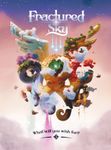
Fractured Sky is about bluffing, deduction, and area control. But what does the rifts expansion add to the equation? Let's find out. Welcome to Brains on Games. I'm Dr. Brian McDonald. In this episode, I'm excited to talk about a game that came to me recently. I did back the Kickstarter for the second printing of this one. uh a game called Fractured Sky from IV Studios. This is the deluxe version of the game that I backed on Kickstarter, so it's not a review copy, but it did come with an expansion, kind of a mini expansion, maybe even a micro expansion, a micro expansion called Rift. So, we're going to talk about both of these. Fractured Sky from IV Studio is a game for between one and five players. We played it with four. We almost had five around the table, but we played it with four. Uh, games take 60 to 90 minutes to play, and this one works with kids aged 14 and up. Let's take a deeper look at Fractured Sky and Rift from IV Studios. This is a great looking game.
You're seeing the neoprene mat. Uh, this is, like I said, the deluxe version of the game. Now, they even came, this thing even came with lenticular cards. So, we've got cards that kind of are animated. I don't know if you'll be able to see this on the camera. Let me see if I put it up close here like this. You've got cards that sort of if if we can escape the the reflections here. You've got cards that move. We did find these lenticular cards to be a little bit less clear. It's a little harder to see them and read them than the actual regular cards that came in the box. But you do have that option of lenticular cards if you want them. These guys are more legible. So, I'll mostly be using these cards as I'm demonstrating the game. Fractured Sky isn't too complicated to understand. I would say it's on the very light end of medium in terms of the rules, complexity, and and figuring out what's going on here. It's not too hard to explain to other players. Um, and it's a game where you're going to win by collecting the most Starfalls. Now, Starfalls are these little statues that you'll see sitting around the board. The base game came with blue plastic ones, but the rift expansion adds these metal multicolored starfalls to the game. And what these colored starfalls add is a set collection mechanic. So in the base game, each starfall is going to be worth one point. But with with the Rift expansion, you're going to get three
points if you collect two of the same color. Three points if you collect three of the same color. But if you manage to get four, that's worth seven points. So, there's an incentive here to go after Starfalls that are a certain color. The Rift expansion came with those colored Starfalls, like I said, some cheat sheets and a little rules card, uh, and this embroidered bag, and that's where you put those metal colored starfalls. They replace the plastic ones in the base game. Players are going to grab a playerboard with all of their components with it. There's going to be one public starfall that everyone knows where that one is. It's a card that's drawn from that red deck. Based on the round number, there could be multiple hidden starfalls. The first round has one, the fifth round has five. It's based on So, the second round has two, etc., etc.
There are also hidden objectives, one per round. So, you're playing this game over five rounds. There's five objectives that you're competing for, but they're all hidden. When you're adding the rift expansion, each hidden objective is going to have a colored starfall that goes with it. Each hidden starfall uh is going to be colored as well. So, you draw these out of the bag and you place them um on the little board here that's going to be within reach of all of the players. On their turn in player order, each player is going to take one action and it's going to go around the table. You could place a market. Now, the there are a limited number of locations around the board where you can add these extra buildings. They stay on the board for the whole rest of the game. You can't move them. That's where they're going to be. If I place a market, one of the things you might be able to see here on the camera is that there's a number of little stars here underneath these locations. That tells you how many islands are connected to it. So, you've got 10 islands here.
This one that's close to the middle is connected to four different islands. There's four little stars. This market will allow you on any of the island it's it's any of the islands it's connected to. If you've got an airship there, you can collect one extra resource. So, if you had an airship over here, you'd be able to collect one extra gold. You could use your action to place a fortress on the board. Fortresses will add one troop strength if you've got any troops in the areas that the fortress is connected to. Again, there's a limited number of spaces here. This spot is connected to three different islands. So, that's going to give me plus one strength on in any of those spaces. I could spend actions and resources to peek at the hidden starfall card or to peek at the hidden objectives. That's what these cubes are for. So, if I spend two gold, I can take a look at that hidden objective that's face down. An interesting mechanism here with these hidden starfalls is that once you've spent the two gold to look at them, you can then choose to take one of the resources from the island. Now, this one is pretty simple. You've only got wood or wood that you could take. Some of the other islands have a choice of resources, but if I do take wood, I'm going to place my cube there to show that I'm taking that resource. I mean, you want to take those resources, but that cube is also giving the other players a hint as far as where the starfall is going to show up at the end
of the round. I could spend any two resources to peek at the hidden objective. So, resources are gold or iron or wood. Uh, if I spend two in any combination of those, I can see what this objective is. So, whoever wins this objective is going to get this starfall at the end of the round. In this case, you've got an objective that wants you to have the most airship in regions that contain iron. So, you're sort of thinking and competing for, do I want to place my ship in a spot that because I want to get some wood or do I want to work towards this objective and make sure I'm I'm placing my ships in areas that contain iron. Ties are broken in in this game by player order. So, the player who was earlier is going to win in a tie. So, you can build these markets, these fortresses. You can peek at the hidden cards that are going to be in the center of the table. You could also place these little skimmers. These are smaller airships. Each player has some in their player color. This is a temporary addition to the board. It's only going to stay until the end of the round. It adds plus one troop strength to that zone that you're placing it in.
So, if I spend a wooden and iron to put this on the board, well then for the rest of the turn, I'm going to get plus one troop strength and plus another troop strength because I've got a fortress that's attached. Now, your most important, I think your most important move in the game here is to place your airship. These are the ones that are going to give you the most troop strength. And troop strength is determined based on these little chips that are hidden behind the screen. So this is another area where you there's bluffing and deduction that's happening. Now you can have a maximum of 10 troop strength in a zone and if you exceed that there's a penalty to each of your airships that are in that zone. So you're not going to be adding it up to more than 10 very often unless you're really trying to bluff and you don't really want to win that space. So when you're placing that airship, the first thing you're going to do is take one of those chips and attach it to your airship. So the the other players can see the outline around the outside, what color the outline is, but they can't see the number that you've placed. And you may have heard that click. These pieces are magnetic. And then you're going to place that on the board. So this number was a nine. They have a little star on the bottom to show the difference between nine and six. Another interesting wrinkle here with the game is that you've got two zeros, but you've also got that one and the 10. And you might be able to tell on the camera, the one and the 10 have a different color outline. So, this is another opportunity for bluffing. Uh, if you place your one and you're able to act like, oh, this is a spot that I really want, you might be
able to draw the other players over there when really you're trying to win in a different zone. Once you place your third airship on the board, that's the end of the round for you. And then you're going to decide what order you want uh in the next round in terms of turn order turn order. So each player's got a cube on the turn order bar there, that counter at the bottom. So if I'm the first one out, that's the end of my round. I can't build anything else once I've placed that third airship. And then I'm going to decide, do I want to go first or uh you know, in some of the games that we played, especially later on in the game, we wanted to go last and get an extra gold. There is another bonus to being the first out. You do get a little bit more information if you're the first airship in a particular zone. Each zone, each island does have a little circle with a card inside. That's the exploration spot. And if I'm the first one to place my ship there, I get to draw a card from the hidden starfall deck. Now, why would that be important?
Well, the hidden starfall deck has one copy of each island. You've got one that's faced down over here. And if I draw this one, I know that there's no hidden starfall in this space. So by being the first to explore those islands, I'm going to get more information about where the hidden starfalls are not. Definitely players are going to be watching. Okay, on your next turn, where did you place your airship? And that's basically the game. Each round, there's one public starfall. There's an increasing number of hidden starfalls in the game. You're completing those hidden objectives each round as well. Uh and then when you finished up that fifth round, you're counting up points based on the number of starfalls. With the rift expansion, you're collecting sets of same color starfalls.
And that's really important because if I've got four and then I get a fifth one, that's not going to add to my points. I I need that set of four. What skills though are you practicing when you play a game like Fractured Sky? I mean, this is a game where there's deduction and there's bluffing. So, in order to deduce the hidden information here, you've got to watch what the other players are doing and evaluate whether they're being honest or whether they're just trying to throw you off the scent. Uh, so in in there is a memory component here. You really have to watch and say, "Okay, well, they checked that card and then they did this. So, what does that mean? What information is that giving me?" Um, so you definitely want to have some memory. There's no memory component necessary when it comes to the hidden information that you've explored here, you've scouted or peaked at those cards.
You can always look at them again if you forget. It's really looking at what other players have done and then evaluating their next actions after that to try and figure out that information if you can. You've got resource management and planning. You're trying to plan out how to win those objectives. and you might be starting uh by working towards objective two. One of the objectives was to have the fewest buildings that are connected to four islands. So that was one where you really wanted to think ahead and plan ahead for uh because if if that's later in the game, that's going to be quite a challenge. And in fact, it was the last place player uh in the last game that we played who won that objective. It didn't help them win the game, unfortunately. So you've got that planning ahead. You've got resources that you're budgeting and you've got chips, troop strength that you're budgeting and you've got ships that you're budgeting.
So, there's a lot of planning. There's a lot of budgeting. And whenever we're talking about planning ahead to work towards a goal, well, those are examples of executive functioning skills, those skills and behaviors that you need for goal directed action. And as I've said, you know, I've talked about some other bluffing and deduction games uh recently over the past several weeks. One of the things that you're doing whenever there's deception or bluffing is that you're really trying to monitor other people's nonverbal communication cues and regulate your own so you're not giving too much away. If I flip over a card and say, "Oh," and then all of a sudden I'm directing all of my energy towards a particular island, other players are going to know what I was looking at. Uh unless I really managed to fake them out somehow without overdoing it. So, we we are talking about with these these bluffing games, there's some non-verbal communication that you're trying to interpret from the other players and make sure you don't give too much away from yourself. Final thoughts though about Fractured Sky and the Rift expansion. Um, well, first, you know, I've played a few IV Studios games and this is another gorgeous game. I mean, they produce beautiful things. Uh, you've got these great ships. You've got the the idea of the magnetic uh components. These are the numbers that are going underneath. What a great mechanism for kind of hiding your bid.
You're not using a hidden card or anything like that. It's very clear and then it's easy for the player to remember what they've done because those chips now are missing from their board. The chips come back at the end of each round. So, you're not trying to to manage those. Um so, you can always bid a 10 every round. And often the tens would get played uh but maybe people would wait until later in the round to play them so that nobody knew what they were doing. So gorgeous components, great production value in a game that kind of combines that bluffing and a little bit of deduction with area control and bidding. Really, you're bidding on with your troop strength. you've only got a limited number of those chips that you're going to use and and a limited number of airships that you're battling with for control. So, great components. I think a an innovative use of magnetic pieces that allow for some bluffing and some hidden information to occur. Um, the lenticular cards are cool but hard to read. So, there is that too. And that's kind of another thing I would say about this game. I love I mean the rift's expansion, the rift, pardon me, expansion does add these metal starfalls, which I think is great. The the set collecting mechanism does add something here because you're you may be trying not to let the other players in on what color you're going for or you I mean once you collect the starfall, it's not hidden from anybody else. Um but uh you're you're really competing for
particular colors once Rift is added in. Plus, the Starfalls are these metal pieces that are really nice. Um, and they are beautiful and they're reflective and they have a little bit of weight to them. Um, but one thing about this game and same with the lenticular cards, right, is that things are a bit hard to distinguish between like if depending on the lighting in your room, you know, the green and the yellow starfall are going to look the same. But the hardest ones were there's kind of a pink and a purple that are really hard. I I wouldn't want to be color blind trying to play this game. Um because the pink and the purple are very close, very similar in colors, and we were constantly kind of looking to say, "Wait, is this the same?" We'd have to put them next to each other sometimes, even to be able to tell the difference. Two of the player colors are purple. There's a light purple and a dark purple. So, I'm I'm not um as enthusiastic, I would say, about the color scheme when it comes to this game, although they do they did include green as a player color. And I always pick green whenever I get a chance to do that. Um, but a in a couple of areas, the lenticular cards, the color choices for the Starfalls, um, style over substance maybe, or style over utility, practicality, you know, practicality kind of went out the window. You have to look closely at those things. And as I said earlier, um, my in my next game, I could see myself using the lenticular cards for the public starfalls because
you're just looking at one of those things and the starfall goes right there at the beginning of the game. But the regular cards for the hidden ones just because I think that they're easier to read and you're just peeking at them for a second. Some of the backgrounds too are similar in color. Uh, let me see here. If I move things out of the road, we've got like multiple spots that are green. So, that's torrential tropics. They've used a font even where you have to look closely to say, is that an M or a T. Um, here's Creepy Cove. The regular cardboard Creepy Cove card is much lighter than the other one, which is much more similar to this. It's um the differences in colors are very subtle. Here's Wayward Wood, and that's slightly darker green than Creepy Cove, which is a little bit lighter than Torrential Tropics. Um, the the colors, all of the players were saying, "Oh, the colors. I wish it was a little bit easier to tell what's going on here." Uh, but all of the players also enjoyed that area control bluffing mechanism. We we we had fun playing this game. This was a good time because it's simple. It plays pretty quickly. I mean, even with four players that who were all learning it for the first time, I don't think we took maybe we took two hours to play through the entire thing, but it didn't take that long. So, we did have a good time playing the game. Uh, one other thing I I should mention is that, you know, you've got the hidden information and all of that stuff that you're deducing. You could spend some resources
to do that, but there's some randomness, too. You might just by chance collect a starfall because you happen to be competing for an island. Maybe you'll get a starfall when really what you wanted were the resources, but you came in first place. Uh, and then your plans are dashed and you have to think about something else for the next turn. Um, but one other thing that we noticed is that uh although the player who's starting last gets an extra gold, um, there's not really a catch-up mechanism for the player who's in last place. So we found, you know, one of our players made some mistakes in the first two rounds and they were never able to recover from those. So they could do some funny bluffing things and stuff, but they just were not able to catch up and get the victory points at the end of the game. So that was a a bit of a challenge for them. In fact, they walked out saying, "Yeah, that one's not my favorite." But this was our teenage player who also doesn't like it when he doesn't win games. Luckily, he often wins, so he still comes over to play sometimes. So, he wasn't as entranced with this one as the rest of the players were. We had a good time. It was lots of laughs. It's not a complicated game. Uh, it's pretty simple. There's enough randomness maybe that a new player could do better than a player who's experienced, but the experienced players are going to have some strategies in their mind and they're going to know what they're doing uh in in terms of, you know, planning things out for round five.
Um, it's it this is an interesting game. Uh, one of our players said, you know, this is probably in the top five of the games that he's played so far in the first half of the year. I know it's not a brand new game, but it's certainly new to us. Um, so our group really enjoyed this one. I had a good time playing it, too. I can't say that it's my favorite. Would it make the top five? I'm going to have to think about it. I like that mech I mean, I like the magnets. I love magnets. What am I going to tell you? Um, but and and the bluffing and area control I quite like. But there are a few caveats like I said. Um, but this is a beautiful game and if you're looking for something that plays relatively quickly that includes that combination of well amazing components, bluffing, area control, deduction, you know, I'm trying to think of other games that do the same thing. This was a good time. So IV Studios, I mean, Fractured Sky, this is a fancy thing. This is a fun game if you like those mechanisms. But if you have any questions or comments, you can of course leave them in the comments section below the video or you can email me at brianbrainsgames.ca. Brainssonames.ca is the website. That's where future episodes will go and the previous ones are up there already. Brains on games is the X handle and the Facebook page and the Blue Sky feed and the Instagram feed. So, we're all over the place. And if you enjoyed this video, you want to be notified of future ones, you can head on over to YouTube and click that subscribe button. Thanks for joining me and hopefully I'll see you next time.