Bronze Island - GameFound Preview
Transcript
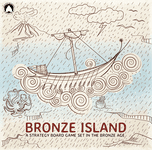
Hi, my name is Paul Groen and in this video, Mark from Ninja Geek Games is going to be giving you an overview of Bronze Island, a strategy board game set in the Bronze Age. This game is coming to a crowdfunding campaign soon. Check the description of the video for more details. Hello and welcome. I'm Mark from Ninja Geek Games and I'm providing you with an overview of the upcoming Bronze Island from Moth Games Design. Set during the Bronze Age, you control a small tribe with visions of growing into a functional civilization using only the mega tools you have. Now, just for transparency, I believe that the Bronze Age fully deserves its position as the third best age ever. And what better way to celebrate than playing a game as those who lived it. At the time of this video, Bronze Island is set to go live on Gamefam sometime in April, where there'll be a link to the campaign in the description. Bronze Island is a two to four player game where you control warriors and ships who must navigate a map to reveal and collect resources.
These generate income, but are also the foundations for building developments that provide perks and abilities throughout play. But be warned, other tribes will not sit idle whilst you grow and expand, and the loss of these precious resources can ultimately destroy your well-laid plants. If that's not enough, in-game events, combat, surprise attacks from pirates and krakens will also see a setback. Note that this is just a prototype, so any components and rules here are subject to change. Right, let's head back to the Mesopotamia. The board represents a map of the modern world as seen from nomadic tribes 4,000 years ago, and it shows a number of different terrain types to include mountains, forests, plains, and sea spaces. At setup, players take turns placing resource tokens on the map with a few stipulations. They need to be placed on the matching terrain. They can't be placed adjacent to any other token and they have to be placed face down to the resources hidden. I'll talk about the different types of resources later, but as you'd expect, we have fish, wood, stone, and many others that players can make use of. Once these are laid out, players then select starting location for their settlements represented by these discs that also include a lone warrior and a ship.
They'll also get to reveal and claim a number of resource tokens. And this also dictates which development cards they start the game with, and I'll talk about these shortly. Your triplay area consists of additional ships, warriors, and resource ownership markers, a deck of development cards, and some special action cards. These tokens are like currency that you can use to support the payments of developments, as well as recruiting warriors and ships. So, the idea of the game is to use actions to move around the map, claim resources, build developments, and earn currency in the form of points. The winner of the game is the tribe who can eliminate opponent settlements. So, there could be some player elimination, or the tribe with the most valuable developments in play at the end of the game, which is currently set on a time limit. On your turn, the first mandatory action to take place is drawing of an event card. And I'll discuss these later, as it's easier to see how they interact with the game once you have an understanding of the other actions that you can take.
You then get to take up to two actions. to move. Your warriors can wander around the map up to two hex's, and your ships can sail the sea up to six. Your ships can also transport individual warriors if you need them to get around the map a bit quicker. And anytime your units enter a hex adjacent to an opponent, they have to stop where you then need to use another action to move away or initiate combat. This means for an opponent that doesn't want to initiate combat, you can block off certain areas of the map or force them to take longer routes. For movement, there are no modifiers for moving into different terrain types, but if you move onto a resource token, whether on land or sea, you flip it to see what you've claimed. There are no physical components you take to your play area for this. You simply place an ownership marker on the token as a reminder to everyone what resources belong to you. Likewise, if you move on to an enemy controlled resource, they lose ownership and it now becomes yours. But there are some trap tokens to be aware of. Not all of these are useful resources. Some reveal tokens show hostile tribes. Well, more hostile than your opponents anyway. And revealing these cost you your hardearned points. This can occur in the sea thanks to pirates. And there's one deadly kraken that if revealed will eliminate your ships. All of these remain active for the rest of the game. And again, with clever placement of your units, they can block paths and force enemies into combat with you or lose points by moving over the traps. Note that if any of the hostile tokens revealed at setup when claiming resources, it's hard luck
and it could mean you start the game with fewer development cards in play. Q tiny bronze violin. Well, I don't think brass was discovered yet. So, what are the benefits for owning all these resources? Well, the greater variety of those that you own, the more likely you are to bring development cards into play, and you get a bit of income at the end of your turn. Now, this income or points tokens are earned based on the ships and controlled resource tokens that you have on the map and form part of the equation for the development cards. As an action, you can look through your deck and select one of these to bring into play. The cost is point tokens and one or more resources that you control. You only spend the points because just having control of a specific resource on the map is enough to satisfy the requirements of the build and one resource type can apply to multiple cards. This means if you lose control of a particular resource, you may have to destroy one or more development cards if they were funded by that resource, but they can be built again later. These developments do a number of things. They can increase the movement allowance of your units, provide additional strength in combat, can be linked to increase the points that you receive from income at the end of your turn, and used to negate or buff effects that occur as a result of drawing event cards. They also provide the limit to the number of units that you can have on the map. If you want to increase your count through the recruit action, you might need to have one or two more developments in play to allow this. And not only that, recruiting ships and warriors also costs point tokens. Units are placed onto or next to
your settlements and can then be used like any other. You also need to ensure that you keep a watchful eye on all rival tribes. Whilst you're all trying to claim each other's resources if you can get a warrior onto your opponent's settlement, they're defeated and out of the game. As well as gloating, you get access to their point token treasury and can take one of their development cards. And this is one of the endgame triggers depending on player count. Some areas on the map are guarded by opponents units. No worries, take them out in combat. This is done through adjacency where the attacker adds the strength of that unit and any development cards that provide buffs. The defender does similar, but they also get a terrain modification boost to their value, whether it's being in a forest, across a river, or both. Each tribe then rolls a dieice that can increase their strength value by up to three, with the winner gaining points tokens and the loser removing their unit. Combat at sea takes the same form, but any warriors being fed don't take part. They're too busy rowing, I assume.
If you're more of a lover than a fighter, you can opt to trade points tokens and swap out the ownership of resource tokens on the map. Well, it's less bloody this way. The last action available is to make use of special action cards. You get five of these, and these can be played for their one-off effects like doubling the movements of units, flipping resource tokens and claiming them from a distance, increasing income, or protecting you from any negative outcomes of event cards. Once these cards are used, they're done with, so they are limited. Now we've looked at the main game actions, we go to the event cards that are drawn at the start of your turn. And these add random events that you have to carry out. They include things like gaining a few point tokens, whether at the roll of a dieice or based on what resources you control, giving extra actions during your turn or even losing units through desertion. Traitors.
Others reveal a natural disaster that requires you to roll a d6. If any of your developments show the same value icon as the result, then they're immediately destroyed and removed. The game continues until either one tribe is left standing as a result of all other settlements being eliminated, or they have the highest points value in development cards after a set time length. The suggested time length for a game is 2 hours for a two-player game, adding 30 minutes for every additional player. The game does include optional variants, such as only starting with your main house development card. This will add balance because for the others placed at setup, it's all dependent on what resources were revealed for that player. You can opt for additional setup areas of settlements that normally start adjacent to a river and can even include terrain modifiers to movement where warriors and ships will move faster on planes or coastal areas. You can have 2v2 games where resources are shared between teams when building developments and then include multi-unit combat. Here you add the strength of every adjacent friendly unit to where the combat's taking place just to spice things up a bit. Bronze Island is set to go live in game found around April time and I hope this video provided you with an understanding of how the game plays.
Thanks for watching. Cheers.