Scout: A small-box climber!
Games in This Video
1 game is featured in this video — it unlocks as you watch.
Transcript
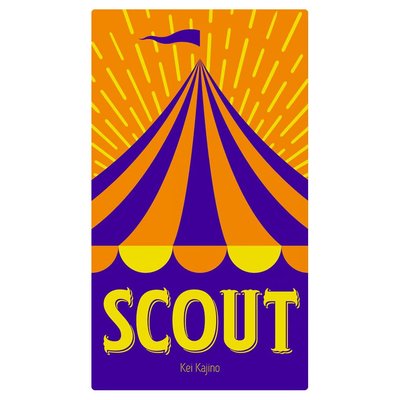
let's talk about Scout a climbing and shedding card game that's all about running a circus welcome to brains on games I'm Dr Brian McDonald and this episode we're going to talk about a trick-taking game because it's October so we're doing trick or treat at brainson games so this is a game it's called Scout it's a circus themed it's an award nominated card game uh and it's sort of F Well it fits under trick takers if you take kind of a broad definition of trick taking games so here's the small box for scout by oink games this is a game for between two and five players and you can play with kids age nine and up games only take about 20 minutes so it's a quick one and you can play multiple games on any given game night let's take a deeper look at Scout by oink games Scout is a light game where you're trying to earn the most points over a number of rounds equal to the number of players like I said it's between two and five player game it's a game where you've got these cards that have different numbers on on either side and what you're doing unlike other trick takers you know every time I play a trick taking game I get the cards in my hand and then I organize them by suit but there's not really suits in Scout instead you've got to you're not allowed to organize your cards first of all uh and instead you've got to wait until all the cards are dealt out before you pick up your hand and then before
you start playing the game you choose do I want to keep the cards right side up like this or do I want to turn my entire hand upside down and use the numbers on the bottom it's it's easy to tell I was worried at first when I opened this up and I had read the rulle saying oh you have to flip your whole hand but you you know the numbers are very clear from the top and the bottom so you don't have to spread everything out in front of you you can see here's the top number but the number that's on the bottom is right underneath so you don't have to spr spread all the cards out too much you can still hold them in your hand and figure it out which would be an issue for younger kids for sure but you've got these colorful Carrs they do have names on them and some circus you know some of them are clowns or people who ride unicycles or people who are trapes artists but really this is much more abstract than that and we found ourselves very rarely actually looking at what was what was on those cards other than the numbers each player is going to start with three of these little chits and those are wor victory points at the end of each round uh and they get this little clown car and the clown car it says Scout and show on the back and I'll explain what that all means once you've decided whether you're going to hold your hand upside down or right side up then the the first player is going to play a card or some cards what you're trying to do in this game it's a shedder meaning that you're trying to get rid of cards from your hand as much as you can and you do that by playing cards in runs adjacent cards adjacent numbers so in this case I might
play the six seven and 8 those are all touching each other I can't grab the nine from over here because there's a four in between uh it's even more powerful if you can get identical numbers on your cards so if you play two sevens 37s is going to be more powerful than a 6 seven and eight if I did have a hand like this it might be even better if I led with that four and then I get the four out from in between the 678 now I have a 6789 and and it is a climber as well as a shedder so if I play this four other players have to play a better hand if they want to get if they want to be the active player so you could play a single card that's a higher number you could play a pair of cards or two adjacent cards or the the greater the number of cards the more powerful that active set is chances are that that 6789 is going to be pretty powerful it's not very often that you get four cards in a run like this that are adjacent to each other in your hand so this is a pretty good play I'm probably going to earn some points because I'm going to be able to replace whatever the active set was which might have been two cards usually you don't get very many very often you you don't get four cards in a row like this sometimes you'll get three so this is going to be a powerful a powerful hand that's going to be hard for anyone to beat but the other thing that you can do so this is called showing when you when you play the higher card because it's a climber you play the higher the better hand and you put that out on the table
to replace the active set that's the show in this game you're putting on a circus show but you can also scout and if you can't beat a hand that's on the table if you can't beat the active set or if you choose not to you can take one of the cards from either end so that's scouting you're scouting that circus performer you're putting them into your hand what's neat about scouting though is that a you can put that card any where you want in your hand and you can turn it upside down if you want to so it might be useful more useful for you even though I played this as a six it might be more useful for you to play a one instead if another player Scouts a card like that from the active set then the player who owns that active set is going to get one of these little chips which is worth a victory point at the end of the game but what else is happening here is that the active set is becoming less and less powerful now you need three cards to beat this one it's it's still hard because it's a nine at the top so probably there's going to be a couple of players who are going to scout from here and I'm going to get a victory point for each time someone does that once per round you're going to get to use this little clown car so you can discard this or flip it over to show that it's already been used and the Scout and show car what that's going to allow you to do is to scout a card from the active set and immediately play a better hand once you've done that so you can sort of flip the game on its head a little bit uh by
scouting and showing on the same turn but you only get to do that once play continues until one player has run out of cards or none of the other players can beat the active set so if all they can do is Scout but they can't play anything that's going to end the round then you get to calculate points you lose a point for each card that's in your hand you gain a point for each of these little chips that you have or that you've earned along the way and for each card that you've captured by replacing the active set on the table so you're going to be doing some plus and minusing when when you're calculating your points at the end if a player if nobody has zero cards in their hand if the way the round ends is that no one can beat the active set and all they do is is Scout instead of showing and replacing those cards then the player who's who owns that active set does not lose points for the cards in their hand hand so they don't get penalized if everyone else chooses to end the round but the other players do you'll use these little chips these little Victory Point counters to keep track of your points and cleverly they have the negative points on the other side you will find after some rounds and we found when we played it sometimes there would be a player who is at negative points but the game can swing pretty wildly right because it's based on the luck of the draw in terms of which cards you get and which cards you manage to scout from the active set what skills are you working on when you play a game like Scout well this is a game that does involve some executive functioning skills I mean let's be
honest it is a card game where there's a lot of luck involved but there are some of those executive functions involved what are those executive functions planning ahead budgeting your actions trying to work as efficiently as possible to maximize those results those are good examples of the executive functioning skills so you've got that idea of well do I want to play a low card now so that my hand's going to look better next time do I want to scout a card instead of playing when do I play my clown car so that I can scout and show on the same turn so it's it is a game where you are doing a little bit of planning and kind of trying to tackle things in an organized way it does involve some working memory as well working memory is an executive function of course but working memory is the whiteboard in your mind where you keep information so that you can juggle it somehow and the working memory involvement here is in those calculations of points because Mental Math requires working memory skills but also in that decision at the beginning like which how which upside down or right side up hand am I going to use final thoughts about Scout well this is a game that it's not a traditional trick taker so with trick takers of course you're playing a card and the high card is going to win and here you're playing a set of cards and you win by replacing that active set with a better Set uh it does have those very colorful cards but it's quite abstract you know like I said earlier we we never never really found ourselves except for a laugh we weren't really looking at the names on the cards or whether they were trapes artists or
trampoline acrobats or what have you or clowns some of them are clowns I feel like the number one cards have clowns on them often but uh it it is an interesting choice at the beginning uh of each hand whether you're going to go upside down or right side up it is an interesting choice which cards you're going to take and the fact that you can slot those anywhere into your hand again upside down or right side up uh and it it is a game where there's wide swings in points and there's so much luck involved that even the younger kids are sometimes going to be able to win some hands but I mean that's true in any card game there's luck involved you can mitigate it to an extent if you're skilled at the game there are some you know there are some tricks that you can play like I showed you at the beginning I had that four by getting rid of that all of a sudden I had a great set that I could play uh but it it's sort of an interesting game game that's quick to learn and quick to teach that the younger kids can understand there's no real reading involved the rule sheet is like this double-sided thing that fit in inside that Tiny Box that I showed you at the beginning so this is a super easy one to get to the table and we found ourselves playing multiple rounds because it's so quick to play are there downsides to scout well for for some folks maybe the fact that the theme is kind of tacked on to this one like we never really thought about it doesn't feel like you're running circus or scouting performers to be in your circus I mean that's the theme of the game but the theme is kind of stuck on there uh
there is a lot of luck involved and I know you know it's a card game with lots of luck uh I think there's more luck involved than some of the other trick takers we've talked about this month where you can skillfully play some cards or the order in which you play your cards is going to have some impact on the outcome uh here there's a bit of skill but you know there's lots of luck too which is like I said great for evening the field for younger players and it doesn't require too too much thought to to play the game you can sit and have a nice time with your friends or with your family and it is a a family weight game and I think for some folks that's going to be a deal breaker it's not complicated or strategic enough but like I said at the same time the rules are simple and it's quick to play it's a game that is better at three or four or five players I think four or five is probably a really good number for this game at two players the rules are a little bit different and it does change things around quite a bit so we certainly had a better time when we were playing with three people which was most of the time how we played the game I think it would be even better at four that would be certainly ideal but I never managed to get four people to the table to play Scout so I didn't get to try it at that level all we could think of though was oh yeah boy it would be great if we had one more person at the table uh some of the the folks that we were playing with thought boy it would be a lot better if you had two of these Scout and show things that would make the rounds a little bit longer I mean at the same time the rounds would be longer but then you don't get those negative
points as much where you're stuck holding a bunch of cards in your hand if you can scout and show on the same turn uh that's going to you know allow you to do some surprising things maybe but you're going to find yourself shedding those cards a lot more if the rounds are longer so you won't get as many of those negative points in that case but overall we had a really good time playing Scout like I said it was kind of a unique style of trick taker uh that fits more under a broader definition of what a trick taker is and uh we enjoyed the game so we played it many many times since uh I brought it home so it was a fun one for us to try out if you have any questions if you have suggestions for other trick takers that I haven't talked about yet or or maybe that I haven't played before if you have any questions or ideas about brainson games you can of course leave them in the comment section below the video or you can e email me at Brian brainon games.cz on.cafe.com