They don't make Euro games like this anymore! - Quebec Board Game Review
Games in This Video
1 game is featured in this video — it unlocks as you watch.
Transcript
Hello everyone. This is Cinema
and this is Joe Hannis
and you're watching Board Gaming Ramblings
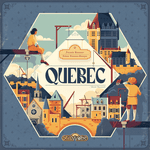
and today we are taking a look at Quebec. This is a I'll usually say this is a new game, but this is kind of an old game in a new print. It has new artwork and stuff like that. We don't think there are changes to the gameplay, but we haven't played the old ones. This is not going to be a comparison between the two. This is published by Capstone and Spiel Works that gave us a review copy. So, thank you so much for that. Quebec is a Euro game of olden times because there's very few rules and there is a lot of interaction. This game is as a brief overview. We're building Quebec over four centuries.
Such a long game. Yeah, it's [clears throat] going to take you four years, 400 years to play it. It's not. It's shorter than that. That's the first positive thing of the game. It doesn't take 400 years to play. So, in this game, you have very few actions to choose from. You can if you have your little architect, you will have your architect. It's not if. And then you can choose to move him. So let's say I want to move this architect from here. I can move it to another of these sites and start building that building. Why am I doing that? Because I want points. So when I'm starting a building, let's say I started this building. Then other players can come and build that building. I can also build that building. So on my next turn, I could take these three workers because it says over here on this side to the left of it, they were the same color. But I had to use tree. The different is when somebody else uses it, they get to do the action and I don't get to do the action. So it's very much like a I want to choose this bot because it's good for me but also has a good action that hopefully somebody else want to use so that I can complete my building with more points because when I complete it, the more of these three spots that are taken will score me more points. So you will get one, two or three stars depending on how many spots that are there. What happens when you finish it?
Yes, what happens? I will tell you I will move to another space and all of these will go into here which will then help you score more points later in the game to the players that built the building. So everything is like if you give me some points here, I will give you some points there. So that is basically what you're doing. There's going to be an event at the end of the round. There's going to be a scoring. We're going to talk more about that scoring later because it is one of the most interesting aspects of the game. During the round, you can also choose to take one special ability that will be your special ability throughout the round. But the later you take it, the more of these workers you get to activate. And having activated workers is one of the things that is always a balance in the game. After the 400 years have passed, the player who has the most points after the final scoring is going to be the winner. And the final scoring is a few things, but mostly it is having linked your roots. So you're also trying to block the other players from getting their linked use by the same time as you're trying to get your So let's talk about this game.
Mhm. I think it's clear when I'm playing this game that this is an older design. It's not a bad thing, but it's like this there's there's like something that older games now I feel like are different from the new ones, and that is like the rules are so simple. Like you have two main actions to choose between on your turn. It's either like put this out to do the action and like be building or like okay I'm gonna move him to a new construction site and people will now be able to build to use this ability and that's it.
Yes.
Like it's it's so simple but it has a lot of interaction and I feel like like that's that's the meat and potatoes of this game.
I'm going to ask you a question. Yeah. And that is, would you have liked there to be more games like this being published now?
Yeah, I would
because [clears throat] I feel like we love the the bigger, heavier, newer Euro games, but very often like when we play an older game, you see like the elegance in the design in a different way. Like
I feel like it would be interesting to see more designers trying to design games where there are fewer rules and where the interaction and the play between the players. And this is coming from somebody who loves say multiplayer solar game, who loves to sit and puzzle with my own stuff, but I would like to have more of this.
Yeah, I'm not saying it doesn't exist. So,
oh no, but very very few newer games have this kind. Like we feel that when we also played Yunan, which was another Spiel re-release, which we really enjoy that is that is more brutal game. This is doesn't have that much brutality in it. But if you play this with a group who haven't played a lot of interaction in games, it's going to be weird because you're going to be like, I don't want to build your building. But you have to because that is how you get to do the action that is better for you. So it's basically I'm going to give you something and by giving you that then you're going to give something back.
And what I do like because because sometimes I have problems with those kind of games like in Canad I'm just like no I'm going to not going to trade you anything.
Yeah. and you can get in like those kind of stalemates in this game. I feel like what I get from building on your side is that it's so good that I feel like it's it's worth it like because I'm getting stuff into here which is huge for scoring. Yeah, we're going to talk about that.
And also I get to do the action in itself. So, so yeah, I'm helping someone else but I get something really good in return.
Yes. And I have to say like this is an area majority game kind of it is like your majorities over here in the scoring that we will talk about soon and also in as I said like you want the areas and every uh 100 years of the game there's going to be different of these buildings available they're going to be randomly laid out the colors are set so it's not going to be
so now you're only able to build on these once in round one and then the twos will be available and then the trees
what Oh, the force of the retreat. Are you completely sure?
Yeah. Just like to be sure that we understand.
I have to say one thing and that is the thing that is for me kind of a negative
is that because everything is like I want to do this because I get this action and I do get this. I think it's hard to kind of evaluate if I get more out of doing the action than you get out of doing the action.
I think it's good that I'm not able to evaluate that.
Okay. because I would like I think that would add to the AP of the game which is not a lot by the way. It's it's really smooth. Um but but I I think that it would kind of ruin the fun if it's just like oh you're getting something more than me right [clears throat] there. So I'm not going to do that. But in a lot of situations your options in this game are kind of limited. So you're just like okay I don't want to do that action that you have. But the the the option like the the plan B is that I'm going here and building and get nothing because it's my own building,
which could be better.
It could be better. Yeah. Um but also the other thing is that sometimes you you the next step has to be oh I don't have any more workers now. I'm forced to relocate my builder
because I didn't get more records.
Yeah. And and that's not a good thing either if you do it like too early. No, I the thing I was meaning is that I don't like I get to a point in the game where I'm like you might get 60 points from this now you might get two and it's not that that it's not like the point of it but I say like I agree because it's balanced in a way that if I I really want this position for example and then other people can like force me to build there because they don't want me to have a scoring tile on that tile or it might not be a good action in that situation in the game. Yeah.
I don't I I'm trying to score points here. We're going to talk about that soon. I basically want stuff here. It's good. Uh
but I I get to a point where I disengage a bit.
Oh, because No, it's because I get to the point where I'm like,
I could do this. It's going to get me some points and it's going to get you some points, but I don't know if it's going to get me more points, you more points. And it's it might also be like we play with somebody who played more aggressively, but they but but you can I guess you can play like more heavy interaction as well and try to block people more and try to do these things. But I just felt like in the way that we played, I end up in a position where I was like, I don't know what is best. And it felt not in a way where I was like I didn't want it to be like oh I'm going to I'm going to think very hard about this for a long time but more in a
I just did some stuff. It might just be because I'm bad at the game.
Yeah. Because I was thinking because I'm so good at it maybe I don't have the problem. Um but but I I can absolutely see you're playing like this game mean if like all the other players like go together or to not use one player's building that player is going to have good.
Yeah. that's players going to have a hard time. But for example, last time we played it, you were forced to abandon two building sites adjacent to this um ability right here because like it wasn't the right time kind of for the other players to utilize that action in a good way and then you ended up like, okay, I have to do this myself. But I think that this one one like all of these abilities are cool,
but this one lets you take the action on your own building site, which kind of if you see like, oh, this is going to be around where this might happen, you can snag that really early and kind of get out of it.
And also like let's say a real majority in here, which we're going to talk about soon, but also the fact that you want to have like a big area of your action kind of drives your
connection. And that's something that's more like a blocking part because basically you're going to score for your biggest area. You're going to score like the value of the point tiles that you have.
So six
and the rest of them you're going to score the stars which is 1 2 three and the points are 136. So you want to have your things connected and the other players want to break that up.
Yeah, absolutely. Uh should we talk about that majority circle over there? So the round is going to end or the 100 years are going to end either when there is no more places to go. So let's say we were in a position of course there's a once but let's say we're in a position I'm now moving there's nowhere to move then basically the the round ends there's a scoring and then we're going to fill this up on the two tiles instead and then it's going to be the rest of my turn I'm going to do that and the game is going to continue. So the scoring works like this. There's going to be five areas of scoring. We're going to start with this right here. H I'm going to get two points because you get a point per disc you have there. So the the purple the pink player which is me going to get two points. But then something interesting happened because the player who gets the most points gets to move half of their tiles to the next area. And in the first round that's over here. So now I suddenly won over you in this area as well. I'm going to get some points and I'm going to move this over here.
And now we're the same. So we get to move things over here. And now we're still moving things and we're getting so much like you can get many points with one point token.
Yeah, it's very seldom that you have a cascading that is like [clears throat] that one player gets Yeah. So this is like for it to make look cool.
But but usually like you have uh a player that focuses on the first half like of the the scoring things and somebody else like takes over the majority in the second. Um, but not that doesn't happen all the time, but you really want to. It's It feels like a big payoff to have the majority.
Yes. Cuz you're going to get like double points for half of your points.
And it's a a maximum of five. So, when you have two people like battling out an area, if they max out, they get more than 10, which happens quite often, then they're only going to move five to the next area. I feel like a great cap. This is like where the tension of the game is for me where I'm trying to see okay because where I plays here and the actions I get here depends on what happens here. But sometimes like for example this green player let's say they don't want these pieces in there and they have enough workers they don't need to move this so they can build another player's pieces or that doesn't go in there at the end. Maybe they already had a lot of green there. So then the other players might have to try to get other ways to get their pieces in there. So again, the interaction is high and the I feel like the best moments we had of the game was when somebody thought they had the area majority and somebody was just like I'm just going to do this action and sneak in there and get some extra points.
Yeah, for sure.
So that is Thanks. Should we do some survival thoughts? Yeah.
Are you ready? Yeah.
You want to begin?
Yes.
You can begin now.
I think
now you can begin.
Oh, now?
Yes. Go ahead.
You can just start whenever you want.
I I like your back. I like the first few rounds we played of the first game, I was just like
h how how does it work? Because it it felt like I'm going to compare it a little bit to Tabanusi. Not that they're in any way similar
board games component.
So a little similar, but there you want to like place a foundation to somebody else to finish so you don't have to finish it yourself. And it's kind of the same thing you're doing here, but I feel like in this game only after like a few rounds of playing it feels kind of intuitive even though it's like an a little unfamiliar mechanism. And I think because it's done so smooth and I feel like even though I'm helping you, I I get very much in return. I get this mostly cool action and I also get to place my pieces into this scoring place. So, so that will score me points and I feel like that really makes it so that I'm incentivized to actually do what the game wants you to do, which I think makes this game work. I think the events that you play with, we haven't talked about this. There's a scoring event and then there are like random events going to happen.
I think they those are nice but but they don't change up the game in huge ways just like a little bit
and also I think grabbing these abilities
leaders
leaders that's also something that you that's some tension in that because [clears throat] how long can you wait? Could you be sure that this guy that I really want the the extra architect? We haven't even talked about him, but
he's cool. He's cool.
His name is Bob.
His name is Bob. Um, how long can I wait to to see if I can grab him after somebody else grabbed something? Because getting these extra work force is really nice. I will get that if I wait, but I I'm not willing to take the chance. I'm getting him like that. I didn't feel like these two abilities were that interesting though. I feel like those always being like ending up being picked lost.
It's going to probably get quite a few points for this one. But
that's true. That's true, actually. But but I do like the game. I think it's simple, but I think it tends and I think I I really like the interaction in this game. I'm going to land this on a 7.5.
Okay. Quebec is a, as said, a board game of olden times. They don't make it like this anymore. I think they they usually don't. And I overall I'm very happy that they're doing a reprint of it because I think that the board game scene has like there's very it's really good that games that are very different will come into the the the the scene. So
if we played this back in 2011, it would probably be like a a a good game or a great game that felt like the time. We didn't play board games back then, but like it was more in the way of the games. I felt like there was a change in between 2012 2014 where like more and more we had point solid games. We had more multiplayer solitaire more mini game based games which we do like and so I think that is a very positive thing. I don't think this is my favorite game.
I I enjoy the game. I I as I said like earlier in the review, I get to a point where I kind of disengage because I I have I I this is probably a me problem like I don't I don't I can't manage to calculate or to see like how is this affecting things in a way that this wouldn't but still I'm trying to get the thing like because the rule set is so simple it's not very hard to be able to to do things that score you points if you are playing decently. Um, I do like the game. I don't love it. I'm going to give it a seven.
I think it's a a good game. Not amazing. But I think that if you are like looking back and thinking, "Oh, I want to play those games of olden times." Then you should actually check it out.
And that's going to be the end of the video. If you are going to spiel, you can see us there. Show us the secret sign. If you do see us, we're going to be at the Allian booth Saturday in the in the afternoon and Sunday in the morning. We're going to be waking up and going to teach you games. We hope to see you there. Thank you so much for watching. Subscribe. I'm Johannes.
And you've been watching Board Gaming Ramblings. And bye-bye.