Empower Empathy (board game preview & review)
Games in This Video
1 game is featured in this video — it unlocks as you watch.
Transcript
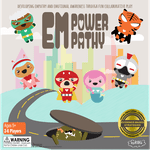
this episode of brains on games is about social emotional learning and empathy welcome to brains on games i'm dr brian mcdonald in this episode we are going to talk about a game about feelings this is something that i tend to talk more about in my day job maybe than i do when i'm talking about board games but this is a board game that was sent to me by the folks at tiny sprouts a game called empower empathy this is a game for kids age five and up you can play with between two and six players and a game takes between half an hour to an hour to play let's talk a little bit about empower empathy like i said this is a game about feelings which is something that i talk much more about in my day job than i do here at brains on games but learning some emotional vocabulary and thinking about feelings is something that is very important for kids and often it's not something that just comes up in everyday conversations in families so empower empathy is a game that does encourage those kinds of conversations it gives kids some vocabulary to think about or describe their feelings and it's something that you might use in a classroom or you might use it as an exercise with your younger kids to sort of help them think through some scenarios one of the things you'll see as we go through the rules of the game is that a lot of what you'll be doing in this game is talking through some social stories which is something that teachers sometimes use but certainly therapists
often use social stories when they're working with kids on developing social skills or or resilience or emotional regulation power empathy is a pretty simple role and move game and it's cooperative so everybody is going to be working together on this game you've got this great big round board and it is a two layered board so there are little holes where these pieces are going to go and your players are going to be superheroes who are going to go around the circle here on the board you probably can't see the whole thing on the camera we'll focus on probably just the top half of the board but the idea is they're going to go all the way around this circle and they're going to try and prevent the villain whose name is gooby here i'll show gooby up here so you can see him they're going to try and prevent gooby from flipping over parts of the city to red which shows that they're everyone's all riled up in those areas that's what the villain is trying to do is to get everyone upset and riled up the heroes are trying to get things back under control the tiger hero is my favorite one they're trying to get things back under control so people can go back to being nice and kind and calm and empathetic with one another what you do in this game is once you've got the board set up like this and these these pieces are are sorted out randomly that really you just want to make sure that you don't have too many of these power up squares you shouldn't have two of these beside
one another so you do want to spread these around the board you'll start by spinning a spinner and if the spinner lands on the heroes then you're going to get to move a hero so the hero is just going to move around the board by rolling a die so it is a roll and move game like i said so you roll a die and you move your hero along now if the hero just lands on a regular gray road you can just they say in the rule book just enjoy the cityscape and you can move on to the next turn if the hero lands on one of these squares with the red hand on it that's a power up card that you get to grab and what you do with these power up cards is you talk about whatever the scenario is that comes up so this one says board when you feel like you can't focus on a task instead of tuning out what's a good way to get yourself back into it i'm paraphrasing here but i the idea here is that a parent would likely it would be the parent reading that card and everybody will kind of talk about their ideas the inside of the box i'm going to put this on the small camera here the inside of the box has some guiding questions that parents can ask so if you're not a therapist who has these kinds of discussions every day with kids they give you lots of ideas about what you can talk about when you're working through some of these scenarios and talking about the power up cards eventually you're going to have heroes
who've kind of moved around the board i should say because it is a cooperative game when you let when your spinner lands on the heroes and you're going to move the heroes around the player who spun it can choose whatever hero they want to move so it's really going to depend on what square they want to make sure that the hero lands on so eventually the heroes are going to be spread out a bit across the board but at some point your spinner is going to land on the villain gooby you know 50 percent of the time you're likely to land on gooby and gooby is that that weird little villain who starts in the center of the board when you land on gooby if he's in the center you roll the dice whatever number will come up is where is the the manhole cover the sewer that he's going to come out of so there's there are manhole covers that are numbered one to six so if i had rolled a two he would pop up here and that would be the extent of what would happen but now i have an opportunity for the heroes to run into him if gooby is already on the board you're going to roll the dice and that's how far he's going to move and he's going to start to flip these roads over to red to show that he's getting everyone riled up and upset once all of the heroes have made it all the way around the board then you're going to count up how many of these power up cards you've been able to collect and for each one you can flip back one of these red roads back over to gray again and if you're able to keep everything from turning red if you don't
have any red tiles on the board then the heroes have won the game but if you didn't manage to collect enough of these things before getting all the way around then you've lost and gooby has won there is one other way that you can flip those red squares back to gray and that is if a hero lands on one you're going to draw a city watch card all of these are social stories that you're going to read and talk about so you get some little scenario with the picture at the top in this case oliver is sliding down a hill on a sled for the first time now you're going to think about what are the feelings that would go along with riding on a sled down a hill for the first time and you want to pick at least three of those so the kids will talk around the table under the parents guidance and you're probably not going to pick a feeling like tired or bored maybe well probably not confused even but you might get excited or scared let's see if i can find some good ones here uh or maybe not disgusted or absent-minded but there's the scared one so right away that's the first one that jumps out at me if you're riding down a hill for the very first time but what's great about i think these cards these scenarios is first of all like i said it's a social story and that's something that therapists use in their work with kids to kind of help them think through some scenarios and reflect on emotions i
would use a social story with the child who is having a hard time dealing with their own emotions so they want you can think about something that's similar to what they're going through but it's not about them and it depersonalizes it so it can sometimes be easier for kids to talk about the feelings of someone else rather than their own feelings or their own scenarios and you're you're still getting wheels turning and getting the ball rolling by having those discussions you've got those guiding questions from inside the box and that certainly makes it a lot easier you don't have to think too hard or go very far before you can figure out what kinds of things you're going to be just discussing in this scenario so once you've got a few feelings and you've figured out how that that child might react in that situation then you get to flip that street back from red to gray and you're preventing gooby from making everybody angry and upset and there are a ton of different scenarios you know riding down a hill on a sled for the first time is probably a pretty exciting thing but what if you accidentally knock a vase off the table and break it you know it definitely these are scenarios that are going to get some wheels turning for kids kyle lost his favorite hat at the park there's another thing that you might feel some sadness about for example and how often do you talk with kids about those kinds of emotions so how would you feel if that happened to you what would you do in that situation what would you you know there's there's all kinds of ways that you can discuss these things with the kids and you've got the emotional
language right you're building that emotional vocabulary and that's really the skill that you're you're building here by playing this game if you're going to learn to understand other people's feelings to be empathetic well you have to be able to understand your own feelings and how do you develop that ability to understand and regulate emotions well first you have to be able to express those feelings without worrying that there's going to be consequences for it and if you're playing a game there are no consequences to that emotional expression next is you have to have the language so kids need to learn the language to describe their emotions especially the primary emotions like frustration or um alarm you might talk about alarm rather than anxiety and then eventually they can sort of experience that feeling maybe they can develop the ability to have more than one feeling at a time i mean having mixed feelings is really how we learn to regulate our our reactions when we're feeling emotional if you're really frustrated about something that you're working on but you care about finishing it those two feelings together can balance one another out so that you can actually overcome whatever the frustration is that's causing you a problem now if a hero lands on one of those power up squares they get the power up card which which names an emotion and names a situation where you might feel that emotion gives
you a chance to talk about it but if the villain lands on a power-up square that sends him back into the center and so now he's back in his lair and he's not in the road where people are going to run into him but at some point it is quite likely that a hero and a villain are going to maybe not on a power-up square but at some point the hero and villain are going to wind up on the same space and there is another interesting thing that happens when you do that uh when the hero and villain are on the same space you have kind of a face off and what winds up happening is that the player who did the role that caused that hero to move on to the same space with gooby is going to randomly choose one of these feelings but the player doesn't get to look at which feeling they're holding up so i don't know what this emotion is but everyone else around the table will be able to see it they have to act out the feeling and i have to guess what it is and if i guess what it is gooby goes back to the center if i mess up though and i don't guess the feeling correctly the city block turns red even though there's a hero on top who's trying to protect it eventually all of the heroes are going to have made their way around back past that start space where you began the game and then you count up how many of those power up cards you have all together you use those each one can flip one of these city tiles from red back to
gray and if all of them are gray once you've traded in all of your power-up cards then the heroes win the game otherwise gooby wins the game and who wants that but honestly that does happen sometimes even in these cooperative games even if the the heroes lose those games though you've had an opportunity to talk with your kids and and help them develop their emotional vocabulary and that is a good skill to have and that in a nutshell is empower empathy this is a quick game that's really about helping younger kids learn to name and recognize their feelings and the feelings of others as well this is a game that i'll be bringing back with me to my office so that i can use it when kids need to talk about those feelings or emotions or to learn about their own feelings and reflect on them down the road and it's a game that i could see you know homeschooling parents using or or teachers in the classroom using if they're doing a unit on emotional recognition social emotional learning or empathy it's a game that's coming up on kickstarter very soon i'll put a link to the campaign in the show notes there's a whole bunch of stuff in this box in this rule book that i didn't even touch on because brainz on games is about games but this manual also includes information for parents and teachers to help to practice these skills or develop these abilities in real life so there's all kinds of information in that book that parents or teachers may find helpful in between those lessons when they're talking about those feelings if
you have any questions or comments from me you can leave them in the comment section below the video or you can email me at brian brainsongames.ca brainzonegames.ca is the website that's where future episodes will go and the previous ones are up there already brains on games is the twitter handle and the facebook page and the instagram feed so we're all over the place and if you enjoyed this video and you want to be notified of future ones you can head on over to youtube and click that subscribe button thanks for joining me and hopefully i'll see you next time you