The Most STRESSFUL Board Game (Panic on Wall Street) Just Got Reprinted! - Wolf Street!
Games in This Video
1 game is featured in this video — it unlocks as you watch.
Transcript
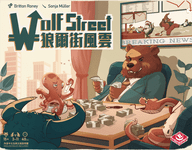
Miniature Market has thousands of board games at discounted prices. Click the direct link below to see all those discounted games. Hello, my friends. Back in 2011, a game came out called Panic on Wall Street. It recently made my number one most stressful game in a video that I came up with the top five most stressful games out there. Uh, and it's been a great game for a long time. It's been out of purpose so long, and I've always wanted someone to reprint it. Well, uh, after that video released, I was contacted by, uh, Broadway, a publisher, and they said, "Hey, we're bringing it back." So, now there's going to be a reprint of Panic on Wall Street, and it is going to be called Wolf Street. So, I'm going to show you this new version and talk about some of the little differences that's in this version. I'll see you on the other side. In Wolf Street, there's really two different games going on. Roughly half of you are going to be investors and you're going to be from companies.
Here's one of these nice chunky wooden tokens from the different types of investment groups like Bearpaw Investment and Crocodile Haven Trust and Bold Market Investments and uh Bat Beacon Investments and Deep Sea Investments and uh Aspis Investments. Now, at the end of the game, the investor with the most money wins. Now, the other half of the players in the game are going to be managers. They're going to be managing stocks and funds from different companies and going to be trying to basically make money selling shares and such. And the manager with the most money at the end is also going to win. So there's going to be one winner from the investment groups and one winner from the management. And essentially they're playing two completely different games. The managers are going to be getting things from different companies like uh the hamster surge or first banch uh branch bank there or electro or you know first avenue there. So different types of things that they're going to be trying to sell. Now these four companies that the managers are trying to sell stocks of have to do with this board cuz over the course of the game essentially going to go through five rounds and each of the five rounds go through different phases. Now the blue company is a lowrisisk company. It it doesn't move as much anywhere from 10 to 50, right? It doesn't move as much. It's very it's it's a lot it's you know it's it's it's stable. Green is also you know stable.
Yellow gets to be a little bit more risky and red is super risky. Not only because of the values, but as we'll show you later, how these values fluctuate from round to round. So again, each round is going to go through this negotiation. Two minutes. For two minutes, all of the investors are negotiating with all of the managers simultaneously like Wall Street essentially. You're you're all yelling and screaming trying to get things uh bought and sold. And to show you how this works, uh let's just say that this is a manager and this is a manager. Each of these managers have two different shares. Now, in real in reality, there's usually more than two managers, and each manager is going to have more than these. You actually draft three to start with, and over rounds, you're going to be getting more. So, you'll get more and more things to sell as a manager. Now, the investors, they're trying to get a good deal. So, the investor might say, "Hey, Mr. Manager, I will give you uh $10 for this." Uh, and they will say, "Hey, okay." So, the investor says that was from bull market will put their token on there saying, "Hey, I own this share here." And the manager is going to write how much they've paid. Well, somebody else might come up and say, "Hey, you know what? I'll give you 15 for this." And it's all real time. It is people are yelling and screaming at the top of their lungs the entire time. And so Bearpaw comes in and says, "Hey, I'll give you 15 for this." And this manager that owns it says, "Well, okay." Gives this back to Bull market or says, "Hey, Bull Market, this guy over here wants to give me 15. You want to give me 20?" And no, no, that's okay. So they go 15 like this, right? And then someone else comes up like Deep Sea Investments comes up because you know what? I'll give you 20,
but I want you to lock it. And they're saying, "Okay, so this now gets flipped over to locked and this is now 20." What this means is that nobody can change this. The manager can't say I won't do it. The investor can't take their thing back. Nobody can outbid it. That is locked in. But if it's not locked in, somebody else might do it or the manager might just say, "You know what? I don't want to do this anymore based upon some other things that are going on, other deals." And so it's real-time negotiation for every single one from every manager. So you can imagine when you have 20 or 30 of these things out on the table and four or five investors yelling at them, it gets really crazy. But it's real time. Two minutes, you set a timer. Everyone's yelling, took on and off, numbers are getting cancelled, some people trying to lock things in. Uh, and so that's pretty much how the negotiation goes. Then you're going to go to the investor income. So all the dice going to get rolled. And again, high-risisk versus low risk. Why is this high risk? Because this die can go from minus 7 to plus 7. If this was minus 7, it goes 1 2 3 and it can't go any further. But even if it was way up here worth 80, it would go 1 2 3 4 5 6 7. It would tank, right? But it it it's a high-risisk one. And it has some numbers in between like plus two and stuff. This one can go from minus3 to plus three, minus two to plus two. This can go to minus1 to plus one. Sometimes it's zero.
So these ones fluctuate less less more more and more as you go up. So at the end, let's just say at the end of this round, it was something like this. Then what happens is the investors will then now get the sorry the managers will get their income because the investors rolled these dice they'll get the money. So for example if if you owned two yellow stocks well now you're going to get 50 free shields so you get a 100 bucks. Maybe you own one of these you'd get 10 bucks. Maybe you owed you own two of these you lost 20 bucks for each of those. Maybe you own one of these you get 30 bucks for that. So you're making or sometimes losing money after you've got your money. you're then paying the managers because you remember you may have told somebody, "Hey, I'm going to give you $20 for that blue one." And you've got to pay off all of those managers. That's how the managers are making money. Now, you could possibly go bankrupt and you try to negotiate your way out of it. And if not, there's a way to kind of stay in and it's a little harder to win at that point, but you're not knocked out like the original version. Um, but then the managers have to pay. The managers have to basically pay uh 10 for each company they have. So they want to get at least 10 because that covers their costs if you will. So it's a one way of getting a good deal is if someone doesn't have a good thing there at least 10, you can slide in and give them five or 10 at the last minute because they want anything cuz they're going to have to pay 10 for every one that they get. So the managers are going to be uh you know making payments. Uh and then we're going to auction off all sorts of new companies. So one at a time, depending on the amount of managers there are, there'll be a certain amount of these that come up one at a time. and players. Each of the managers has one of these dry erases.
They secretly write how much they're willing to pay. They flip it over. Whoever paid the most gets this. Then you go to the next one. Some of these have an X2 or 2X. Meaning if someone buys this, they're going to get double, either positive or negative. If it happens to be negative, you got to pay negative double. And these are worth more. So the invest manager is going to pay more for them, and they're also going to try to get more for them for each of the shares. And also keep in mind that the companies, there's not an equal amount of them. you know, the the the red ones which are very risky, there's less of them. So, there's a there's not an even distribution between the type of shares as well. But essentially, you'll at the end of each round, you'll auction off a certain amount depending on the players. Then, you'll start a new round. And that is pretty much it. You're playing five rounds, and whoever has the most money is in the investment side wins, and whoever has the most money on the mantra size wins. The game is really about the open negotiation uh and trying to figure out how much how to make money on both sides. And that's pretty much the game.
Let me just show you the little component comparisons between the original version. Now, they did rebalance most of the boards here. Like this, the new one goes up to 80. It went 30 40 50 70 80. This went 30 40 50 60 70. So, it's even more swingy. Makes you really want to go after it more, which, you know, I think is a good change. This one went 30 40 50 60 70 where it used to go 30 40 60. So, again, they made the the top two a little bit more advantageous to go after, which I think were good changes. Um, and then so this one had 30 40 instead of 30 30 40. So it's s small little difference there. And now this one can go all the way down to 10 where before it only went from 20 to 40 where it now goes 10 to 50. So on the higher ends it does go more but it doesn't necessarily move as you know it doesn't still doesn't move a lot very often uh or as much but the the high end and the low end gives you a bigger spread to make it a little bit more.
They also slightly modified the green die. The green die used to have a zero and now they they removed that and put more numbers on there. So it the green one's always going to move down. Now they still use paper money in this edition. Uh it is slightly smaller than the old one. Everything is slightly small in this new new edition. Uh just probably because of cost. They want to take cost downs. It's not noticeable when you're holding it in your hand, but it is slightly smaller. The dry erase cards, these are now cards where before they were tiles. They're also very slightly smaller. Again, not not a you can't really even tell the difference, but with a lot of managers, it actually probably helps, you know, it helps good with the table space. But these are actually easier to shuffle than these. So I kind of like having the dry race cards even more than the cardboard. And the tokens themselves are slightly smaller, of course, to keep up with the slightly smaller aspect of the card. So the scale-wise, it's about the same, but the big increase here is these are these nice chunky wooden ones where these are just standard cardboard ones. So that's pretty much most of the differences. All right. first. Yes, as I mentioned in the intro, um Pentagon Wall Street had recently made my number one most stressful game because of the real-time negotiation and such. And I was really I've been dying for this to get reprinted like for the longest time.
I was surprised that it hadn't been reprinted and I'm glad that now it is. So, let me first talk about just generally speaking the original game because this is very much the same thing. There are some changes we'll talk about um and some some some ones that that really matter. So, uh first of all, this game is like an experience like no other. the the two-minute negotiation rounds. I mean, if you think about it, the game's five rounds long. There's literally like 10 minutes of hootin hollering running around the tables shouting at each other. It's crazy. And that is the essence of the game. That's the best part of the game is that the it's literally 10 minutes long. Now, grant it does take about 30 to 45 minutes to play the whole game because of everything else that's going on, but it's really a 10-minute game when you think about it. They have all this like yelling and such. It's kind of like a game. The bit the most thing I could talk about is like it kind of feels like a game called pit which is like a really fun well some people call it really fun.
I call this pit but fun cuz I don't find pit fun. I found it very random and and weird but the aspect of like yelling ask asking people stuff all at the same time. Real time negotiation at the top of your lungs. That's what made this fun. So I feel like this was like pit but actually fun. The real-time negotiation is just so fun in this that you're you're you're trying to find the right deal at the right time and looking at where they are, knowing which way the dice might swing and how much it might swing, trying to scoop in and find the right deal at the right time, not necessarily being the first one there in the early negotiations to get stuff because as the the clock starts ticking and as it gets closer, deals really get done and deals get unupholded and deals are like, I'm not giving you that. I'll this guy over here wants to give me 20. Hey, does anyone give me this? Hey, I'll give you more than that. And then someone's like, "You know what? Nope. I don't want to make that." And someone's like, then a manager is like, "Oh, no."
It's it's crazy. It's it's so fun. The real time negotiation, this is just awesome. And you're constantly just like looking for the for the good deals. And then how badly do you want to lock it up by, you know, turning your your token over? It's going to cost you, right? I love that the game has two sides and two winners. And essentially, you're playing two completely different games where one, you know, half of you are the investors trying to find the good deals. The other half are the managers trying to kind of talk people into why they should spend more money or why they should buy their share where Mr. manager next to me has a share for sale for the same company. Hey, that guy sold that one for for for 20. I I'll sell it for 15. You want in and you know, let's get two. Let's kick that guy off. Let's put it 15. You come over here for 15. I'll do it for 15. Hey, I got a second one. Someone else come for 15. Right? And you're always undercutting each other.
just it's so fun and it's like it's so you are completely playing two different games and I love it because it just feels like a it's like hey let's play this game twice everyone swap sides and you'll feel like hey we played two completely different games tonight even though it was the same game and it was still fun. I like when you're trying to decide when to lock in and the fact that you can lock in uh and not get bumped off but it's gonna cost you right because they're not just going to lock you in for because you're paying five more than the next guy. No, pay me 15 more because you want this really bad and I'll lock you in. stuff like that. I love that. Uh I like that you have the sort of the conservative versus the aggressive uh stocks, the ones that move a lot, the ones that don't move a lot. Uh there's different varying amounts of those that will come out for auctions. Uh and and again, it's the timing of the right deal at the right time and looking for those opportunities and the player that does that is going to be the winner on the investment side for sure. U the game plays best with higher player counts. Now it plays up to 11. I have once played this with 11. Uh, and much to my chagrin, my neighbors hated me because that night we played it outdoors at like 1:00 in the morning. And uh, I heard about it next day for my neighbors. They weren't too happy uh, with 11 people screaming at the top of their lungs for 10 minutes. Uh, so yeah, but it's definitely best with six or more because you want at least three managers, I think. So six to 11, I think, is the sweet spot here. Um, so that's like generally speaking. Now, let me talk about the availability or not of the game. Now, first of all, Broadway is bringing this to Gen Con and they will be there selling that. You will be able
to buy this at Gen Con if you go there. Now, second, they are still looking for a US sort of retail partner to sell the games after Gen Con be for like more of a longer term retail. So, if you're a publisher that that works in the United States and North America and you're looking for a great game to reprint and be a partner with Broadway, I they're openly looking for someone to sort of take that over. And lastly, um Broadway does have a factory that they can make these in that is not in China. Uh that is in Asia but not in China. And so, uh you can avoid some of the tariff things that are going on as well. So, if you're a publisher, let me if you can contact Broadway directly. But if you're interested, just go to my website, gameboygeek.com, go to the contact page, send me a little note, and I will put you in contact with the right person who who is dealing with this game, specifically at Broadway, because it's a big company. Now, let's talk about the new versions and the differences here.
You've got a rebalanced market board and dice. And so, you know, the the the red top two spots are 10 higher than before, which means it's more tempting, which means it's more exciting, which means it's more fun. Uh the yellow removed one of the zero spots and replaced it, you know, with it's like, you know, 40 60 uh with 50 and 70. Again, more tempting for a little bit more aggressive, more fun. I mean, it it just it makes you want to do it even though it's probably not the right move, but you just hit yourself in the head because you do it anyways. Uh the green had the 240 spots instead of the 230 spots. Again, it a little bit more money in flexive there. is it a little bit more hey it's it's still conservative but it's still you know a little bit more enticing to go there. Uh the blue is low risk is is a little riskier because now it can go from 10 to 50 uh instead of from just 20 to 40. But again in relative to everything else it's still very conservative but it's still a little more risky than the old version. But again, I think that adds more excitement in this than the original one because even the very conservative ones have more risk than they used to. And so it just ratchets up the fun and scales it all the way. Uh overall, you know, it's it's the top's a little bit more swingy and a little more interesting even at the bottom. So I I like those. And now the green die has a plus two. Um uh you know, one of the plus twos became a plus one and the and the zero became a minus one. And so the green had it used to have a positive imbalance and that was rebalanced here.
And so it's a positive change there. Um I like that the the bankruptcy rules, but before you could still negotiate your way out of bankruptcy, but before if you couldn't negotiate your way out, you just were you eliminated. And in this one, if you can't work out a deal, you basically take a token, it cost you a 100 at the end of the game. You basically have you're basically in the whole 100. You get 100 influx of cash, but essentially you have to pay that back at the end of the game. So you have a shot. If you go bankrupt, you're likely not going to win anyways, but at least you have a shot and you can go super risky and you might be able to come back and away, but there's no player elimination. I think that's a positive change. Um, and then the uh investors and managers. So, with with the managers, two things uh a few things. They added a starting draft. So, now instead of just getting random three random things, you get to draft three cards at the beginning. And it's an open draft where you're, you know, you're drafting your three things. I like that.
Anything you have some some there. Now, first time players, hey, you might just want to say um randomize it. But once you know what you're doing, drafting the the starting, it's not going to make or break the game, but it does help you a little bit, especially knowing what the other players have had and what they're what they're drafting. And also the auction. So, the auction was always a part of the game that was still fun if you had someone that could run the auction really well, but it also dragged the game down, especially with the higher player count, you know, bringing out like eight tiles every round at the end to auction off and you think, well, the auction doesn't isn't only last maybe 10, 15 seconds. Yeah, maybe. But then people are auctioning back and forth and then it send to slowly slow the game down. Now, here you got it and it's just a blind bid. Now, does it take some of the fun out of it? Yes, for the managers, that part was never fun for the investors because they weren't doing anything. The other players were walking them off. You don't really care. You're going to the bathroom. You're getting a drink, whatever. Um, so only half of the players that was interesting for anyway.
So now I like that it sped it up. It's like, hey, here's one. You got 5 seconds. 5 4 3 2 one. Flip over your bid. Okay, you won it. Let's go. If you tie, those two tied players go again. So it does make the game faster. Is it a little less exciting? Yes. But again, that part was kind of only really exciting for the people bidding anyway. Uh, so I think this is a good change. Uh, if you really love the auction, you can still just do it. It's just an easy rule change. But I like that they were trying to make the game more streamlined because that was the one part of the game that really did drag a little bit. And at the end, now I didn't show it in the overview, but there is a set collection bonus where if you for the managers, if you have each of the four different colors, you're getting $40 at the end. So it encourages you to just to diversify instead of just buying a bunch of the same color. It makes you draft differently at the beginning. It makes you auction differently. Uh might and you might try to hate auction at the end to make sure other people aren't getting sets. So it does give you one more thing to think about that's very easy. Not a lot of cognitive load overhead and it doesn't. The production changes the dry race cards. Sure, everything's a tiny bit smaller in this edition, but again, I think that's more for price than anything, and you don't really notice it. It does help with table space, especially with having the full cop of 11 players. But I like having the dry race cards instead of the tiles because they're easier to shuffle. I like that.
Uh the chips are a tiny bit smaller, but so are the cards. So it's kind of stick scales the same. But the chips are nice. They're thick wooden chips as opposed to those the cardboard. The m the money eh I would have rather had like chips or something like that, but it's paper money like the original. I don't typically like paper money. It's a little bit smaller than the original, but again, everything's been a little bit smaller. I never like this paper money anyways, but it is what it is. It's it's easier to actually hold in your hand. and there's already so many tokens and stuff on the board, especially on the table with that many players. I think just holding the money is probably the easiest thing just to hold in your hand anyway because you're typically holding in your hand. Holding a lot of money is easier than holding a lot of tokens. So maybe it is okay for this. Um, and there's no timer in this version. Go figure, right? No games have timers anymore. And quite honestly, we use the phone anyway as a timer because no one when you're screaming and yelling sees the uh the timer end. We always use a loud timer anyways. So, overall, I am super happy this is back. I like all of the changes they made. Uh, and you can finally get this again come Gen Con and hopefully afterwards they'll find a partner to do this. Uh, and I hope that now more people can experience Wolf Street, uh, which used to be Pentagon Wall Street. And I hope that more people can enjoy this. This has been the Game Boy Geek breaking down barriers, growing relation by helping you find one you'll love. Game Toppers upgrades every game you play, and they just launched their 4.5 Kickstarter, which will introduce the new Galactic, Microoft, and Watson game toppers with interchangeable rail inlays, as well as new game mats, miniature gaming terrain packs, leg kit options, dining covers, accessories, and
amazing package deals. Search for Game Toppers on Kickstarter or go to gamet topperslc.com.