Reflections in the Looking Glass Sneak Peek
Transcript
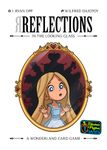
this episode of brains on games will preview a set collecting game with an Alice in Wonderland theme welcome to brains on games I'm Dr Brian McDonald in this episode we are going to talk about a game that's coming soon to Kickstarter a game that was sent to me not too long ago by the folks over at electric pepper games and it is a game called Reflections in the Looking Glass a game that fits in a little card size deck of card size tuck box Reflections in the Looking Glass is a two-player game but you can play it with kids age eight and up and games take anywhere from 10 minutes to half an hour let's take a deeper look at Reflections in the Looking Glass Reflections in the Looking Glass is a light set collecting card drafting game where what you're trying to do is wind up being the player who has the highest absolute score the score that's furthest away from zero either positive or negative it's the highest absolute score the plus or minus at the beginning doesn't matter and you you achieve that score by collecting sets of these cards you're going to start the game by drawing a card from a small deck that determines how the Tableau that you're choosing from is going to be laid out and it's always mirrored so you've got one set of cards on one side and then it's the as you shuffle them out they're
arranged in the same way on the other side but they're all dealt out at random I've set up a partial Tableau here just so that you can see how the game's going to look and then players take turns just choosing one of these cards from the Tableau on either side now it's arranged so that's some cards are facing me and some cards are facing my opponent but you can choose any card you want as long as it's a card that's not covered up so I couldn't take any of these ones from the middle row I can only take from the bottom row here two things I think make this game interesting one is the way that the scoring works so it is a game where you're collecting these sets of cards and if you have an even number of cards you're going to have either a plus or minus depending on whether you are collecting the moon cards or the sun cards you can see there's a moon a sun and a moon symbol on the corner of all of these so an even number of cards is going to give you a plus sign or the opposite if you're collecting the opposite color an odd number of cards will give you the opposite sign so really what you really want to do in this game is collect three of a kind if you get that's going to give you three points in either direction so you want the ones that are going towards the sets that you're collecting but if if you wind up getting stuck with four of a kind then your score drops down to one so from three to one so it's it is a game where you want triplets and you don't want to get that fourth card even though there's four of each character here in the deck so you start by laying
out the cards in this Tableau like I've done here and like I said this is only a partial Tableau there's going to be 12 cards left at the end each player gets four of those cards and they keep those a secret four cards just go back in the box they're not used so those are secret as well so you don't know what cards the other person has in their hand those cards are kept secret but they are used in scoring at the end so if I have say you can see there's two dodos here if I have a Dodo in my hand as well and I managed to collect both of those from the Tableau that's going to give me my three of a kind but I don't put this out in front of me until the end the other thing that makes it tricky so not only am I trying to collect probably three of a kind and not four of a kind and not two of a kind not only am I trying to collect a certain number of these I you know identical currents but whenever I choose a card my opponent is going to get a card as well that's the Looking Glass element here of this game so if I choose this dodo here that's going to go face up in front of me so the cards you've chosen are common knowledge it's only the four cards in your hand that are hidden so if I've chosen the dodo from here my opponent is going to get the card from the matching location on the other side so he's going to get the Mad Hatter if then he chooses his own dodo then I'm going to get the mock Turtle down here and now that's starting to uncover cards
that are in the middle so now you can take Tweedledum and Tweedle D or the walrus and the carpenter with a white rabbit or the Jabberwocky and you're just going back and forth trying to collect cards to create those sets once all the cards have been removed from the Tableau and they're placed out in front of you then you start counting up scores let me show you how that's done so I just grabbed a bunch of cards from the deck without really so I don't even know is this right number that you're going to have at the end of a game I just grab some of these things so it might not be the exact number of currents that you would expect to have but it's going to give you an idea of how scoring works so like I said three of a kind is what you're trying to get and if I've got three moons that's going to give me negative three points but here I've also got three sons and that's a plus three so these two groups of cards are going to cancel one another out so so far in this top row here with all these three of a kind I'm only going to get minus three points I've got a couple of pairs of sun cards and pairs of suns are going to give me a minus two so now I've got minus 2 minus 4 and this is going to give me a plus one so all together I'm going to have minus 3 minus five minus seven plus one is negative 6. so my total score is going to be six and then my opponent is going to count up theirs as well and like I said the sine plus or minus doesn't matter it's the absolute score the furthest from from zero is what you're trying to get and we found when we were playing the game we were
usually getting between 9 and 13 points because we'd get stuck with cards that we didn't want but often we we weren't trying to mess with one another as much as you might when you're actually playing the game so it allowed the score the each player to kind of run away a little bit in terms of their scoring now what skills are you working on when you play Reflections in the Looking Glass well it is a game where you're going to find your score bouncing around depending on how many of of each card you have in front of you and so there is a lot of mental math that you're doing it's it's only plus or minus up to three but once you collect multiple different sets of these cards you're going to be doing those calculations over and over again and adding and subtracting as you go now you can cancel out opposing sets but you're not going to I don't think you'll want to during the game organize them in a way that makes it easy to tell which ones are being canceled why because then your opponent can tell what it is that you're looking for more easily so you might not want to do that you've got you've got this handy cheat sheet and I like the way that this is organized because they have it set up so that you've got either the the the sets of cards that will give you pluses or minuses or it can be split up in a different way and it's the Suns and the moons instead so it just makes it easy for the players depending on how best they want to visualize those scores to figure out what their totals are going
to be so you're doing a lot of mental math and you're juggling those numbers in your mind at any time you're juggling information in memory we are going to be talking about working memory working memory is like the whiteboard in your mind that's where you hold information so you can work with it and anytime you're doing Mental Math that's a working memory exercise now there's a little tiny bit I would say of executive functioning skills here as well why is that well the executive functions are the abilities and behaviors and skills that you need to work towards a goal and you might find yourself saying well okay I've got two of these Jabberwocky cards and the third one is buried I want to work towards freeing that card up so that I can be the one who gets it and my opponent doesn't take it on me anytime you're planning like that and you're trying to tackle things in an organized way you are using those executive functioning skills so it is a game where working memory and mental math are important and there's a little bit of those executive functions and planning thrown in for good measure final thoughts though about Reflections in the Looking Glass well this is a a set collecting incurred drafting game where I think that the randomized layout of the cards in the deck does add to the replayability the patterns are going to be different each game and how things are laid out you might only have four cards that are open at the start or you
might have a lot more than that so it does I think make things interesting and then the scoring makes things interesting as well the way that you can stick a player with the card that they don't want well you're getting a card hopefully that's one that that's going to add some points for you I do think makes it fun game to play with the younger kids especially it's sort of a good introduction to these kinds of you know I think of Seven Wonders duel which would be the last game where things were laid out kind of in a pyramid and you were drafting those cards uh this is is a version of maybe that seven Wonder style of play but it's simplified and it's easily accessible I think plus you get that that math exercise that you don't get with as me with every single game that you play the other thing that I like I mean I like the theme of going back and forth and kind of forcing the other player to take cards they don't want but the artwork is great the art is a lot of fun on these cards I think it was fun that they included not just the Alice in Wonderland characters but we've got the Jabberwocky poem referenced as well and I do remember reading that when I was in school and enjoying it so uh you know you've got good artwork a good theme a little bit of of Randomness in terms of how the game is going to be laid out that can add to the replayability and then you've got that mirror image and the funny scoring so it's an hey this is an interesting game and I think a great introduction to kids for this sort of
set collecting card drafting uh those mechanics that you're going to be practicing when you play this game if there's a downside to Reflections in the Looking Glass it's the fact that this is a two-player game if both of my kids are home I can't play it with both of them so it's two players only there's no team version or solo mode that you can play for Reflections in the Looking Glass so you've got to have just one other opponent when you want to pull this thing out and play it but here we have a small box uh card game that's a good introduction I think to that drafting mechanic like I said thanks so much to the folks over at electric pepper games for sending this game my way I will put information about the kickstarter campaign in the show notes below the video if you have any questions or comments you can leave them in the comments section below the video or you can email me at Brian brainsongames.ca brainsonggames.ca is the website that's where future episodes will go the previous ones are up there already brains on games is the Twitter handle and the Facebook page and the Instagram feed so we're all over the place and if you enjoyed this video and you want to be notified of future ones you can head on over to YouTube and click that subscribe button thanks for joining me and hopefully I'll see you next time