Mathemagician’s Duel
Games in This Video
1 game is featured in this video — it unlocks as you watch.
Transcript
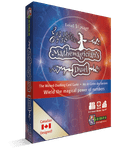
welcome to brains on games I'm dr. Brian McDonald in this episode we're going to be talking about a game that I think teachers are really going to like and appreciate as something that could be really helpful for them in their class and you know what for parents at home too it's a math game called Mathemagician z' dual this is a game that can be played with between two and three players it takes about 20 to 40 minutes to get through it and it's good for kids aged eight and older okay let's take a look at what goes into Mathemagician z' dual you can see right here we've got these cards with these characters on them there's four different characters in the game and it doesn't really matter which character you're just gonna draw them randomly really I think that they were put in here just for a varieties sake so we'll just focus on two of them because typically you'll be playing typically you'll be playing this as a two-player game now here these cards are spells you know the game is called mathematicians duel so there's math and there's magicians so you've got these little wizards on here and what you're trying to do is cast spells that will reduce your opponent's health from 20 down to zero with their magical strength they call it here in the game you can see that here minus 3 and minus 3 now you draw these spells and each player is going to have one on the board that they're working on completing and in order to complete a spell like this you've got to create a math equation they call it an incantation in the game
so incantation and equation combined a little portmanteau there I think that's the way that word is pronounced ok let's look over here so you've got this equal sign and what that means is that your equation has to equal that number and if you can get your equation to that number you can say my spell is cast what's interesting though is that your opponent is going to double check your work and if there's a mistake the spell comes back and hits you instead so you'll want to equal this number a 4 here you've got a 9 you have to have at least this many digits in that equation that you're working so that means that you've got to get to this 9 but you have to have at least three cards or more so you're drawing cards from two separate decks one has digits here you can see from well it goes all the way up to nine I just drew a couple out of the deck just so you can see what they're like the other has pluses and minuses so you're adding or subtracting in order to develop this equation what complicates things is that your opponent can put numbers or operational symbols in your equation too so you might be working up to get that number nine but they might put a minus sign and you needed a plus and so that's going to slow things down for you you're going to be keeping track and juggling a lot of numbers and doing a lot of
calculations you've got to get a total of nine or four or whatever the number is on your spell and that has to be done with a certain number of digits so you're constantly adding up your equation and it gets longer and longer you might have I know when I played it we had six seven numbers on this equation mostly because my son was trying really hard to mess up what I was trying to do and he wasn't as worried about his own numbers so he was always looking at my equation to see what the number was adding up to and he was also focused on these numbers here because he could cast his spell if the number of my equation got to the number that he needed all he had to do is claim it at that time so you're constantly adding and subtracting and trying to solve these equations so you're doing mental math and it's repeated you're going to do those over and over and over again to try and you can't just memorize the equation because because it's constantly changing and the totals that you need are also changing so you're doing mental math and what that's going to be working on is also developing your automatic calculation skills right you're going to start to memorize some of those combinations or start to see patterns in the numbers emerge but you're also juggling a lot of numbers you've got to remember the total of your spell the total of your opponent's spell the total of Urich in your opponent's equation those numbers are constantly changing and we've talked before about that special skill working memory working memory is
like the whiteboard in your mind where you keep information so that you can juggle it around and it's really important when you're doing mental math I mean you might be able to remember two or three or four numbers but as soon as you start to combine them or change them around somehow that's a working memory exercise so you're you're working on working memory and you're developing those automatic math calculation skills and this is why I thought it's it's a much more direct math game than most of the games that we've talked about you know pit crew is another one where you're doing some of that but the numbers aren't changing as much here you're always with pit crew you're working up to a total you're not adding and subtracting and changing things around as much as you are here in Mathemagician x' dual now a couple of days ago before I was lucky enough to go and get this amazing haircut I was also lucky enough to have a chance to speak with Scott Kelly who's a teacher and also one of the designers of mathematicians duel here's our interview to teach you is a midlife career change for me I just as firm aching games go on those I did end up working for a Games Workshop uh yeah mail-order warehouse retail in stores I wasn't in the studio designing blyde when we had our big event rather than just playing the main core games we had little side tables with games that people come and try out and I started fading for that so I take
the core properties and things that we already had as Games Workshop and I'd make like little mini games out of that or my favorites was squidge or I took Quidditch from Harry Potter and except instead of wizards and wishes on brooms it was goblins riding wolves and then squeeze these little creatures so hopping around instead of the balls by things like that so I create these games for those but again it was just for events so moving head again then after I left there I went into teaching and starting to think I nod wriggles Damon I enjoy into the classroom because a lot of kids who say eat games and they say all Monopoly sorry right and that is a very limited you know whatever's on that one shelf in Walmart or the Toys R Us but the ones are familiar with and once a while you get some of the students who are from families that did more gaming and they'd recognize Settlers of Catan things like that for example some of them are a couple students really being in a risk they played that at home so I had a better idea but I thought there's intrinsic value in pretty much any game as far as teaching the social skills how you communicate the turn-taking the negotiating how you're going to get along and play together even when you're playing competitively so I felt there's a lot of that and then just on top of that you've got your adding up your point values probability what's the chance this is
actually going to succeed if you're playing games that have died still you need just the right card that sort of thing so all those together and then once you throw in games that are actually themed on something historical for example then you have all that background in there as well and what do you think about games versus lectures or drills or exercises that most other teachers are doing it needs to be interesting and engaging that was my thought yes explicit instruction I believe does have to be there with mathematicians duel specifically I don't know if this is something you I might be pre-empting a question you had coming up later when I conceived of the idea it was wasn't so much about learning how to do the math but practicing the skills the reason I said do it this way always watching kids playing Pokemon uu I played magic when it first came out Magic the Gathering and my jealous Dory element only I kept those cards first edition the first set came home but the kids they know all the characters you know all the stats they know who all they all are and what they all do and there's great amount of memory power of brain power going into this yeah there isn't a lot of retention or thinking going on often in school because it's not interesting it doesn't me want to talk about you're telling us all these facts and making us learn these things is God like three days
later yet with these games this is their right they know all the stuff so I thought wanted take what makes that game fun but apply a topic to it that will have some long-term learning outside the game itself how do you see parents of teachers using this game as a way of helping their kids develop those skills I'm playing with students too watching them is really interesting if you're playing with them or watching two students play because it gives you a sense of where they're at what they know and how they do math all right this is really interesting well I think so you can judge but part of the game is you can pull cards out of your ink an equation that you've created right so you're building your equation you put down a number card and operations and offer a number an operator number operator until the value of that when read left to right equals the casting value on spell that you've chosen so I'm trying to hit maybe fifteen that's a number I'm trying to get so I return I'm playing my one card onto my inking equations but you can play on your opponent as well to mess them up so sometimes the inking creations getting kind of long as you're pouring ah take this take this and then throwing cards at you to prevent you from getting the number you want so you can take a card out you pull out a number and you can take with it the operator on either side left or the right now while I was sharing this in my class I was in a grade seven math class I just taken over
for there's a maternity leave so I came in in November they'd already done the integers unit right so I've done negative numbers and I watched a student playing and they had their ink ink reason laid out in front of them and it's fun to watch because once they get to realizing they can do that maneuver they will cover through their cars out front they'll cover two cards recalculate the entire line then look two more cards and recalculate the entire line and cover two more just to see what would happen if they took each of those out so you on their turn they've added their entire thing seven times just to see what the difference would be if they pulled one of those numbers out so this one student he there's a minus sign and then a two and he kind of pulls those I would did the line of his courage and he adds them up and he looks confused and it puts them back and he adds it up again and he pulls it out and he adds it up again and he goes if I take out - to my overall number gets bigger I say yes that happens any pauses he goes that's what you trying to tell us and I said so you you spent two weeks before I got here on subtracting and adding negative numbers and now you understand what happens you subtract a negative number and he goes well makes sense now right right but does he have this this really concrete example that laid out literally laid out in front of them that he's worked on on
his own and kind of come to this conclusion which was shown him before but at the time he wasn't really absorbing him so I think it's really neat to see what sort of conclusions they come to playing with the numbers I mean even just finding patterns where it'll be reading left to right now adding it up because they forgot what number is I add so on three plus two minus four plus four and little weight minus four plus four that doesn't make a difference than that cancels there so every time they added up after that they'll just skip over the plus four minus four to save themselves time because they recognize that it cancels them out and I don't ever recall telling any of the student playing and you have these because you can also see common errors right so if they're adding I'm at seven they had eight and they come up with sixteen and they do it over and over again then again we're noticing that there's a common error or something's stuck in their head that they're going to have to sort of unlearn or be shown explicitly again for them to really understand how that works so a teacher playing so a teacher or a parent who's playing with them can make those Corrections like immediately helped to prevent those things that the errors from becoming automatic because that's the problem in that situation the error is automatic now instead of getting the automatic correct calculation there you go right so especially if you're in a situation where things are getting marked wrong I like on a worksheet or something like
that you go oh it's wrong and a lot of students go oh well I didn't get that mark and they let me move on i'm not allowed a little ack and say where did i go wrong where as in the card game sort of forces them to look at it because your opponent is constantly checking because if you declare your spell is cast and you go oh I reach 15 before you can have a cache your opponents written into the rules gets to double-check and they have to make sure it's correct nago that's actually 16 I think you miscounted here and then you prove it to them the spell still gets cast but it backfires on the caster right so it is in your best interest to make sure that you've got that correct and it's always double-checked and that real-time feedback I thought also a benefit over a lot of the video apps and websites because I have observed a lot of them are pretty good they engage the kids that fun they're interesting they give them problems in ways that the kids want to solve them but I have observed a lot of guessing going on on some of them where students will just keep putting in numbers till they get it right right so you don't they don't get that feedback of why is that right why would these other ones wrong so the board gaming in general doing things with people physically in front of you playing a board game where that cooperation and agreement is necessary it doesn't allow you to sort of guess your way through until you get to the end claim that you're done so that's another reason that I like the board games in general as a is a method for practice and
engaging work yeah well and it is really engaging I think I played it with my son who's in university he's taking a biostatistics course right now and doing this basic addition and subtraction and he's like what a brain exercise I haven't done this kind of math in a long time he said we should I need a copy of this game at home so I can continue to practice now one of the things I wanted to make sure that I asked you because and as soon as I open up this box I had a question right away the box says level 1 yeah what does that mean we're currently working on level 2 right now play testing it level 2 includes multiplication and division yeah yeah in addition subtraction it includes multiplication division we're just working on the balance of numbers of cards the playtests I got so far indicate to me that I do need to add a few more operators and the third level will include the dish do some subtraction multiplcation and division from the first two plus all the numbers will be negative oh okay integers so even if you feel or once you feel that you know distraction I got it I'm pretty good at this now I need something a bit more challenge or the kids are your students right as they move up there's still something for them to do I continue to challenge them so you can use it at higher levels right you could see it with the multiplication division negative numbers in high schools right
it doesn't have to be limited to grades 4 to 6 or 8 or whatever because you feel a bit simple for what what they're doing but like you said we found that same thing your son said that be with the mix of reactions when we were play testing it could we go to game cafes and game conventions and we get people play and people either go okay I'll try it math is pretty simple and then they get in and go wow that is a bit more than I thought it would be but at the same time we have people going oh is it a math game I don't get a math like you're an adult subtraction you shouldn't be intimidated by this right there's another interesting phenomena I know that goes into law the math anxiety and I do write on the blog actually uh on our website a piece called why we're teaching kids to hate math or I kind of adjust my thoughts I didn't do a lot of research I linked a couple of different sites talk more about that is he's much more of an opinion piece but I thought I really felt I needed to speak out about being okay and socially acceptable to be to go I'm not really good at math oh yeah cuz that's hard and we're talking about addition subtraction my kind of side bar not my story bit there so we would get some of them convinced Alana's fun look this few little wizard characters on it I think okay I'll give it a try they sit down and they're really into it right they're at they're trying to figure out
what number would I need next should I use my this number to attack use that make it worse for you or is that going to help you and part way through or towards in the feedback we get was I didn't feel like I was doing math I forgot about the math part I was just playing a game that's exactly what we're going for right but to get over that initial oh it's got math it's an educational game for kids I get past that is we're finding a bit of a challenge but we're hoping that we can break a bit of that stigma however I have thought it may be an expansion where we throw in zeroes because that would really change the way the game plays and maybe parentheses where you can put one in your inking equation it means nothing but when you put that second one in then you got to calculate that part before everything else that might mix things up I think that'd be definitely an expansion for for the advanced but we'll test it we'll see how it goes there's a good way to increase math anxiety when people are playing it add parentheses perfect Scott thanks so much for talking to me today I really enjoyed your game and like I said my son says he wants to play it again just to prize those basic math skills also and that that is the intention all right it says eight plus on the box that doesn't mean eight there is eight plus but you can't put like a 299 because people living longer these days I don't exclude the centenarians let me ask one more
question before you go if people have some questions or if they want to find your game how can they track you down how can they track down mathematicians duel oh we're at some wwvs games CA all right if calm the B SMBs game stands for Bill and Scott so you know there is a link on our website so you can order it online through our website however right now what we're asking is if you're in the southern Ontario area maybe even further out if you go to the Mathemagician stool page specifically at the bottom of the page is a list of retail stores the carrier game we're not super huge being in all the big outlets yet but there are a few hobby stores and game stores that carry Mathemagician stool and really like you to have a look at them first because I'm doing this as a secondary job I I'm doing okay already anyway even through the situation what we have with kovat a lot of stuff is shutting down I'm able to work from home so I'm still working but a lot of these stores these little game shops this is all they do I'm not having all the traffic coming in for the past couple months is really difficult for them yeah so I'd really ask everyone to go and see because a lot of them are offering it online and they will deliver or ship so check with them if you can get it through them get it through them and if not you can come back to our website and we'll we'll ship one to you great idea look at your friendly local gaming store please yes
please support them all right thanks again Scott cool thank you very much so that's an overview of mathematicians duel a quick game that can be played in under forty minutes that requires automatic math calculation skills and working memory if you have any suggestions for me or questions about the games that we've talked about on the show you can find me at brian at brains on games dot CA brains on games dot CA is the website where all the previous episodes are posted and future episodes will be there too brains on games is the twitter handle and the Instagram handle and the Facebook page so we're all over the place and if you like this video and you want to get notifications when future videos are posted just head on over to youtube and click that subscribe button hopefully you like this one and hopefully we'll see you next time