The Palaces of Carrara 2nd ed - Gamefound Tutorial
Games in This Video
1 game is featured in this video — it unlocks as you watch.
Transcript
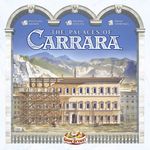
hi everyone my name is moani and i'm naveen from before you play and today we're going to be showing you how to play a game that is currently on kickstarter called the palaces of carrara second edition yes this one's designed by wolfgang kramer and michael kiesling they are a dynamic duo that makes a lot of different types of names and uh this one's published by game brewer like monique said this is the second edition that is currently on kickstarter the first edition came out uh roughly 10 years ago 2012 and so this is kind of the newer version of it and we are going to show you how it plays yeah so in this game we are going to be uh building up palaces in carrara we're going to be purchasing building blocks in order to exchange them for these building types to score in various ways and so today we are going to show you how to play these second edition rules with the first edition kind of prototype and so we do want to mention that everything you see here today is going to be prototype which means things are subject to change in the final copy but if you would like to know more about the game as well as the ongoing campaign we'll include a link to the kickstarter down below now before we get started if you do like these kind of videos and you want to see more of these in the future please consider subscribing and with that we are ready to begin so if you please direct your attention to the center of the table we are all set up here for a two-player game of the palaces of carrara second edition and so welcome to carrara just kind of give you the delay of the land in the main board here we have the six different cities where we are going to be building our um our building tiles i suppose and trying to score points for them uh over here we have the starting offer of the building tiles that we're trying to build as well as the wheel the infamous wheel yes the market we're going to be referring to in order to purchase more of these building blocks over here we have the royal court
board that is home to our six different scoring markers which we're going to be using to score at different points in the game and each player also has their own player board that's going to house our building tiles as well as our player screens because we're going to be keeping our building blocks as well as our money a secret that's right so essentially what we're going to be doing in this game is we're going to be trying to acquire these different building blocks of different colors at the right price so that we can buy buildings or make buildings and then put those buildings strategically in different cities so that we can score the most amount of points the game is played over several rounds and whoever has the most points at the end of the game wins now the game also comes with advanced rules but today we're going to be showing just the base rule set so that you have an idea as to how to play the game now like we're mentioning over the course of the game our goal is to build these building tiles onto our player board so we can score points but in order to do this we have to first buy building blocks and so at the start of the game we start with 20 florence which are the the currency in the game as well as two different colors of building blocks depending on your player turn order so i'm gonna be going first so i have two purple blocks and so over the course of the game players are going to be taking turns taking one action each until the end game trigger has been met and so there are four different types of actions that you can take and we're just going to go through each one of them starting with buying building blocks and so if you were to choose to buy blocks on your turn you're going to refer to this wheel here on the board at the start of the game the wheel is going to be seated with one of each color of block and so if you'll notice the wheel has these different wedges that also correspond to this outer ring and this outer ring dictates
the price of the different colors of building blocks and so if you'll notice at the start of the game they are quite expensive with the the white building block costing six coins it's the most expensive for each individual one in that wedge and so when taking this action before actually purchasing building blocks you can optionally rotate the wheel one tick clockwise and so this will change the price of the block through on that wedge it also changes the combination of colors that are available and so if you don't see the color of block that you need to buy that block is free now if you do choose to rotate the wheel before purchasing blocks you must also fill the wheel with more building blocks and so this is done by taking blocks out of the bag you basically just have to fill enough so that the total amount on the wheel adds up to 11 blocks so in this case we need to add five to this wedge that's right so i'm gonna go ahead and add these five right here so now we have a lot of white and red christmassy then you choose one section and you can buy as many blocks as you as you'd like to from that section so since it's my turn i would definitely be choosing this section to purchase blocks from and i'm gonna just go ahead and take this one for free because free is free and maybe i'll take the white yellow and blue for a grand total of 10 florins which of course i will pay back to the bank any blocks that get to the very end of the wheel here uh if you choose to rotate the wheel just go right back to the most expensive section yeah so it goes from least to most expensive real quick and so now that i have blocks the next type of action is building buildings and
so let's first take a look at the anatomy of a tile when looking at a tile you'll notice a few things the first thing is a building tile comes in two different color backgrounds and that determines the kind of landscape which is one of the future scoring conditions the orange ones are considered urban while the green ones are considered rural at the bottom you'll also notice the name of the tile and that's actually quite functional because that'll determine what type of building type it is when going into building scoring the bottom right symbol is something that we're going to ignore for this uh this version of the game it is used in the advanced game but the top right hand corner shows the building value and that's the amount of blocks that i need to turn in that's essentially the cost of the building tile so by taking the building a building action essentially what you're going to be doing is choosing one of the nine different tiles that you have out here and choosing which city it's going to go into the way you determine which city it'll be going into is based off of the little chart that we have on our player boards these cities basically tell you which color building blocks can be used in order to build that that said building in a particular city so in this particular case let's say i wanted to build porta here porta costs two building blocks and i happen to have these two building blocks a blue and a purple the only city where this can go into is larichi and i do apologize if i cannot pronounce this correctly because that is the only one that accepts purple blocks so what i would essentially do pay my two blocks back to the bag and i would place this porta tile right above here so that in the future i can use its benefits after that we
immediately refill the building from one of the face down specs and so going back to the wheel here if you'll notice the most expensive building blocks are going to be the yellow and the the white ones because if you look at the player board every city accepts yellow and white cubes and so that's going to be the easiest type the most versatile color to build with now when taking this action instead of building one of these building tiles here you can choose to build a monument and so there are six different monuments that are available they're all very expensive they all cost eight building blocks but when building these instead of just building them outright you can choose to upgrade a previously built building tile by just paying the difference right the nice thing about building monument tiles is when building them you can also take one of these eight improvement tiles and these are going to be great for when you go into scoring and so what they essentially do is say for example i claim this yellow improvement tile it covers up the corresponding multiplier on your player board and so for the yellow tile it's going to be pisa and so when we go to score it'll increase your multiplier for your rewards essentially yeah so in that case you went from 3x now to 4x gold every time you score that one yes and just like they're only one of each monuments for the different types of building types they're also only one of each type of improvements for the different cities on your board as well as the landscapes and that's essentially it for building building tiles before we continue to the next type of action i do want to mention that there is a little bit of an exchange system and so obviously not all building blocks are created equal in this game the color hierarchy is just
the order of the cities here with the purple being the lowest in the hierarchy if you ever need to pay a certain color building block that you don't have you can exchange two of the color below it and so if i really needed to pay a green building block i can exchange two blue for that one green now you cannot chain these exchanges which means at the start of my action i would have already had to have two blue building blocks in order to turn it in for a green i couldn't turn in two purple for a blue and then turn that in with the blue that i had yeah it's just one exchange each i guess and so now that we've bought building blocks we've built buildings how do we score right and so on your turn that is actually one of the four different types of actions you can take scoring and so on your turn if you're to choose to score the first thing that you do is you take this marker here because there's a little bit of a following mechanism in the game this marker will get returned to the royal board once it goes all the way back to your turn then you're gonna take one of your six scoring markers and you're going to place it in one of the different areas that you can score this section that you remove your scoring marker from just determines the bonus that you're going to get and it's going to be either three points or five coins and so since it's really early in the game i'm just gonna go ahead and take my marker from here gaining me five coins right away oops that's a ten that's not cheap so let's just fast forward a few rounds and say the table looks like this we each have built a few buildings yes and now i'm ready to score and so technically there are 14 different areas where you can score there are six main cities and again only one person can
score each city for the entire game there are also six different building types those are the the names that are on the actual tiles and those are present on your actual player board which means you can score those at any time there's no real competition for that as well as the two different types of landscapes which are also on your player board and again those are going to be the orange versus the green background and so say it's my turn and i want to score one of these cities because these are the ones that are the most competitive if you'll notice under each city there are these tile icons and that tells you essentially how many building tiles you need in that city in order to score it yes and so the only city that i think i am qualified for is pisa because it requires me to have two building tiles and that's exactly what i have so i'm gonna go ahead and put my scoring marker here in pisa and now nobody else is going to be allowed to score pizza for the rest of the game and then i add up the building values of all of my building tiles in pisa and multiply that by whatever the multiplier is in that column so right now i have a value two cathedral as well as a value one castello which means it's three building value times three coins i'm gonna get nine coins for scoring this and so going back to earlier when we talked about the improvement tiles that's why these are so great because they increase that multiplier for you and so if you look at the player boards you'll notice that some cities get your coins and some cities get you points so it really just depends on what you've been working towards now if i didn't want to score any of the main cities and instead i chose to score a building type then instead of placing my scoring marker here i would place it on my player board on the building type that i'd like to score and so looking at my
offering here it looks like i have two cathedrals and two castellos now say i wanted like a combination of coins and points then maybe i'd like to score my costellos so i'll go ahead and place my scoring marker right there on the costello section and then i would score all the castellos on my player board multiplying their building value by whatever the multiplier is below their column which means i can be scoring from multiple cities on my player board and so in this example it looks like i'm going to get three coins because i have that one building tile um value costello so one x times three as well as four points because of this two building tile value multiplied by the two-point multiplier in luca so you'd get four points and you would take three coins exactly and that's essentially how scoring works for all the different six building types landscapes can also be scored the same way at a multiplier of one point four rural tiles and one coin for urban tiles and that's essentially how scoring works now we did mention taking this token right and so the reason why you take this is because once my turn ends the next player also has the opportunity to score but if they choose to score they have to take their scoring marker from the section where i took mine from yes so i'm essentially pigeon pigeon holding all of my opponents into taking the same bonus that i took if on naveen's turn he chooses not to score that's fine the only thing is he would now remove his scoring marker from that section and place it into this big empty area here which means he is forfeiting this bonus for the rest of the game he can still score using the scoring marker but he just won't receive a bonus and then once it gets all the way back to my turn then i would just return this marker to the
top of the royal board here so that somebody else can take it in the future and of course there was four actions the last type is passing for to florence yes and so that is a nice way to gain some extra money if you need to buy additional building blocks right now i do want to mention that once you've used up all six of your scoring markers every time you build a new building you're gonna get victory points equal to whatever the building tile value is which means whatever the amount you paid and so that means you still have opportunities to score victory points once you've used up all your markers now you continue playing this way until the end game trigger has been met and that is when one person has used up all six of their scoring markers and there are no more tiles available in the building stack to replenish buildings on the board whoever triggered the end of the game gets five victory points and then they're done because everybody else gets one more turn and once the game ends everybody gets one point for every five coins left over and whoever has the most victory points wins and so that is how you play the base game of the palaces of carrara now as we were mentioning there are advanced rules that you can utilize and these rules have to do with the extra components namely decorations and statues that add for more interesting scoring when playing with these rules you're going to use the opposite side of the wheel that shows these decorations as well as the statues in the center as well as the opposite side of the the royal board over here and so as you can tell um each player also has two additional scoring markers to use and this side of the board also has two additional scoring locations for money scoring that you don't actually spend it just gives you a better multiplier for the end of the game now we're not going to go into the advanced rules specifically but just know that the statues as well as the decorations add for kind of a more robust well-rounded
experience yeah if you're looking for a more strategic game that's on top of an already strategic game then the advanced rules are the way to go like we mentioned this game is currently on kickstarter so there is a link to the campaign down below also if you have any questions about anything that you saw here feel free to leave those in the comments and we will try to get back to you as soon as possible and thank you so much for watching the video if you do like to see these kind of videos in the future please consider subscribing thank you bye you