DON'T BUY The Hunters A. D. 1492 2nd Edition and Borderlands Expansion Until You Watch This!
Games in This Video
2 games are featured in this video — they unlock as you watch.

Transcript
We just finished going through absolutely everything we could find on the Hunter AD 1492 second edition and the Borderlands expansion. We watched every piece of footage available, dug through campaign materials, community discussions, the works.
Yeah, and honestly, I'm equal parts intrigued and skeptical. This is a reprint campaign with a new expansion, which already raises questions. But the dark fantasy monster hunting vibe in Renaissance Europe, that's compelling,
right? So, the big question, should you back this thing or skip it entirely? Let's break it down because there's a lot to unpack here.
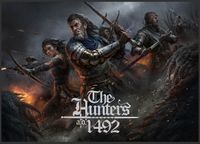
So, here's what we're dealing with. The Hunter AD 1492 is a 1 to four player cooperative campaign game designed by Matteas Albrich from Officina Monstrom. It's currently on Gamefound, already hit 319% of its 50,000 goal with over 900 backers. Sessions run about 90 minutes, rated ages 14 and up, but you'll need multiple sessions to complete a full campaign arc.
And the premise is genuinely cool. You're in post-apocalyptic Renaissance Europe, where this thing called the Mist rolled in 21 years ago and spawned a nightmarish creatures everywhere. You play as hunters, basically mercenaries leading caravans through mist covered territories, taking contracts to hunt monsters while racing a 60-day countdown to finish your main objective. The campaign promises hundreds of events, over 70 types of craftable equipment, character progression, tactical map-based combat. It sounds massive.
Now, before we get into the gameplay itself, let's talk about what you're actually backing here. This isn't just a new game. It's a second edition reprint plus a brand new expansion called Borderlands. The Hunter Pledge sits at €116 for the revised base game. The Emperor All-In is €31, which includes everything. base game, Borderlands expansion, another expansion called Wasserberg Dockers, two heroes packs, metal coins, playmat, the works.
But here's where it gets interesting. They're offering upgrade bundles specifically for first edition owners at 111 to €115. These include the new Borderlands expansion, plus replacement components for everything that changed between editions. The fact that upgrade packs exist tells you the first edition had problems that needed fixing.
Exactly. And they've got this fix pack for €1 that contains essential elements to fix first edition errors. So we're looking at a game that needed fixes significant enough to manufacture new component sets. Delivery is set for December 2026, so you're waiting about a year.
All right, so let's talk about how this thing actually plates because the mechanics are where it either works or falls apart. The game splits into two main phases. You've got the overworld exploration phase where you're moving your wagon token across a map of Renaissance Europe. Each move draws road event cards based on danger level. Locations marked with Roman numerals 1 through three determine how brutal your random encounters get. You visit towns to buy equipment, take side quests for cash and XP, and progress the main story through plot cards. There's this crafting system where you build gear from scavenged materials, upgrading your wagon to unlock better crafting stations. But, and this is critical, you have exactly 60 days to reach your final objective. Every move costs days. Every side quest costs days. Get knocked out and limp back to town to heal. More days you'll never get back.
Then you hit the tactical combat phase when you enter quest locations. Instead of modular tiles, they use a coilbound tome of maps. Basically, a spiralbound book of preprinted battle maps. You just flip to the right page based on your quest. It's genuinely clever for setup speed and gives that storybook feel.
Combat itself follows a structured sequence. First, you draw action cards to refill your hand to five. Each hero has a 20 card personal deck. You pick five to start each mission. Shuffle the other 15 and draw from that pool. Initiative is determined by your perception stat. Heroes get two actions per turn. Enemies get one action.
Here's the tactical meat. When you attack, you play an action card specifying the attack value, like attack two or attack three. Your weapon determines how many dice you roll and its range. You need to roll equal to or under your attack value on each die to score hits. Roll a one, that's a critical. The die explodes, and you roll another, potentially chaining multiple explosions. Roll a six, always a miss, no matter what. After rolling, your stat adds guaranteed hits, strength for melee, agility for ranged, knowledge for magic.
Now, there's also this morale system. You can spend morale to boost rolls after seeing results, increase stats for a single attack, or move extra spaces. But drop into negative morale and you suffer minus one to all your stats for the entire quest. Hit rock bottom and you lose health instead of morale. Enemy behavior uses AI cards. You draw one card per enemy group, and all enemies of that type follow the priority list top to bottom.
Character progression comes from XP earned by completing quests. You unlock equipment slots, improve attributes, purchase new cards for your action deck. From the footage we watched, the core loop functions smoothly when balanced. The dual use cards each has an action on top and a reaction on bottom create genuine handmanagement decisions.
Okay, let's talk about what actually works here. Because when this game hits its stride, there's genuinely compelling stuff. The thematic integration is really strong. That mistrouded Renaissance setting isn't just flavor text. It's baked into the design. The wagon-based exploration creates this traveling monster hunter vibe that feels distinct from static dungeon crawlers.
Yeah, and that coilbound map tome is legitimately clever. Setup becomes flip to page X instead of assembling tiles. It reinforces that storybook atmosphere while cutting down on fiddly overhead. When we were going through the materials, that stood out as a smart production choice.
Agreed. And the dualuse action cards are where the tactical depth lives. From the gameplay we watched, seeing players debate whether to use a card for its attack for action immediately versus holding it for its melee defense plus two reaction later. That's real tension. You can't do everything, so prioritization actually matters.
And the equipment customization system has serious depth. Over 70 different craftable equipment types with a physical shape matching system where tokens literally fit or don't fit into attachment slots based on embossed edges. The crafting progression, unlocking wagon upgrades to access better crafting stations for higher tier gear, creates a satisfying advancement arc. It's tactile and puzzle-like in a way that should feel rewarding. The cooperative scaling shows intentional design, too. Enemy spawn points on maps have these 2/3 pip indicators, determining which enemies appear based on player count. In the footage we saw at two hero play, four wolf spawns existed, but only two activated. That's conscious balancing, not just throwing the same encounter at every party size.
Can we also appreciate that the second edition changes at least acknowledge problems exist? They added natural regeneration, which directly addresses healing scarcity complaints. They reworked hero leveling and equipment requirements, suggesting they heard feedback about certain characters being unviable. Whether the fixes actually solve these problems is another question, but acknowledging them beats pretending everything was fine,
right? Which brings us to what doesn't work because there are some serious red flags here that we can't ignore.
The fundamental math breakdown is the big one. From the footage we analyzed, tutorial missions work beautifully. We watched a two hero party tackle wolves with three health and zero defense. Combat flowed smoothly, felt challenging but fair. Completed in two rounds with minor damage. It was tight and satisfying.
But then the difficulty cliff appears. What the available materials show is a dramatic spike immediately post tutorial. The first real combat throws four street thugs at you, five health each, two armor. Your heroes still have two attack dice hitting on target numbers two to three. Maybe a strength stat adding one or two guaranteed hits. Even with exploding dice on critical ones, the damage output cannot consistently penetrate two armor against five health targets before enemies shred your seven health heroes.
And character balance is broken. Seek Freed starts with only one attack die. Against armored enemies, he's statistically incapable of contributing meaningful damage. Community discussions identify him as essentially unplayable with players literally saying, "If you take him, you've already lost the campaign." That's not subjective difficulty preference. That's a character option that doesn't function.
Then there's the death spiral mechanics. Fail a quest and get knocked unconscious? You revive with one health. You must travel back to town costing days from your 60-day limit. Complete side quests to earn money for more days. Spend that money healing, then travel back to retry. One failed encounter cascades into campaign failure, not from repeated losses, but from time pressure created by a single setback.
From an extended playthrough, we observed an experienced player optimized everything from the start. Best characters focused on armor and damage output. The campaign still hit an unwinable wall against a single enemy with 10 health, three armor, and an ability having strength and agility. Despite setting unlimited traps to reduce the enemy to two remaining health, the party couldn't penetrate three armor with hald stats. Enemy killed both full health heroes. Campaign over.
And what does the second edition claim to fix? Hero leveling reworked. Equipment requirements adjusted. XP system changed. Natural regeneration added. That's it. No numerical specifics, no damage output examples, no before and after scenarios, just vague promises that things got better without demonstrating how or by how much.
The 60-day time limit creates this perverse situation where the game advertises many side quests and hundreds of events, but actually exploring that content means failing the time limit. Multiple sources describe the countdown as requiring you to already know exactly where to go. That suggests the design expects you to fail. Restart with meta knowledge and optimize the critical path. A campaign game that punishes exploration contradicts its own premise.
Dialogue choices lack actual consequences. From what we saw, the game presents multiple conversation options, but lets you select all of them sequentially. You just see text blocks in different order. The campaign promises difficult decisions. But if choices have no exclusivity, their cosmetic variety, not meaningful agency.
And here's the kicker. The Borderlands expansion that justifies this entire campaign. Not one second of gameplay footage exists. Zero. You're backing an expansion to a base game with severe documented balance issues where the expansion's mechanical contribution is completely unknown. Does it address base game problems? Does it add more content to an unstable foundation? Nobody knows because nobody's shown it.
So, where does this land for us? I'm putting this at 4.5 out of 10, and I'm being generous because the concept has merit.
Yeah, I'm right there with you. This rating reflects a game with genuinely compelling ideas. Dark fantasy setting, tactical dice combat with exploding crits, dual use cards, equipment crafting depth that collapses under documented balance failures. the second edition claims to fix without demonstrating how or by how much.
Breaking it down, concept and thematic execution, 7 out of 10. The Renaissance monster hunting premise and coilbound map presentation create strong atmosphere. First edition mechanical execution, two out of 10. We're talking documented reproducible failures showing unwininnable encounters, unplayable characters, death spiral, time pressure, fundamental balance collapse post tutorial.
Second edition unknown factor, question mark out of 10. They list changes but provide zero numerical specifics, no successful completion metrics, no demonstrated before and after comparisons. This isn't balance confirmed improved. It's balance improvements claimed without proof.
Why not lower? The tutorial footage demonstrates these core systems can function when properly tuned. The concept has genuine merit. Why not higher? Backing a 116 to 301 euro campaign where revisions are unspecified and the new expansion is undemonstrated. That's objectively high risk.
Our verdict? skip for new backers unless the campaign updates with detailed numerical patch notes, midto late campaign playthrough footage demonstrating revised balance, and Borderlands gameplay showing integration rather than compounding problems.
For first edition owners who already invested and enjoyed it despite flaws, the upgrade bundle at €115 offers expansion content plus fixes for what you already own. That's a conditional maybe if you have house rules that made first edition playable.
So, if you're wondering if this is for you, let's be real about who should even consider this. This is for experienced campaign gamers comfortable with house ruling games. People who enjoy high difficulty optimization required campaigns where meta knowledge from failed attempts is part of the experience. You need a dedicated group of three to four players who can commit to multi-session schedules. From what we observed, community reports say you cannot play with two hunters despite the tutorial working fine at that count. Players switching to three hero configurations found it more feasible. So solo players expecting to control one or two heroes, the evidence strongly suggests three plus required. The advertised one to four players is misleading if the lower end is structurally unbalanced.
Absolutely avoid this if you're a new or casual board gamer. This is not an entry point to campaign games. If you expect a balanced first playthrough experience without optimization guides, skip it. If you need concrete evidence of mechanical fixes before committing over €100, this isn't it.
If you're looking for alternatives, Gloom Haven: Jaws of the Lion delivers proven balance with similar tactical combat. Oath Sworn: Into the Deepwood offers narrative-driven monster hunting with thoroughly tested systems and no punishing time limits.
All right, here's the final word. The Hunter AD 1492 second edition exists in this credibility gap. First edition's documented problems aren't subjective. They're mathematical imbalances producing reproducible campaign ending failures. The second edition promises fixes without demonstrating them. The Borderlands expansion has zero footage. You're not backing this because it's good. You're gambling that vague promises solve specific problems. A campaign game that requires you to fail, memorize optimal paths, and restart multiple times while punishing exploration isn't challenging difficulty. It's structural hostility to the experience it advertises. Until proven otherwise, this remains an expensive promise backed by troubled history.
Thanks for hanging with us while we dug deep into this one. We're Board Game Critique and we'll catch you in the next