Brick and Mortar - Review & How to Play
Games in This Video
1 game is featured in this video — it unlocks as you watch.
Transcript
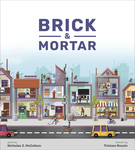
hey everyone board game brody here with meeple mountain avenais prototype copy of brick and mortar it's a new game coming from octo raft games in brick and mortar you will be owning stores trying to expand into various markets in the hopes to maximize profits build equity and of course undercutting the competition the market is ever so changing as players each can manipulate supply and demand here is the game all set up up here are all the store cards available for purchase here on the card lists the capacity of each item that the store can have at a time this being on the same shelf of the store or on any different shelves what i mean this is the capacity the total amount allowed in the store at one time when you buy items you will always place them on the top shelf as rounds go by the items will drop to lower shelves until they become expired and are removed from your store each door also has a purchase cost also a utility cost to keep it running and a point value each door is different it has its own modifier they give you a specific perk for owning that store and many of these occur during the sale phase of the game but check the icon listed on the store to know exactly when the modifier is
activated some of the modifiers also have an arrow indicating that the modifier is activated either before that step or after that step here on the board lists the different steps during the round each round is marked with this marker counting different months if this marker makes it through december then the game ends but it will most likely end before then because this marker here is set at 45 points and if anyone scores past that then it will also trigger the end of the game most likely in july or august the board will also show the demand here when players choose certain demand cards to place on there and the supply is shown below when players choose cards to add specific items to the supply section of the board and the supply is shown below when players choose cards to add specific items into the supply section on the board taking the cubes from the side here and placing them on the board you can also see each item's prices but we will get more into that here in a bit you will want to make as much profit as you can so that you can purchase points turn order can also be important in the game and is changed when a player moves ahead of another player on the point track or if you move back you will then move down on the turn order position players can always take debt tokens if they need extra money and you won't be able to ever pay them back but they will
affect your score at the end of the game giving you negative points each player will have a building board a bidding dial used to buy and sell when there's competition a player screen to hide your dial when choosing each player starts with fifteen dollars five market cards and four store cards that will be used and replenished as you use them let's go through the steps of each round of the game so before the first round you will need to draft your starting hand of store cards you will then choose one of the four to start with pass the three to your left taking three from your right and deciding which of one of those to keep you will do this until you have three store cards total and the last one gets discarded if you are new to the game they have a recommended starting hand for players to have before the draft but as you learn and understand the game you will just draft your randomly dealt out hand the game begins with the building phase and the first building phase is a little bit different as each player will choose a starting store placing it on their leftmost slot in their building you will fill in the store with the maximum capacity by adding as many type of resources as the store can hold placing them all on the top shelf next you will move to the advertisement phase during this phase each player will look at their five market cards and choose two to play that will fill in information of supply
and demand you can choose one of each or two of the same but remember that you are trying to make things better off for yourself and harder for your competition these cards are placed face down behind your player screen until everyone is done selecting their two cards players will then draw two cards from the market card deck so that they have again five cards for the next round the supply phase is next leaving all the demand cards face down the supply cards will be flipped over showing the depicted items to load onto the supply part of the board each image of the card represents a cube of that type and it's played on the matching loading dock on the board players will then stock their stores beginning with the food and moving across the board players will need to determine if there is a constraint or no constraint if there is a constraint that means that there is not enough of that item type to accommodate everyone's capacity if there is no constraint because there are more items in the market than all the other players total available capacity or only one player can stock that type of item then players will pay the minimum cost to stock as many items of that type as they would like if there is a supply constraint then players must bid to purchase the items in the market players will simultaneously and secretly bid using their bidding dial
on what price they want to purchase this item for with the minimum price appearing on the main board you don't need to place a quantity at this time once all players have bid the dials are all flipped over and the player with the highest bid will then purchase as many items of that type as they would like at their bid price then the player with the next highest bid will go next and so on until you get to the player with the lowest number a bid if there is a tie the player further back of the turn order will go first players will stock their items adding them on top of their shelves in their stores where the items are allowed any items not purchased will be left for the next round players move to the sale phase all the demand cards will be flipped over and placed out so everyone can see them on the board each image on the cards represents demand for one cube of that item type items are sold one type at a time beginning with food and continuing across the board players will also need to evaluate if there is a constraint or not constraint exists if more than one player can sell an item of a particular type and there is not enough cubes on the demand card for everyone to sell all of their items if no constraint then the players can sell as many items as they wish at the maximum price located on the main board if there is a demand constraint then players will simultaneously and secretly
bid with their bidding dials this time players will need to set a price and a quantity once all players have bid everyone bidding flips over their dials and the player with the lowest bid must sell their selected quantity at their bid price again ties will go to the player furthest back in turn order players will continue to sell items until all demand cards are full or players have sold their selected quantities of items if however a player isn't able to sell their selected quantities because the demand card is full there is a surplus and these surplus items are discarded after the cell phase all the cubes on the demand cards and fulfillment centers are returned to the supply and the demand cards are discarded players move to the inventory phase where players age their items by simultaneously moving items down one shelf level any items that fall off the shelf is expired and discarded back into the supply some stores might have effects when its items are expired as well utility phase occurs next players must simultaneously pay their utility bill by paying the cost of each of their active stores listed on the top right of each store card players who cannot pay this bill will need to take a debt token this provides two dollars at the cost of losing one point at the end of the game the investment phase is the last in the round you may buy or sell points during
this phase to buy you will visit the chart showing the price you can buy a maximum of 10 points per round and the more points that you buy the more expensive they become so a good idea is to buy smaller quantities more frequently pay the bank the listed price and move your point marker up on the track if you happen to pass another player on that track you will move yourself ahead of them on the turn order track you might need some extra money at times in which you are able to sell points all points will give you three dollars a piece with no limit on how many you can sell when moving yourself back on the point track moving yourself behind another player then you will move your marker on the turn order track placing it behind that player the round is now over and you will be able to move the marker to the next month starting a new round this time during the building phase you'll perform this phase more normally players can buy one store per month and in turn order players will perform a store action either buying a store from their hand of cards or bidding on a public store when buying a card from your hand you will pay its cost to place it on the left most open area on your player board if instead you want to store in the public market then you will need to bid for it the player first in turn order will pick a store to bid on they will have to start with the listed minimum price shown on the store for
their bid amount or higher each player who has not yet bought a store will either outbid that player with a higher offer or pass once a player passes they can no longer bid for that store the highest bidder must pay the bid price to the bank and take the store placing it on their left most available spot on their board if the player who started the bid wins then the next player in player order who hasn't performed a store action goes next if the starting bidder didn't win then they will again choose another store to bid on or build one from their hand this will occur with each player taking one store action of some type when building your third store you will also be unlocking an added bonus of discarding one to all of your market cards to draw replacements during the advertisement phase the fourth store bonus will let you play an additional market card during the advertisement phase players will continue going through each phase round by round until a player passes 45 points or the round marker gets to december at that point the game ends finishing the current round players will add points listed on the bottom left of their stores and subtract points from the empty slots on their building boards finally subtract one point for each debt token that you have whoever scores the most points at this point wins the game brick and mortar offers
players a game of numbers to achieve the most profits you need to know your costs for the store your utilities and for the merchandise itself all of these costs will be calculated in your head one way or another to figure out if the store needs to perhaps go or if you need to focus on it a bit more possibly getting more merchandise on the shelf or opening up certain abilities to score you more points so the first thing you need to figure out is the best stores to utilize to bring in the most dough some stores have added benefits some that are used just for that one store and sometimes used for all of your stores always check on the top left to see what added benefits that store has check out the type of merchandise that the store will hold with its maximum number being listed on the top there is also a lot to think about when picking a store and the synergy between your stores will also be a factor to consider so plan the best that you can with the stores that work with your plan and all work together besides building stores advertising is another step to get you that moolah each player gets to pick two of these cards focusing on supplies so that you can actually get specific goods inside your stores or demand so that you can sell items on your shelves especially those bottom shelves or you can even do one of each keep in mind that other players might also play cards that you can benefit from but again
there's no guarantee it's always interesting to see how these cards play out as everyone just has that little bit of control on these things so when the big picture happens sometimes it's a big surprise or other times things might just set up perfectly as planned in addition to being a game of numbers or math well it's not too much math but it's also a game of grabbing what you need or that you can benefit from and using these good to sell at some time to make a profit hurry and sell those groceries before they go bad ultimately if you can manage your stores you'll be able to use your profits to buy points the player who best manages their store every round as buying smaller quantities of points more often will pay off in the long run so clean up your stores pay your utility bills and open your doors in brick and mortar by octa-raf games again this is board game brody i hope you enjoyed this video stick around and check out some other board game reviews to see what you might want to get to the table