Ace of Spades vs. Drawing Dead | Which Solo Poker Game Is Better?
Games in This Video
2 games are featured in this video — they unlock as you watch.

Transcript
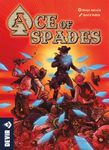
Hey everyone. This is SetaGames. Today we are doing something a little different because I want to compare two solo games that have quite a few things in common, but also offer very different experiences. Those games are Ace of Spades, published by Devolver Games, and Drawing Dead, published by Best With One Games as part of the solo game of the month series. Both games use poker hands to defeat enemies. Both have a progression of increasingly difficult encounters and both offer different abilities to help you along the way. But after playing both, I realized that they take quite different approaches to the whole concept. And while I think both games have their strength, I personally enjoyed one of them quite a bit more.
Now, this doesn't necessarily mean that one game is objectively better than the other. I think they simply appeal to slightly different kinds of players. So let's take a look at what each game does, where I think they succeed, and where I see some weaknesses, and which one I would recommend depending on what you're looking for. But before we get started, as usual, grab yourself a cup of tea and let's do this. All right. There we go. All right. So let's start with Ace of Spades. And the first thing I want to emphasize is that Ace of Spades is a perfectly fine game. In fact, I think its biggest strength is just how streamlined it is. The rules are very straightforward. The learning process is quick and if you're already familiar with poker, you will understand the basic gameplay almost immediately.
Essentially, play poker hands to deal damage to enemies. You're fighting your way through 12 enemies of increasing difficulty, trying to deal enough damage to defeat each one with a limited number of poker hands. And that's basically the foundation of the entire game. The rules are easy to understand. There isn't much upkeep and you can get started without spending a lot of time reading through the rule book. I think that's really nice because if you're looking for something you can just put on the table and play. But there's also a downside to the to the simplicity, at least for me, because while the game is easy to play, there isn't a whole lot of room for manipulating your cards. Of course, you do get abilities that can help you out, especially these temporary abilities here, but most of the time you're still largely dependent on the cards you draw. You can discard and draw new cards. That is possible, but even then you could just draw bad cards. And that makes the game feel quite luck driven to me. You can make tactical decisions and using your abilities at the right moment can certainly make a difference, but I often found myself wishing I had more options to influence the outcome.
Now, defeating enemies does give you additional abilities. Most enemies provide temporary abilities that you can use once, while certain bosses give you more powerful permanent abilities. For example, this one here would let me add or subtract two points of value two from one of the hands in cards in the hand you play this turn. So I could maybe play my cards here in order to get like something that I can play. Or the club's cards in the hand you play, which would be no none in this hand here, are considered to be part of the spade suit that could help if I wanted to, for example, have a flush or something. Each third enemy, if I'm not mistaken, also gives you a permanent ability because the temporary ones, they are gone, they are discarded after using having used them once. The permanent abilities, they stay.
And I do like those permanent abilities here. They can make a real difference, especially towards the end of a run. But here's the thing. You don't really build your own character in Ace of Spades. The enemies are selected randomly at the beginning of the game and the abilities you receive depend on which enemies you defeat. So while everyone can give you different combinations of abilities, you have fairly little control over the direction which your character develops. You can't deliberately work towards a particular build or choose a specific strategy and develop your abilities around it. And that was something I was really missing. The abilities add some variety, absolutely. But for me, the overall experience still felt quite similar from one run to the next. I was playing poker hands, defeating enemies, collecting abilities, and moving on to the next encounter.
And I wanted a little bit more than that. Now, one comparison I've seen quite a bit is between Ace of Spades and the video game Ballatro. And I have to say, I don't entirely understand that comparison. Yes, both games use poker hands, and in both games you're trying to reach a particular threshold with a limited number of hands. And also, you can discard and draw new cards. In Ballatro, that threshold is a score threshold. In Ace of Spades, you're trying to deal enough damage to defeat an enemy. So, sure, there are similarities. But for me, the most interesting thing about Ballatro isn't simply playing poker. It's building combinations of effects through jokers, planet cards, and all the other ways you can modify your run. You can develop a strategy, strengthen particular combinations, and create some really interesting synergies.
And that's precisely what I was hoping to find in Ace of Spades. But it doesn't really offer that kind of player-directed development. Now, that's not necessarily a problem with the game itself. It 's more a matter of expectations. Because if you're simply looking for a streamlined, poker-based boss battler, I think Ace of Spades does a good job. It just wasn't quite the experience I was hoping for. And that brings me to Drawing Dead. Now, Drawing Dead is definitely the less streamlined game of the two. There are more rules to learn, more things to keep track of, and more decisions to make. But I wouldn't call it overly complex. The rule book is very good, and I had no major problems learning the game at all. That said, I do think it helps if you already have some experience with solo games or card games in general. The learning curve is a little bit steeper than in Ace of Spades, but in my opinion, the additional complexity is absolutely worth it. And there are several reasons for that.
First of all, in Drawing Dead, you actually choose a character. Each character has different abilities, and those abilities can significantly influence how you approach the game. You also have the opportunity to upgrade your character twice during your run. And here's an important difference compared to Ace of Spades, you get to choose which abilities you want to improve. So you have much more control over how your character develops. I really like that because it means I'm not just reacting to whatever reward the game happens to give me, which is fine, but it's not quite what I'm looking for. I can actually make decisions about my character and work towards something. The gameplay itself also works quite differently. Instead of simply trying to form poker hands from your own cards, you have a river of six cards in front of you. On your turn, you draw three additional cards and each of them has a different job. So one card goes into the river, giving you seven cards to work with. Another card can be used for its effect, allowing you to manipulate the river or the hand or the bank in different ways. And the third card can either help you unlock a gate, which is necessary to progress towards the three bosses, or go into your bank for later use. I think that's a really interesting system because suddenly your cards aren't just cards you use to make poker hands, they're also a resource you have to manage.
Do you want to improve your current situation? Do you want to save something for later? Or do you want to make progress towards unlocking the next boss? Those decisions matter and you have to make them every turn. Another thing I really like is that drawing dead doesn't always require you to make complete five-card poker hands. For example, you can play a flush or a straight using only three cards or four cards or five cards. Obviously, a five-card combination is stronger than a three-card one, but you see all of them here on your skill card. But even if you can't make the best possible hand, you still might be able to do something useful with what you have. And I think that makes a huge difference. It takes getting used to if you're used to playing poker that you can only like have a three-card hand, but I mean it works and it really is good for mitigating here. You aren't always stuck hoping to draw exactly the cards you need. Sometimes you can make progress with weaker combinations and sometimes that's all you need. I really appreciate that flexibility. And it also makes the gameplay feel quite different from traditional poker because you're only using the cards that are actually part of the combination you're playing.
Then there's the bank. You can store up to three cards there. I usually have them down here, which means you can save useful cards for future turns. And you can exchange those cards with your hand by taking one of them in your hand and discarding the other one from the game. That's a really simple idea, but it gives you another way to plan ahead and influence your future options. And then there are the different card effects. You can manipulate values, exchange suits, exchange cards, get cards back from the lost pile into your discard pile, and generally try to improve the combinations available in the river. In order to mark all of that, you have these handy tokens here. You have tokens for suit in case you want to change you can change a suit. You can reduce numbers by plus one or like reduce them by minus one or increase them by plus one. And then of course you also also have like the damage counters.
And that is like really really useful. Of course, none of this means that luck disappears completely. You're still drawing cards. And sometimes the game simply won't give you exactly what you need. But I feel that I have far more opportunities to do something about an unfavorable situation. And that's what I like. There's another interesting element here, and that is how the game handles your cards. Cards that you actually use for your poker hands go into the discard pile, which can eventually be shuffled back into your deck. But cards that you don't use go into a lost pile. And those cards are essentially gone. Gone from the game completely unless you have effects that let you recover them by putting them back into the discard pile. Usually those are random cards. But there are quite a lot of effects that let you do that which is like the recycle effect here. So you're not just thinking about which poker hand you can make right now. You're also thinking about how many cards you're losing along the way and how that affects the rest of your game. And that's important because if you run off out of cards, you lose. I really like that tension. It adds another layer of decision making without making the overall game excessively complicated. You just need to memorize like a few of these keywords, and there aren't that many. Also, you have all these keywords explained in the rule book, and also there is a player aid that lists all of the keywords. So there's no reason to learn that if you just have the card right next to you. So let's go back to a higher level and compare both games directly. So looking at both games side by side, I think the main difference is pretty clear. Ace of Spades is the most streamlined game.
Drawing Dead is the more tactical one. Ace of Spades is easier to learn, quicker to get started, and has less rules overhead. You play fairly traditional poker hands, defeat enemies, and gain abilities along the way. And if that's what you're looking for, I think it works quite well. But because the options are more limited, the game also feels more dependent on luck. Drawing Dead on the other hand gives you more decisions to make. You choose your character, you can upgrade specific abilities, you can manipulate the river, save cards in your bank, and decide how to balance immediate progress with preserving your deck. There's simply more going on. But what I find particularly interesting is the relationship between complexity and depth. Yes, Drawing Dead has more rules, but I think the additional depth you get from those rules is considerably greater than the amount of extra effort required to learn and manage the game. And that, for me, is one of Drawing Dead's greatest strength. Now, in terms of playing time, I don't think there's a huge difference either. For me, Ace of Spades takes somewhere around 45 minutes to an hour.
Drawing Dead might take around an hour to an hour and 15 minutes, depending on how quickly you make your decisions. So yes, Drawing Dead can take a little longer. But we're not talking about a game that suddenly takes twice as long or requires significantly more preparation. And personally, I'm very happy to spend those additional minutes if it means I have more interesting decisions to make. So which of these two games would I recommend? Well, I think that depends what you're looking for. If you want a more simple, streamlined poker battler that you can learn quickly and play without having to think about too many additional systems, I think Ace of Spades is a good choice. And I can absolutely understand why people enjoy it. Sometimes you just want to play a game without having to manage lots of abilities, effects, and resources. If you want to put something on the table, play some poker hands, defeat a few enemies, and have a good time, and that is perfectly fine. But if you're looking for more tactical depth, more opportunities to influence your cards, and more control over how your character develops, I would definitely recommend Drawing Dead.
For me, that's simply the more interesting game. I like being able to manipulate my cards. I like having different characters with different abilities. I like being able to make decisions about my upgrades and having to balance the cards I'm using with the cards I'm losing. And I like that a game doesn't always leave me at the mercy of my next random draw. That's something I value quite a bit in solo games. So, personally, Drawing Dead is the winner for me. Not because Ace of Spades is a bad game, I don't think it is, but Drawing Dead offers much more of what I'm looking for in this kind of game. And honestly, considering that the additional rules overhead is still quite manageable, I think it strikes a much better balance between complexity, depth, and player agency.
So, all in all, I think both games are worth considering if you enjoy poker-based solo games. Ace of Spades offers a straightforward and accessible experience, while Drawing Dead gives you a deeper or more flexible tactical puzzle. And I think that's really what the choice comes down to. Do you want something streamlined that you can just sit down and play, or do you want something with a bit more complexity, but also more meaningful decisions and more control? For me, it's definitely the latter. But I'm really curious to hear what you think. Have you played Ace of Spades, Drawing Dead, or perhaps even both? Which one do you prefer, and why? Let me know in the comments below because I'd love to hear your thoughts on these two games. And with that, we've reached the end of today's comparison.
Thank you so much for watching, for sticking to the very end of the video. As usual, my thanks goes out to all of you. And a special shout out to my generous patrons. The biggest thanks go to for supporting me at the highest tier. I truly appreciate that. You can support me by watching, liking, commenting on my videos, subscribing to my channel, supporting me on Patreon, and joining my Discord server to hang out with me and my amazing community. All right. Thank you so much for watching. I will see you in the very next video or on my Discord server. Take care everyone. Stay safe and cheers.