Hidden Gem Board Games

Transcript
Hey everybody, welcome back to the channel. Today we'll be diving into one of my newest favorite game publishers, and that is Yao Fish Games all the way from China. Over the past few years, I've spent quite a bit of time exploring their catalog, and I've honestly been having such a wonderful time with their games. I really enjoy their selection of titles, the gorgeous artwork, and the overall presentation and packaging. They've become one of those publishers that I genuinely look forward to following, and they've quickly earned a place on my list of hidden gem publishers. Yao Fish Games mainly focuses on family games, children's games, and light strategy titles. Their catalog includes many games inspired by Chinese culture, while others feature fun economic themes, all designed to bring people together around the table. Many of their published games come from iconic designers such as Reiner Knizia, along with several other well-known German game designers. While they release refreshed editions of older titles, they also continue to publish their own original games. So today, I'll be featuring 10 games from Yao Fish Games, and throughout the video, I'll also be sharing an exclusive interview with their CEO.
Before we dive in, I'd just like to mention that I've already covered three of Yao Fish Games titles here on the channel. So if you'd like to check out their edition of Samurai alongside a side-by-side comparison with the original, their release of Jumbo with another side-by-side comparison, or their edition of Pack and Stack, I'll leave the links to all three videos down in the description below. By the way, they're all fantastic games. Now let's take a look at seven games that I've never featured on the channel before. To kick things off, let's start with Chaos Stew of the Spring and Autumn Period. Chaos, Conquest and Cunning. In a game full of hidden information, how much can you really trust what you Chaotic Stew of the Spring and Autumn Period is a family game featuring various mechanics, such as bidding, betting, and bluffing, deduction, hand management, memory, and simultaneous action selection. Designed by Reiner Knizia, the game was originally published by Piatnik in 2005 under the name Banküberfall and later became more widely known as Grave Diggers. Over the years, it has seen multiple editions, including the second edition of the Chinese version published by Yau Fish Games in 2025.
The game is set during ancient China Spring and Autumn Period, where players take on the roles of the five Hegemons, powerful rulers competing for dominance. Each player aims to expand their influence by conquering cities and building the largest army. At the start of the game, each player receives a nation screen, a number of troops, and a hand of cards. Throughout the game, players place cards face down in front of different nations, look at hidden information, reveal cards, and attempt to conquer locations. Gameplay is driven by a shared set of seven action cards. Each round, one action is revealed at a time, allowing players to perform actions, such as placing cards, peeking at cards, flipping them face up, or initiating a conquest. Once all actions have been revealed, they are shuffled and used again in subsequent rounds. When a conquest occurs, players participate in a blind auction by secretly committing any number of troops and revealing them simultaneously.
Afterward, the cards at the contested location are revealed, and any rewards are distributed. Unlike typical auctions, rewards are given starting with the player who committed the fewest troops, followed by next lowest, and so on. If there are not enough rewards to distribute, some players may receive nothing. Special character cards can affect how conquests are resolved. These include critics, beauties, traders, and lobbyists, each introducing different effects that can alter outcomes or change how rewards are distributed. The game continues until the draw deck is depleted and a player has no cards remaining in hand. A final round of conquest is then resolved for any remaining locations. The player with the largest army at the end of the game wins.
I really enjoy playing ChaoticS II: The Spring and Autumn Period. There's a lot going on in the game and I really like how everything comes together once it gets going. A big part of that is the hidden information. What I enjoy most is how you can still influence the board despite all that uncertainty. Placing cards in the right spots, setting things up for later, and quietly shaping what a location might become feels really satisfying when it works. I also really like how the spoils are distributed. Giving rewards from the lowest bidder to the highest is such a cool twist. What I really enjoy about this edition though is the theme. There is a lot of history baked into it and it actually comes through in the cards and characters. It made the game more interesting for me beyond just the gameplay.
Overall, ChaoticS II: The Spring and Autumn Period is a neat game that I enjoy coming back to from time to time. It doesn't always hit the same way every play-through, but when it does, it creates some really fun and memorable moments. Out of all the versions, this one stands out to me the most because of its theme. I also asked Susie Wang, the CEO of Gameland Brand Business, a few questions about the company. Here's what they had to say. When it comes to working with designers, do you primarily seek out games for licensing and localization or can designers also pitch their original ideas directly to you? If you'd like to read the full unedited interview, I'll leave a link to it on my BGG blog in the description below.
Next up, we have
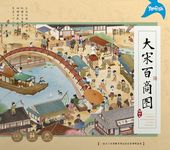
A Dream of Splendor in Song Dynasty, a relaxing city builder worth discovering. Sometimes a game catches your attention long before the first turn even begins. A Dream of Splendor in Song Dynasty was one of those games for me. A Dream of Splendor in Song Dynasty is a family weight city building and economic game featuring mechanics such as deck building, events, income, increasing the value of unchosen resources, multi-use cards, open drafting, and race. In this game, players are transported back in time to the Song Dynasty,
a remarkable period in Chinese history, often regarded as a golden age of technological innovation, economic prosperity, and cultural achievement. Each player takes on the role of the owner of a small street located on the edge of the bustling marketplace in Bianjing, the capital of the Song Dynasty, known today as Kaifeng in Henan province, one of China's eight ancient capitals. A Dream of Splendor in Song Dynasty is essentially a city builder, deck builder, and engine builder. The objective is simple, and that is to be the first player to construct eight shops while accumulating at least 50 taels. I have to say I was pretty much blown away by the entire presentation of this game. The packaging, artwork, and components are absolutely gorgeous.
There is so much attention to detail throughout the entire production, and it really shows. Even the insides of the little shop models have artwork printed inside of them. It's one of those games where you can't help but admire the production every time you bring it to the table. Don't be daunted by the size of the game box. While it does compare in size to one of Eagle-Gryphon Games' deluxe editions. The rules themselves are actually very straightforward and easy to learn. This is very much a family weight game that's accessible while still providing plenty of meaningful decisions.
The gameplay itself is very fast-paced with minimal player interaction. Normally, I tend to enjoy games with a little more interaction between players, but every now and then it's nice to sit back and enjoy a game that's simply relaxing. This is one of those comfort games for me. While you are racing to construct eight shop models and accumulate 50 tiles before everyone else, I often found myself simply appreciating the beautiful production, looking over my growing street of shops, admiring the artwork, and trying to figure out the most efficient combinations to maximize my income from every customer. I also really enjoyed the customer selection. I liked having the freedom to plan ahead based on the icons shown on each customer card. Some customers allow you to draw more menu cards, while others visit more types of shops, rewarding a well-developed engine.
Deciding which customers to pursue and which shops to construct gives the game a nice amount of planning without becoming overwhelming. Overall, A Dream of Splendor in Song Dynasty was a wonderful surprise. If you enjoy the city building aspect of Machi Koro, the race-like feel of Jambo as players work toward a monetary goal, or like deck builders and engine builders wrapped inside a relaxed city building game, then this is definitely one worth checking out. I found it to be a thoroughly enjoyable gateway game that brings all of those mechanics together in a laid-back, beautiful, and genuinely satisfying way. What do you look for in a game before deciding to publish it? Next up, we have Animal Connect, a small card game with big charm.
A table full of colorful animals, simple rules, and a race to empty your hand. Big Five or Animal Connect offers a surprisingly engaging puzzle in a small package. Big Five is a card game featuring hand management and pattern building mechanics designed by the renowned game designer Reiner Knizia. It was originally published by Amigo in 2010.
In 2022, Yaofish Games released their own version titled Animal Connect. In this content, I'll be focusing on the Yaofish Games edition. At its core, Big Five is a race to shed your cards. Players are trying to be the first to empty both their hand and their personal deck. The game consists of 100 animal cards featuring five different animals across five different background colors,
with each combination appearing multiple times. At the start of the game, the cards are shuffled and distributed as evenly as possible among the players, with one card placed face up on the table to begin play. Each player then draws five cards from their personal deck to form their starting hand. On a player's turn, they must either play cards to the table or exchange cards from their hand with their deck. To play cards, the active player must expand an existing group of animals already in play. Patterns can be formed in two ways, either by matching the same animal in different background colors or by playing different animals that share the same background color. Each group can contain up to five cards. Adding the fourth card allows the players to discard one card from their hand or deck as a bonus.
While completing a group with the fifth card allows them to discard two. At the end of their turn, players draw back up to five cards if possible. Alternatively, players may choose to exchange cards by swapping cards from their hand with new ones drawn from their personal deck, returning the exchanged cards to the bottom of their deck. The game continues until a player successfully plays all cards from their hand and deck, claiming victory. For those who prefer multiple rounds, the game can also be played over several rounds with the players scoring negative points based on the number of cards remaining.
The player with the lowest total score at the end wins. Big Five or Animal Connect is a neat little card game that works especially well with younger gamers, serving as a great introduction to pattern building mechanics. It's quick to play, easy to learn, and remains engaging throughout. The game scales nicely across all player counts, making it a flexible option for different groups. My only real gripe is that it can take quite a bit of table space as the patterns grow. Overall, Animal Connect or Big Five is a charming card game that works wonderfully as an introduction to pattern building for younger players, while still offering enough engagement for adults. What do you hope players take away from your games when they play them?
If you've been enjoying these game selections so far, don't forget to like the video and subscribe to the channel for more hidden gems just like these. Next up, we have Legends of the Three Kingdoms. Reliving Romance of the Three Kingdoms on the tabletop. Few stories have shaped Chinese culture quite like Romance of the Three Kingdoms. Its legendary heroes, epic battles, and unforgettable rivalries have inspired countless films, television series, video games, and now one very enjoyable board game. Romance of the Three Kingdoms is one of the Four Great Classical Novels of Chinese Literature. Set during the collapse of the Han Dynasty in the late 2nd century, it tells the story of how China was divided into three rival kingdoms, Wei, Shu, and Wu.
The novel follows legendary rulers, brilliant military strategists, and fearless generals as they wage war, forge alliances, and battle for the right to reunify China under a single ruler. Although based on real historical events, it combines history with folklore, making many of its characters and battles larger than life. More than an epic tale of war, Romance of the Three Kingdoms explores themes of loyalty, ambition, brotherhood, betrayal, and strategy. It features some of China's most iconic historical figures,
including Lu Bu, Cao Cao, Guan Yu, Sun Quan, and the legendary strategist Zhuge Liang. More than six centuries after it was written, it continues to inspire countless films, television series, video games, and board games, earning its place among the greatest and most influential stories ever told. Inspired by the classic novel, Legends of the Three Kingdoms is a competitive war game. In this game, players take command of one of four factions, Wei, Shu, Wu, or the Warlords, as they battle for supremacy across the map. Throughout the game, players move their legends across the battlefield, recruit troops to strengthen them, activate powerful abilities, and engage in combat against rival legends and opposing faction cubes in an effort to earn merit points.
Once any player reaches the required number of merit points, the current round is completed before the game proceeds to final scoring. Players then score their chosen target cards, and the player with the highest combined total of merit points and target card points is declared the winner. Legends of the Three Kingdoms honestly exceeded my expectations. I had a fantastic time playing it, and I thoroughly enjoyed just how tactical and cutthroat the gameplay can become. Temporary alliances naturally form around the table as players work together to slow down whoever is in the lead. Only for those same alliances to dissolve a few turns later. When it becomes advantageous to turn on one another. It creates some wonderfully memorable moments and perfectly captures the constant struggle for dominance portrayed in Romance of the Three Kingdoms. Everyone is competing to become the most powerful faction and no lead ever feels completely safe.
There's a surprising amount of strategy involved and you'll constantly find yourself weighing difficult decisions. Do you focus on defeating opposing legends for merit points? Capture locations by eliminating enemy cubes or quietly work toward maximizing the points from your chosen target card. Finding the right balance between all of these objectives is one of the things I enjoyed most. Combat itself is also more nuanced than it first appears. Landing successful attacks isn't always guaranteed. Thanks to the different dice probabilities. The strategy cards were another highlight for me. Playing them requires discarding other strategy cards from your hand equal to their cost.
Replayability is another area where Legends of the Three Kingdoms really shines. Every faction contains 10 different legends. Yet, you'll only use three during each game. Combined with the faction exclusive strategy cards and each legend's unique abilities, every play-through feels a little different. While the game plays well at lower player counts, I definitely think it shines with four players. As someone who spent countless hours playing the Dynasty Warriors video games over the years, I couldn't help but smile seeing so many familiar characters brought to life in a board game form. The production is also fantastic. The artwork is vibrant and full of character doing a wonderful job of bringing these legendary figures of the novel to life. As I've come to expect from Meow Fish Games, the overall presentation feels incredibly premium.
Overall, Legends of the Three Kingdoms was a wonderful surprise and one of the most enjoyable tactical conflict games I played in quite some time. If you enjoy highly interactive and confrontational gameplay, battling for control of the map with unique characters and asymmetrical abilities, or you're a fan of Romance of the Three Kingdoms or the Dynasty Warrior series, then this is definitely a game worth checking out. From my experience, I've noticed that many players around the world are interested in your games, but they're sometimes difficult to access due to regional limitations. Are there any plans to make your titles more accessible internationally? Next up, we have Divine Dragons Ingenious Calculation.
Learning math the fun way. There's a lot packed into this little game and it's all about making math fun. Divine Dragons Ingenious Calculation is a children's educational game featuring mechanics such as area movement, area majority, race, and roll and move. Designed by Reiner Knizia, the game was originally published by Ravensburger in 2006 under the name Abenteuer auf dem Zahlenfluss. Over the years, it has seen multiple editions, including this Chinese version published by Yao Fish Games in 2022. In this game, players are transported to the Divine Dragon's River, where they compete in a series of math-based challenges involving addition and subtraction.
The game includes rules for five different games, each offering a slightly different way to play. The five games included are position race, dragon boat race, Arithmetic Master 350, Long River Holiday, and Dragon King's personal guard. Divine Dragon's Ingenious Calculation is a wonderful educational game for children, especially when it comes to teaching simple addition and subtraction,
and it works really well. From my experience teaching this game across multiple sessions, younger players genuinely enjoy it, particularly because of the variety of game modes included. Each mode offers something a little different, which helps keep things fresh and engaging instead of repetitive. As an adult, I've also enjoyed exploring the different modes, with games one, four, and five standing out the most for me. You can definitely see elements of Reiner Knizia's earlier designs here, simplified into something much more accessible. Games like Rheinlander come to mind,
but presented in a way that's easy for children to grasp. Overall, Divine Dragon's Ingenious Calculation is a fantastic game for children. If you're looking for a fun and engaging way to help your younger players practice math, this is a fantastic way of learning while having fun. For international publishers who may be interested in co-publishing your games, is that something you're open to? And how would that process typically work? Next up, we have Talisman. Building an island one eruption at a time. A quiet island rises from the ocean, but it won't stay peaceful for long. Taluva is an abstract strategy and territory building game that features various mechanics. Designed by Marcel Andre Cassola Merkle, the game was initially released by Hans im Glück in 2006.
Over the years, it has seen several editions,
including this Chinese version published by Game Land in 2023. In this game, players create an island as it rises from the ocean through volcanic eruptions. As the island grows, players build and expand their settlements across the changing landscape. The goal of the game is to be the first player to place all of two of your three types of buildings, huts, temples, or towers. If the game reaches its end, the player with the most temple wins. Taluva is one of my favorite games in this genre. If you enjoy abstract strategy and territory building games, this is definitely one to check out. It's elegant, thinky, dynamic, and very tactile. What I really enjoy is how interactive and cutthroat the game can be.
Volcano eruptions can completely disrupt the board, removing huts and reshaping the island. While you can target the other players, there are also moments where targeting yourself can actually put you in a better position, which makes those decisions more exciting. The rules are simple, but the decisions are not. There's a lot of depth here, and every game plays out differently. It's just as enjoyable at two players as it is at a full house. It's also worth mentioning how influential Taluva has been. You can see parts of its design in many games that came after it. Overall, Taluva is an elegant and clever game that offers a surprising amount of depth. It's interactive, strategic, and sometimes ruthless, and it stands out as one of the best in its genre.
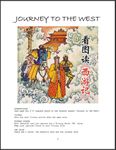
Are there any upcoming titles or projects that players should be excited about? Next up, we have Journey to the West. A legendary adventure comes to the table. What if one of the greatest stories ever told could be experienced around a board game table? Journey to the West is one of the four great classical novels of Chinese literature. It tells the story of a Buddhist monk, Tang Sanzang, who embarks on a journey to India to retrieve sacred Buddhist scriptures. Along the way, he is joined by three companions, the Monkey King, Sun Wukong, Zhu Bajie, and Sha Wujing. Filled with adventure, mythology, and humor, Journey to the West has become one of the most influential stories in Chinese literature, and has inspired countless books, films, television series, and games around the world. Inspired by the classic novel, Journey to the West is a cooperative storytelling adventure game, where players take on the roles of one of the four main characters and relive the adventures of the classic Chinese novel.
The game is divided into six unique chapters, each featuring its own storyline, objectives, and a powerful demon or group of demons that serve as the final boss encounter. While each scenario has slightly different objectives, the overall goal remains the same. Progress through the story by completing the required plot objectives before confronting and defeating the boss at the end of the chapter. Players will usually lose if the entire game board becomes filled with terrain cards. I thoroughly enjoyed all of my playthroughs of Journey to the West. Playing through all six chapters, trying each of the four characters, exploring the different adventure cards, and experiencing the various difficulty levels took a considerable amount of time, but in the best possible way.
The amount of content packed into the box is impressive, and the replayability is certainly there. What I appreciated most is how faithfully the game captures the spirit of the novel. You gradually learn about the characters, follow the story as it unfolds, and experience many of the challenges they face along the journey. Rather than simply borrowing the setting, the game transforms the novel into a fun, interactive adventure, while remaining engaging from beginning to end. Overall, Journey to the West truly exceeded my expectations. It successfully combines cooperative game play, storytelling, and meaningful decision-making into an experience that feels both thematic and immersive. If you're a fan of cooperative adventure games or story-driven board games, this is definitely one worth checking out whether you're already a fan of the classic novel or discovering it for the first time. Journey to the West offers a memorable way to experience one of the greatest stories ever told.
Finally, is there anything you'd like to say to players around the world who are discovering your games for the first time? And that's it for today's publisher spotlight on Yellow Fish Games. Thank you all so much for watching. I really hope you enjoyed the video and discovered a few new games along the way. If you did, don't forget to leave a like and subscribe for more hidden gem board games and future publisher spotlights.