Game Info
Year
2022
Players
1-2
Age
10+
Playtime
45 min
Complexity
2.3/5
Collection
Ratings
Creator Score
Mechanic profile
Not enough video data yet
Vibe profile
Not enough video data yet
Description
No description available.
Featured Videos


Ask a Rules Question
All mentions
Browse transcript mentions, sentiments, pros/cons, mechanics, topics, quotes, and references.
Total mentions: 4
This page: 4
Sentiment:
pos 3 ·
mix 1 ·
neu 0 ·
neg 0
Showing 1–4 of 4
Video Olu7G3tfu7g
Rolling Dice & Taking Names Analysis at 42:15 sentiment: positive
video_pk 94663 · mention_pk 258642
Click to watch at 42:15 · YouTube ↗
Overall sentiment (raw)
Positive (educational)
Pros
- Easy to learn
- Teaches about the Battle of Waterloo and its context
- Flavor text enhances learning
Cons
- May not perfectly recreate the battle
Thematic elements
- Historical battle simulation
- Battle of Waterloo
Comparison games
none
Mechanics (from transcript analysis)
- card-driven gameplay — The game is a card-playing game, with flavor text on the cards.
- historical simulation — Aims to recreate aspects of the Battle of Waterloo.
Video topics + discussion points
No key topics recorded for this video.
Quotes (from this video)
- to me that was a very simple game easy to learn but kind of recreated what really happened during that time
- if y'all ever seen a GMT rule book They're they're not pretty books with glossy pages and big images and very few words per page they're double column they're they're numbered almost like a contract a legal document that's just how they're formatted
- it's basically the conflict between uh uh basically the US and and that region of the world between China and us trying to influence and control that area
- this is coming from somebody who complained I did a 45 minute history lesson on Cuba Libra when I taught it to you
- I knew nothing about how Castro took over CU I I knew he did it how he did it and why I don't know but playing that game three or four times now I have a I'm not a master by any means but I have a much better understanding of what really happened during that time
- I am learning about stuff that happened during the Vietnam war knew nothing about super excited as I play through this game learning about that
- you do learn as you're playing the game how the forces had to build towards that final battle of waterl you learn the players that took place
- yes I have that one I've never play amazing historical game from Marton Wallace yes I had some Muro stuff in it but I actually learned a lot about that from Lincoln
- we got access and allies coming up talking about jumping to the deep end we'll jump straight into that
References (from this video)
No references stored for this video.
Video 447NlKlv_O8
Box of Delights Playthrough at 0:03 sentiment: positive
video_pk 88983 · mention_pk 235644
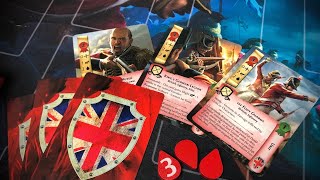
Click to watch at 0:03 · YouTube ↗
Overall sentiment (raw)
positive
Pros
- Offers replayability through objective variation.
- Provides a sense of learning and progression.
- Engaging decision-making with resource management and objective prioritization.
Cons
- Mistakes can lead to significant penalties, wasting actions and resources.
Thematic elements
- Napoleon's return to power and revenge
- France, February 1815, post-exile
Comparison games
none
Mechanics (from transcript analysis)
- attachment — Certain cards are attachments that can be played on units or frontiers.
- Card Play — Players draw and play cards representing units, characters, and events.
- Combat — Units can inflict damage, and characters have health.
- Deployment — The game starts with deployment and skipping the preparation phase.
- Frontier Control — The game involves managing units across different frontiers and potentially creating formations like squares or lines.
- Objective Completion — Players work towards completing objectives that require specific stats like 'Zeal' or 'Might'.
- Resource Management — Players manage resources to deploy units and characters, with a focus on 'zero cost' cards.
Video topics + discussion points
No key topics recorded for this video.
Quotes (from this video)
- Napoleon's been in Exile on the island of Elba since April 1914 after he was forced to abdicate the French throne
- The host acknowledges making a mistake and says 'I've wasted an action because I made a mistake this is why you've got to pay attention'
- it does mean they're not actually that far ahead of us
- This is when when we when the battle feels like it is and we've started to get you know the shape how we want it this is when these events start to come into their own and your tactics
References (from this video)
No references stored for this video.
Video T06WHjtmxEI
Box of Delights Rules Teach at 0:06 sentiment: mixed
video_pk 88997 · mention_pk 235703
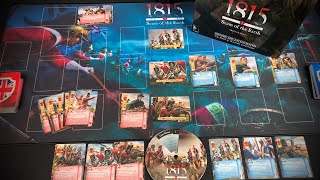
Click to watch at 0:06 · YouTube ↗
Overall sentiment (raw)
mixed
Pros
- Recreates the Battle of Waterloo
- Tactical depth through tactic cards
- Challenging solo AI
- Strategic reserve system adds a new dimension
Cons
- Can be difficult to play
- Risk of drawing a worse hand with a mulligan
Thematic elements
- The Battle of Waterloo
- Waterloo, June 18, 1815
Comparison games
none
Mechanics (from transcript analysis)
- Card-driven combat — The game uses tactic cards to represent historical tactics and their effects in combat.
- Deck Building — Players use decks of cards representing their forces, and managing the deck's resources is crucial.
- Leader health — Losing the leader unit results in a loss, adding a crucial element of leader protection.
- Mulligan — Players can take one mulligan to redraw their starting hand, with the risk of receiving a worse hand.
- Objective-based gameplay — The game is played through a series of objectives from A through G, culminating in a final battle.
- reserve system — Cards can be placed in reserves, which are off the main board, to protect them and deploy them later without additional cost.
- solo AI opponent — The game includes a solo mode with an AI opponent that has adjustable difficulty and specific rules for recycling its deck.
Video topics + discussion points
No key topics recorded for this video.
Quotes (from this video)
- The French army are Marching across uphill across this field this muddy field bogged down trying to attack up this Ridge and these four to five positions on the their right flank
- Napoleon's forces continued North to face what he thought was a weaker foe culminating in the Battle of Waterloo a sum of 50 000 casualties and Napoleon's final defeats
- The rule book sees this from the perspective of the French so it sees papalette farmer over here as the right flank
- Those are your tactics for the British will place them off to the side and then for the French we have the same three tactic cards though in the real battle they were not really apart from Cavalry Charges not really employed to the same devastating effect
- So the foe starts with a big deck and we can choose the level of difficulty for the foe we're going to go for hard difficulty which is the third level up
- I must confess like Wellington I struggle with my Army I struggle I've played this a few times and I do find it difficult
- It's more significant in the multiplayer game and also if you're constructing your game constructing your deck
- It is a means to play cards without having them potentially coming under attack from our enemy forces and kind of keeps them safe off to the side and then we can bring them into one of the Frontiers at a later time without having to pay their cost we've already paid their cost to put them in reserves
References (from this video)
No references stored for this video.
Video zJAjpq5wzKM
Rolling Dice & Taking Names Discussion at 1:14:35 sentiment: positive
video_pk 10201 · mention_pk 30083
Click to watch at 1:14:35 · YouTube ↗
Overall sentiment (raw)
positive
Pros
- Tensionful card interaction with meaningful choices
- Two-player focused design with thematic flavor
Cons
- Rule complexity can be high
- Flow can feel dense without good rule explanation
Thematic elements
- asymmetric card-driven battle game
- Napoleonic era; Waterloo campaign
- historical card-driven strategy with battlefield duels
Comparison games
- The Lord of the Rings LCG
- Arkham Horror LCG
- Napoleon's battles (historical card games)
Mechanics (from transcript analysis)
- asymmetric card play — Each side uses distinct cards and objectives with strategic timing.
- Combat: Deck/Hand — Players advance toward Waterloo via objectives and frontiers, with simulations of a final battle.
- Resource Management — Discarding/playing cards to meet costs and activate effects.
- Resource/destruction economy — Discarding/playing cards to meet costs and activate effects.
- Three-frontier battlefield and objective deck — Players advance toward Waterloo via objectives and frontiers, with simulations of a final battle.
Video topics + discussion points
No key topics recorded for this video.
Quotes (from this video)
- Retrograde is a fantastic board game that I would highly recommend to anyone who loves strategy games.
- I really like it as a two player 30 minute Euro type game.
- Beer and Bread is a multi-use card game for two players.
- 1815 Scum of the Earth is a card-driven battle game and I enjoyed it.
References (from this video)
No references stored for this video.
Transcript Navigation
Showing 1–4 of 4