



Aeon's End: The Descent Deep Dive
What the Community Thinks About Aeon's End: The Descent
Reviewers who love the Aeon's End series overwhelmingly praise The Descent as a fantastic addition to the franchise. This standalone expansion is quintessentially Aeon's End, delivering the deckbuilding challenge fans crave while introducing genuinely fresh mechanics and a surprisingly engaging story. The consensus is strong: if you already love Aeon's End, this is the experience for you. For newcomers to the series, The Descent offers a complete, self-contained package with a four-game campaign that introduces the world gradually.
Board Games UnLocked rates the expansion a perfect 10, noting that the Descent manages to feel fresh every single time despite the series' extensive catalog. Sir Thecos, meanwhile, shows that even the toughest battles in The Descent create memorable, nail-biting moments that keep players engaged throughout the campaign. The writing draws particular praise for being more emotionally resonant than previous Aeon's End entries, with at least one reviewer noting a genuinely moving narrative moment that stood out from the game's typical serviceable storytelling.
Core Mechanics That Define Aeon's End: The Descent
The Shuffle-Free Deckbuilding System
At its heart, The Descent uses Aeon's End's signature shuffle-free deckbuilding that reviewers call one of the best in modern board games. Players carefully order their discards, knowing exactly what cards will return to their hands. This system creates a unique puzzle where you manage your deck's flow, purchase new cards to improve your engine, and time your powerful spells for maximum impact. The deckbuilding feels fresh across multiple plays because no two games build the same deck, and the ordering of your cards becomes a critical strategic element that rewards planning.
The Friend and Foe Module
The Descent introduces the Friend and Foe system, which reviewers describe as a brilliant addition that should have arrived in the series much earlier. Each Friend is a small deck of four cards with an innate ability that players can charge up to trigger powerful effects. Foes work similarly but create obstacles players must manage. The genius of the module lies in its modularity: if Aeon's End feels too difficult, add just a Friend. If it feels too easy, add a Foe alongside your Friend. If everything feels balanced, play with both. This allows each table to calibrate difficulty without artificial house rules. Friends and Foes include characters like Delana the Healer, who provides consistent life gain, and Fawn the Alchemist, whose explosive damage output can turn the tide of battle. The relationship between Friends and Foes creates interesting tactical decisions where players must manage two simultaneous threats while leveraging their ally's abilities.
The Aeon's End: The Descent Experience
Narrative Weight and Campaign Progression
The Descent tells the origin story of Gravehold, the series' central location, by following the young mage Brahma as she searches for safe haven from the Nameless. The four-game expedition structure provides a complete arc: the story escalates, challenges ramp up meaningfully, and the final battle feels earned rather than arbitrary. Reviewers note that while Aeon's End writing has historically been serviceable at best, The Descent elevates the storytelling. There are moments of genuine emotional impact, particularly around the foundational events that lead to Gravehold's establishment. For fans who have played through multiple Aeon's End releases, the backward chronology creates satisfying Easter eggs and callbacks to characters players know from later games.
Escalating Difficulty and Boss Design
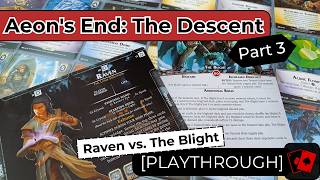
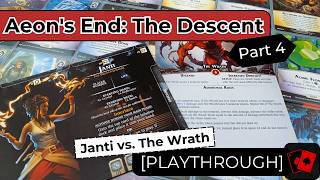
Each of the four nemeses in The Descent features a unique mechanic that keeps bosses feeling distinct. The Blight distributes tainted halos that provide benefits at a cost, forcing players to weigh short-term gains against long-term complications. The Wraith presents a damage management puzzle with its strike track, where players must time attacks carefully to avoid triggering dangerous effects. The Coven introduces two separate enemies with power cards that weaken as players deal damage, creating a novel two-target engagement. These designs ensure that no two expeditions feel similar, and each nemesis teaches players something new about the game's systems. Reviewers who take on the final battle against the Wraith note it delivers genuine tension, creating moments where victory feels uncertain and the outcome could swing either way.
What Makes Aeon's End: The Descent Stand Out
Modular Difficulty Without Compromise
The Friend and Foe system solves a design problem that has plagued many cooperative games: making difficulty accessible without feeling like artificial handicaps. Rather than simply removing powerful cards or reducing enemy health, Friends and Foes integrate thematically into each scenario. A friend character like Delana the Healer works narratively within the story beats, while mechanically providing meaningful assistance. Reviewers emphasize that the system is balanced. Having both a friend and a foe doesn't feel like the foe cancels out the friend's benefit. Instead, they create a dynamic where the friend's support and the foe's complications interact interestingly, requiring players to manage multiple priorities simultaneously.
Replayability Through Expeditions
The four-game expedition format hits a sweet spot between campaign depth and standalone replayability. Each expedition tells a complete story arc and stands alone, but together they form a narrative journey. Once players finish the expedition, they unlock all cards and can run through the same battles with different mages, creating natural reasons to replay. Reviewers note that the Descent feels fresh on subsequent playthroughs not because new content appears, but because the deck construction puzzle creates genuinely different game experiences each time. With various mage options, nemesis difficulty settings, and the modular friend and foe choices, the number of possible games scales significantly.
Potential Drawbacks
Specific Friend and Foe Pairings Can Feel Uneven
While the Friend and Foe system overall is brilliant, reviewers note that some individual pairings feel more or less balanced than others. Certain friends synergize better with specific mages, and some foes seem more aligned with particular nemeses than others. This isn't a design failure since the modular nature lets players swap combinations, but it does mean that not every combination feels equally useful for every scenario. Players who want perfectly balanced experiences with specific friend and foe choices may need to experiment.
Primarily Appeals to Series Fans
The Descent is unquestionably a game for people who already love Aeon's End. Reviewers are clear that if the shuffle-free deckbuilding of the base series doesn't appeal to you, The Descent won't change your mind. The game leans heavily on understanding why cooperative deckbuilding under pressure feels satisfying. For newcomers curious about Aeon's End, The Descent works as an entry point, but understanding the series' design philosophy helps appreciation significantly.
If You Enjoy Aeon's End: The Descent
Consider exploring the full Aeon's End lineage. The New Age and Outcasts expansions offer distinct themes and standalone experiences that show how the deckbuilding system accommodates different settings. Legacy of Gravehold provides a larger campaign structure if you want even deeper narrative investment. Past and Future pushes the timeline to explore far future scenarios, showing how Aeon's End accommodates sci-fi elements through card design rather than tone shift. For those specifically drawn to the expeditionary campaign structure, the Legacy games deliver multi-game narrative arcs with permanent consequences. Astronauts, though a completely different setting, shares DNA in its cooperative card management and pressure-based decision making.
What Reviewers Are Saying
"The amazing thing about this game is because it's a module you can either if you find Aon Zen to be way too difficult you can actually play it with just a friend like you could have your number of Mages and a friend and not even bother with a foe, or if you find the game too easy then you can play without a friend and just have a foe so you can kind of dictate the complexity and the difficulty of the experience."
— Board Games UnLocked
"There was one moment that surprisingly I was I was like this is pretty solid writing maybe it was just a head face or maybe if I'm going toot my own horn it was the way I was reading it that I was like damn this is a solid Moment. Like good job and everything else is is good. Like they do enough with the characters and the characters have personalities and stuff."
— Board Games UnLocked
"If you love Aon Zen, this is this is that, it is Aon Zen, but they added the biggest mechanism for this, is the friend and foe system, and that is genius. That is such a good addition to this."
— Board Games UnLocked