


Age of Automaton Deep Dive
What the Community Thinks About Age of Automaton
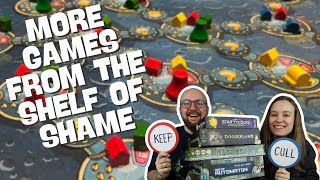
Board Gaming Ramblings has featured Age of Automaton in several formats: a Keep or Cull episode, a Leaving the Shelf episode, and a monthly roundup of March games. The reviewers agree that the design is tight and rewarding to plan around, but they land in different places on whether it earns a permanent spot in the collection.
The most enthusiastic response came from the monthly roundup, where one host admitted the rules had not sounded especially exciting and then found the game was one of the best experiences of the month. The Keep or Cull episode kept the game with a caveat, noting it might not stay in the collection forever. The Leaving the Shelf episode went further and culled it. The hosts did not dislike the game. They simply had too many titles they preferred to play.
Reviewers repeatedly describe a game that punishes careless play. Even the host who struggled most through a first session said they wanted to play again to see whether they could master it, which is a fair summary of how the channel regards the design as a whole.
Core Mechanics That Define Age of Automaton
Worker Placement With Scarce Action Spaces
Worker placement is the mechanic reviewers return to most often. The board offers only a few action spaces, and once a player takes one it is blocked for everyone else, so hesitation costs an action. Workers are a limited resource too. Sending a worker out for many different actions means planning how to get it back, and upgrading workers to higher levels becomes a recurring goal. Some worker actions can also cost points at the end of the game, so the reviewers say players must weigh how often they take that route. The design rewards players who read the board early and commit to a line before the spaces they need disappear.
Resource Management and Forward Planning
The second core system is resource management, which reviewers describe through timing rather than raw economy. One host explained that the game requires you to set up your next acquisition before you need it, because falling behind is difficult to recover from. Luck is present, but the reviewers felt it did not dominate. Players can usually soften a bad result by spending resources or money, so every purchase becomes a question of when to buy and what to forgo. The value of a resource depends on what the board offers this turn and what the next turn will demand.
The Age of Automaton Experience
Tight Planning Under Pressure
Play feels cramped and deliberate. Reviewers describe a sequence in which each choice closes a door: a worker sent to one space cannot be used somewhere else, and a space taken today may be gone tomorrow. The tension comes less from direct conflict than from the sense that the board is always about to shut down the option you wanted. Reviewers called it a very tight game, and that tightness is what makes each round feel consequential.
Surprise, Struggle, and the Pull to Improve
The emotional arc reviewers describe is a reversal of expectations. One host read the rules and expected Dogger Land to be the better game, then found Age of Automaton the more satisfying experience once it reached the table. The first sessions were hard, and the difficulty did not drive them away. It left them with a list of things to try next time, and several reviewers described wanting another session to test what they had learned.
What Makes Age of Automaton Stand Out
Risk and Reward in Worker Upgrades
Reviewers single out the choice to upgrade workers as one of the design's strongest features. An upgrade adds capacity, but it costs actions and can carry end-game penalties, so players must weigh a short-term boost against long-term scoring. The Keep or Cull episode highlighted this balance as a reason the game stands apart from simpler worker games, and it is the system the hosts pointed to when explaining why the game rewards careful planning.
A Tight Design That Surprises on the Table
The second standout is how the design's tightness pays off in play. Reviewers describe the rules as less exciting on the page than the game feels once it is underway. The monthly roundup's host said the game was the one they expected to be the least enjoyable of the day, yet it turned out to be the best. That reversal is the strongest endorsement the channel gives it, and it suggests the rulebook undersells how engaging the planning becomes.
Potential Drawbacks
A Steep Learning Curve That Is Not Forgiving
The most consistent criticism is difficulty. Reviewers called the game hard, and one host said they struggled a lot through their early plays. Because action spaces fill quickly, a player who misreads the board can find the actions they need already gone. That bottleneck makes the early turns punishing, and newcomers may need several sessions before the planning starts to feel natural. Reviewers who are comfortable with heavy worker placement may accept that cost, but it will narrow the audience for the game at a table with less experienced players.
Limited Pull Back to the Table
The second concern has less to do with quality than with the crowded shelf. The Leaving the Shelf episode described the game as one that was enjoyed but not one the hosts were drawn to pull out again. The decision to cull it came down to too many games rather than a flaw, yet the result is the same: a well-regarded design that does not reliably earn repeat plays against a deep collection.
If You Enjoy Age of Automaton
Players who enjoy Age of Automaton's worker placement and multi-front planning will find similar satisfaction in Blue Lagoon. Board Gaming Ramblings described it as very tactical, with players needing to stay ahead on several fronts at once, and noted that it is simpler to teach than many of its designer's other titles.
Players who enjoy Age of Automaton's surprise, where the rules sound modest and the table reveals depth, may also want to try Dogger Land. The channel compared the two directly. One host expected to prefer Dogger Land after reading its rules, but found Age of Automaton the more satisfying of the pair, which makes the comparison a useful way to decide between them.
What Reviewers Are Saying
"And also there are so few action spaces. So if you want to do an action, you better hurry up and do it quick because those are going to be blocked so fast."
— Board Gaming Ramblings
"I was just like surprised by how fun it was. I enjoyed myself playing it way more than I thought I would be."
— Board Gaming Ramblings
"I played this. I enjoyed it enough to put it on the shelf, but when I see it on the shelf now, it's not like I'm being dragged to pull it out and play it again."
— Board Gaming Ramblings