/pic3738560.jpg)
/pic7849764.png)
/pic3738560.jpg)




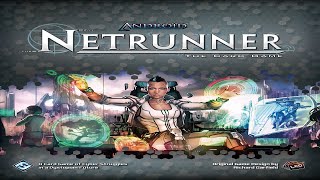





































Android: Netrunner Deep Dive
What the Community Thinks About Android: Netrunner
Android: Netrunner stands as one of the most distinctive competitive card games ever created. Ten years after its release, players and reviewers still speak of it with genuine appreciation, recognizing it as a masterclass in asymmetrical game design. The game's resurgence through the community-driven Null Signal Games has introduced a new generation to its unique mechanics and tense decision-making.
Core Mechanics That Define Android: Netrunner
Asymmetrical Gameplay and Hidden Information
The game's greatest achievement is its complete asymmetry. One player operates as a Corporation trying to advance secret agendas, while the other plays as a Runner attempting to infiltrate and steal those agendas. The Corporation's cards are played face-down, creating genuine bluffing mechanics. The Runner never knows if they are running into an agenda, a trap, or a defensive measure. This hidden information creates tension that permeates every decision, forcing players to read opponents and calculate risk versus reward with each run.
Resource Management and Tight Economics
Both sides face constant resource scarcity. The Runner must carefully manage credits to break through ice, while the Corporation must balance protecting servers against advancing agendas. Every action costs something precious. Players describe this as one of the game's defining features, drawing comparisons to resource management games but with the speed and intensity of competitive card play. This tightness means that minor decisions cascade into major consequences.
The Android: Netrunner Experience
Intense Mind Games and Bluffing
The bluffing layer transforms every interaction into a psychological battle. Players are constantly asking themselves: Is my opponent really protecting this server, or are they feinting to make me spend resources elsewhere? Should I install this card in a well-protected server to genuinely protect it, or should I put it somewhere obvious as bait? Reviewers emphasize that the player skill element comes from reading opponents, managing information, and creating doubt. Rolling Dice and Taking Names describe it as a chess match to see how well you can bluff your way to force your opponent to do things they do not want to do.
Satisfying Mastery and Discovery
The game rewards dedication and repeated play. Players who invest time discover synergies, understand card interactions, and develop intuition about optimal decision-making. Yet the learning curve is inviting; even casual games feel engaging and meaningful. The pleasure comes not just from winning, but from executing a well-planned strategy or pulling off an unexpected combo. Foster the Meeple describes it as a really good two-player game with deep strategic gameplay that rewards staying current with the card pool.
What Makes Android: Netrunner Stand Out
Elegant Design with Thematic Integration
The game commits fully to its cyberpunk theme through thematic naming conventions. The Runner's hand is called the "grip," while the Corporation's hand is "headquarters." Servers are called "archives," "research and development," and "remote servers." Ice is protective code. This theming enriches the experience without overcomplicating it. Board Game Design Lab highlights the groundbreaking asymmetric gameplay and rich thematic depth that rewards long-term strategic planning. The terminology becomes second nature quickly, and the flavor text reinforces why each card matters to the narrative of corporate espionage and resistance.
No Rare Chasing and Skill-Driven Outcomes
Unlike collectible card games, Android: Netrunner was designed as a Living Card Game where every expansion pack contained all the cards. 3 Minute Board Games highlights this as a major selling point, noting that the skill element determines outcomes far more than in Magic: The Gathering. There is no pay-to-win structure, no random booster packs, and no chasing rares. The competitive field is leveled by design, meaning victories feel earned through superior play and deckbuilding rather than deeper pockets.
Potential Drawbacks
High Barrier to Entry and Terminology
The game's greatest strength, its unique nomenclature and asymmetry, also creates an initial learning curve. New players must learn terms like "run," "rez," "trash," "breach," and "meat damage." The two sides play so differently that even experienced card game players need to learn the game twice, once for each role. Some reviewers note that teaching the game requires patience and multiple plays before newcomers fully grasp the depth of decision-making involved.
Meta Dependency and Availability Challenges
Staying competitive requires following the meta game and keeping pace with new cards and strategies. The game's elegance comes partly from its reliance on understanding what opponents might play and how to counter it. For casual players, this can feel overwhelming. Additionally, with the original Fantasy Flight Games run discontinued, acquiring core sets and expansions from the original era can be expensive and difficult. The community-driven Null Signal Games continuation helps, but the barrier to building a complete collection remains real.
If You Enjoy Android: Netrunner
If Netrunner captures your interest, explore Magic: The Gathering for its vast design space and proven longevity, though it lacks the asymmetric structure. Ashes: Rise of the Phoenixborn offers another asymmetrical card dueling experience with unique dice-driven resource systems. Star Wars Destiny combines dice combat with card play in a competitive format. For bluffing mechanics within cooperative frameworks, Arkham Horror: The Card Game delivers hidden information and deck construction against AI-driven scenarios. Legend of the Five Rings provides political intrigue and faction-based deckbuilding. For those who appreciate the pure mind-game elements, the abstract strategy of Go shares Netrunner's emphasis on reading opponents and controlling territory.
What Reviewers Are Saying
"Netrunner, the head-to-head in it, the bluffing, the different style of decks you can play, just how much of a feel and skill game it is. You can have a very powerful deck, but if you are completely inept, you will lose every game of Netrunner because there is such a big skill element to it, far more than Magic the Gathering."
— 3 Minute Board Games
"Android Netrunner is a really really good two-player card dueling game. It's such a tense game because you're totally having to bluff on where agendas are. Is the corporation putting defenses up because they are protecting where the agenda is, or is it because they are bluffing and that is not actually where it is?"
— Rolling Dice & Taking Names
"Android Netrunner is a fantastic competitive card game. The asymmetrical design is unique. Deck building creates variety. It's the most unique design in our collection."
— Board Game Hangover