
The City of Archives: Mythos Pack Deep Dive
What the Community Thinks About The City of Archives: Mythos Pack
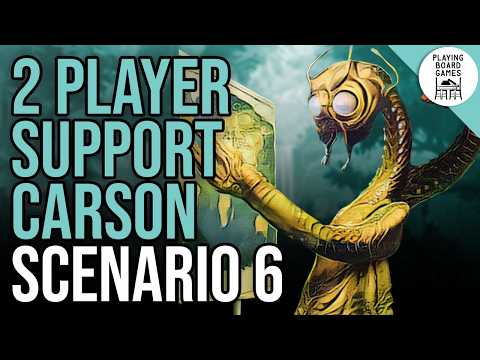
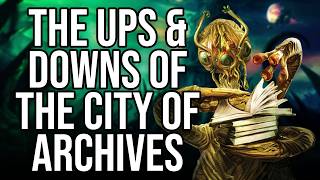
The City of Archives is one of the most debated scenarios in Arkham Horror: The Card Game, and the close read from PlayingBoardGames treats the criticism as partly fair and partly a matter of expectation. The central complaint is the premise itself. Every investigator is turned into a Yithian body, which removes the chosen investigator and their unique cards from the deck for the length of the scenario. PlayingBoardGames accepts that this is the point of the design, since the scenario is meant to remove your identity, and the host acknowledges that the experience can feel especially bad for players who only sit down to Arkham once every week or two.
Where the host pushes back is on the idea that the scenario is unwinnable or unfair. The host argues that the shroud values are mostly low for a scenario of this position in a campaign, that the boss enemy's evade value is only one, and that the designers are trying to make players lose without making the scenario unfair. The host also praises the scenario as a deliberate experiment that makes Arkham Horror better, even for players who do not enjoy it. The complaints the host shares center on a few design choices: the restriction against playing item assets, an encounter set that feels out of place, and the Rotting Remains gotcha that can punish players during the blind play.
Core Mechanics That Define The City of Archives: Mythos Pack
Hand Management
Hand management is the mechanic that most shapes how a Yithian plays this scenario. Under the body-swap rules, each investigator can commit a card to a skill test and double that card's skill icons once per test. PlayingBoardGames argues that this asks players to stop seeing cards as tools reserved for a single moment. A card such as Dodge can still be held for the normal Arkham use, but in this scenario it is worth more as a source of two willpower, two intellect, or four feet for a test. The host frames the shift this way: the scenario asks you to use cards almost as soon as a test calls for them, rather than holding them for the perfect moment.
The hand limit adds another layer of pressure. The scenario's skull token asks players to keep four or fewer cards in hand, and the host points out that with four cards in hand, every token in the bag passes when a player is two up, leaving only three of the sixteen tokens to cause a failure. Other effects reduce maximum hand size, and the upkeep discards that follow can force a player to give up cards they had hoped to commit. Because Fantasy Flight Games built the scenario around the Yithian ability, the hand becomes a resource to be planned rather than a reserve to be hoarded.
Resource Management
Resources and clues carry the scenario's economy, and PlayingBoardGames' play sessions show how tightly that economy is managed. Players spend resources to raise a skill test by one point each, and they can spend clues as an alternative to drawing, since a Yithian who spends a clue to draw a card draws two instead of one. This is also where the host's advice on timing matters most. The host describes the ideal rhythm as spending cards judiciously in the first half of the scenario and saving them for the second half, rather than using everything as soon as it is available. Clues gained early are often a form of card draw later, so an early clue can be worth more than an immediate action.
The City of Archives Experience
Body-Swap Disorientation
The first feeling the scenario creates is disorientation. Players lose the familiar rhythm of their investigator and their signature cards, and the Silas and Carson playthrough reflects that unease with jokes about how the group does not want to think about being Yithians again. The experience is one of a strange new identity that still has to do the work of a normal investigator. Players learn to move, investigate, and fight with unfamiliar tools, and the host describes the frustration of feeling powerless as a central part of the scenario's tone.
Tense Blind-Play Dread
The second feeling is tension, driven by the unpredictability of the blind play. The Silas and Carson run has a series of moments where the players hesitate before drawing, admitting that they are too scared to draw, and where a single weakness or enemy changes the entire turn. The host describes the scenario as one where the game is "actively trying to make you lose," and the dread comes from not knowing which location, token, or encounter will turn a planned turn into a crisis. That dread is part of why PlayingBoardGames considers the scenario a strong fit for players who enjoy hard blind play.
What Makes The City of Archives: Mythos Pack Stand Out
Cards That Change Their Purpose
PlayingBoardGames' most consistent praise is for how the scenario reframes the cards in a deck. Rather than treating the Yithian ability as a restriction, the host argues it reveals value that players tend to overlook. Events such as Fang of Tyr'tharr can be committed to a test for four fist icons rather than saved for a single enemy, and lockpicks can be committed to pass a test and gain a clue. The host argues that cards are rarely useless in this scenario, only misread, and that players who learn to see the skill icons rather than the card text tend to do better.
A Fair Balance for a Late Scenario
The second standout is the numbers. The host points out that the scenario is much more forgiving than its late position in the campaign suggests. Most locations have shroud values of two or three, the boss enemy's high fight value is offset by a low evade value, and a single book icon committed to a two-shroud test can put a player two points up. The host concludes that the scenario is balanced around its own demands, which lets it be hard without being cruel, and this is a reason PlayingBoardGames defends City of Archives as a worthwhile piece of design.
Potential Drawbacks
Losing the Investigator and Unique Cards
PlayingBoardGames treats the loss of the investigator and unique cards as the biggest reason players dislike the scenario, and the host understands why. The host notes that a player who only plays Arkham occasionally has less time to recover from a scenario that removes their deck's identity, and a unique combo piece or a signature weakness that remains in the deck can make the experience worse. The host does not dismiss this concern, but argues that the loss is unavoidable in this scenario, so the more useful question is how a player can still have an impact while playing as a Yithian.
Blind-Play Gotchas and Item Restrictions
The second concern is the blind play, which the host describes as the scenario's clearest weakness. The restriction that item assets cannot be played is one example. The host understands the design intent, which is to force players to adapt, but says the rule can feel strange when a player is holding a key item. Rotting Remains is the sharper gotcha: a player entering that location must test brain three and take one horror for each point failed. The host notes that this can become a serious problem when someone draws several copies in a row, and suggests that a milder penalty would have kept the surprise without the risk of a sudden collapse. The host also criticizes the Striking Fear encounter set as a poor fit for the scenario's flavor and numbers.
If You Enjoy The City of Archives: Mythos Pack
Players who value the scenario's shift in how cards are used may find other scenarios in the Arkham Horror campaign line worth exploring, since PlayingBoardGames groups several of them as scenarios that demand a different way of playing. Horror in High Gear and Written in Stone are the gentlest examples, because they remove movement and change how certain investigators, such as Ursula Downs and Monterey Jack, function. Clutches of Chaos asks players to rethink how resources and clues reach the board, and Undimensioned and Unseen removes traditional combat against its boss enemies, forcing players to rely on willpower and other tools. These scenarios share the City of Archives' willingness to change the rules of play, which makes them a natural next step for players who find the Yithian experience rewarding. Each comes from a different part of the Arkham Horror line, so they are best approached as separate experiences rather than a single campaign.
What Reviewers Are Saying
"The key to learning how to adapt it to what a scenario is asking you is to remember that while this game is cooperative, the game is actively trying to make you lose."
— PlayingBoardGames
"The big thing that people talk about for why they do not enjoy this scenario is that they feel as if they lose their investigator, which they do, and they also lose the unique cards from their deck."
— PlayingBoardGames
"I always have a good time in City of Archives. So it's just like a... it's a scenario built for a just-in-play style."
— PlayingBoardGames