

Bagged & Boarded Deep Dive
What the Community Thinks About Bagged & Boarded
Bagged & Boarded has earned genuine enthusiasm across the board gaming community, though not through flashy presentation or hype. Instead, reviewers praise it as a thoughtfully designed experience that nails a specific aesthetic and delivers meaningful decisions. Meeple University describes it as "a really thoughtful game with very accessible and well understood mechanisms," a rare compliment in a hobby often crowded with games that look impressive but play awkwardly. The game's appeal seems rooted in how completely it inhabits the comic-collecting hobby, rather than just using it as window dressing.
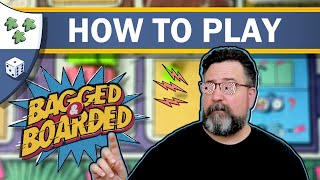
Most notably, reviewers who actually played it experienced genuine emotional investment. Our Family Plays Games reports falling "in love with it" after the first session, and found themselves absorbed in the thematic fantasy: "I'm like, I gotta work and do some more chores because I want to spend money and get comic books and oh my god, it is a fun game." This immersion is no accident. Nights Around a Table, whose comprehensive rules explanation reveals the design's sophistication, notes that the game's meta-commentary is sharp: "because it ain't a real hobby until capitalism sucks out its soul." The designers understood that comic collecting sits at an intersection of nostalgia, personal passion, and genuine money-sinking. Bagged & Boarded leans into that contradiction rather than hiding from it.
Core Mechanics That Define Bagged & Boarded
Worker Placement with Time and Travel
The worker placement system uses a novel resource: time cubes representing hours in the day. Rather than claiming abstract board spaces, players physically move their cubes to locations (home, comic store, comic convention) to perform actions. Each location has multiple action rows, with better actions occupying the premium spots. What makes this elegant is the travel cost: going to the comic store costs 1 cube, the convention costs 2. This isn't just friction, it's simulation. As Meeple University explains, "you want to try to do lots of actions in that location at the same round because it's more efficient from a travel standpoint." The thematic payoff: a kid riding their bike across town burns actual time that could have been spent collecting or earning money. This mechanism makes every decision feel grounded in the comic-collecting kid's real constraints.
Set Collection with Market Pressure
The set collection layer operates differently from most games. You're collecting issues by series (hero), and sets of three or more displayed comics score points. But displayed comics increase that hero's value for everyone, creating a shared incentive system. Meeple University calls out this elegantly: "if you are creating a point scoring set collecting on certain comic books, your opponents more than likely they're not going to be able to create sets with them because there aren't enough cards in the deck, but they can hang on to them." This means you might deliberately keep a competitor's desired series in your collection, holding it hostage as bagged (preserved but not displayed) inventory. The game's economy rewards both displaying beautiful sets for points and sitting on valuable back issues for future selling. It's not zero-sum; it's negotiation without negotiations.
The Bagged & Boarded Experience
Nostalgic Immersion in Comic Culture
This is a game about childhood, specifically the bittersweet memory of hunting for comics with limited allowance. Meeple University captures this: "Very nostalgic as well. Just the feeling of collecting mint comic books or mail order. There was no Amazon back there. So just like little thing the form that you have to fill out and then mail it." The game recreates that specific historical moment when ordering comics meant filling out a mail-order form and waiting. Our Family Plays Games adds that this theme isn't just decoration, it's the beating heart of why the game works: "I love the cute little comic books that they came up with the different titles which of course are, you know, offshoots of real comics but it was really cute the way they came up with the different comic book titles and the artwork and all that stuff." The fake comic series (Catamaran Man, Gorgonzilla, The Pacifier, Wander Woman) are riffs on real comics, grounding the fantasy in what actually existed. When you're doing chores for money to buy comics, the theme hits because it's TRUE.
Meta-Commentary on Collecting and Capitalism
Underneath the nostalgia sits a sharper observation: collecting is capitalism. You sell comics to buy others. You grade them to increase their value. You display them partly for beauty, partly to signal their worth to other players. You make strategic decisions about which series to "complete" and which to abandon as investments. Nights Around a Table's introduction nails this: the game is about "kids collecting comic books to read, to preserve, and to display," but the real mechanics are about "making enough money to afford them" through savvy investment and trading. The superpowers you unlock by being the first to display a hero are themselves themed as toys and perks (electric scooter discounts, celebrity autographs, spring cleaning sales). This isn't cynicism, it's accuracy. Bagged & Boarded doesn't pretend hobbies aren't about accumulation and status. It makes that the game.
What Makes Bagged & Boarded Stand Out
Comic-Collecting Culture as Theme, Not Flavor
Most games use theme as window dressing. Bagged & Boarded makes theme the system. The mechanics of how you collect, grade, display, and sell comics aren't bolted onto an abstract economic engine. They ARE the economic engine. Grading costs money and locks in value. Displaying increases resale prices for everyone. Autographs double selling value but reveal your hand. Bagging protects comics but costs time cubes and inventory slots. Every single mechanical knob turns a historically accurate detail of comic collecting into a strategic decision. Meeple University praises this synthesis: the game is "very relatable" because it genuinely understands comic culture, from the bargain-bin hunting to the autograph signings at conventions to the careful preservation on display shelves.
Accessible Complexity through Thematic Clarity
Bagged & Boarded has a lot of moving parts: 13 action spaces, hero value tracking, grading slabs, superpower cards, endgame scoring cards. On paper it sounds heavy. But reviewers consistently note that the theme makes it comprehensible. When you understand you're a kid managing comics, not optimizing abstract points, the actions make sense. Our Family Plays Games initially didn't understand what "bagging and boarding" meant, but once they realized it was actual comic preservation, everything clicked. The game doesn't require rules lawyering because the fiction does the work. Meeple University summarizes this as the game achieving what few do: "a really thoughtful game with very accessible and well understood mechanisms."
Potential Drawbacks
Apparent Complexity at First Glance
The rulebook and board layout look intimidating. There are many action spaces, many card types, and the flow requires careful turn order management. Our Family Plays Games notes some initial hesitation: "Maybe seems overly complicated. I felt the same way for Dinosaur Island until we played it and realized it wasn't." Like many games with thematic depth, Bagged & Boarded demands a rules explanation or tutorial before the clarity clicks. This isn't a pick-up-and-play game, even though the experienced mechanics are quite logical once you grasp the premise.
Niche Theme and Publisher Awareness
The comic-collecting hobby has passionate fans but isn't universal. A player who didn't grow up with comics or doesn't engage with collecting culture might not feel the thematic pull that makes the mechanics resonate. Additionally, Bagged & Boarded comes from Octar, a smaller publisher, so it lacks the distribution weight of bigger companies. Awareness and availability may be the game's biggest challenge rather than design or execution.
If You Enjoy Bagged & Boarded
If you fell in love with the comic-collecting theme, Meeple University suggests Comic Hunters as a companion game, though reviewers note that Bagged & Boarded actually executes the concept more cleanly. More broadly, games that reward deep engagement with a specific hobby (like Splendor for gem trading or Food Chain Magnate for economic simulation) might appeal. The worker placement system also makes it a spiritual cousin to games like Agricola or Tzolk'in, though Bagged & Boarded's theme is far more tightly integrated. For pure theme-driven experiences that don't shy away from the economic realities of hobbies, few games nail it as completely.
What Reviewers Are Saying
"I must say I'm very impressed. I mean, I was impressed by Brick and Mort and I'm impressed by this as well. It's a really thoughtful game with very accessible and well understood mechanisms. So yeah, I enjoy it."
— Meeple University
"I fell in love with it. You get so immersed in the theme, you know, cuz I'm like, I gotta work and do some more chores because I want to spend money and get comic books and oh my god, it is a fun game. I am so excited. I really wish them much success when Bagged and Boarded comes out."
— Our Family Plays Games
"Very nostalgic as well. Just the feeling of collecting mint comic books or mail order. There was no Amazon back there. So just like little thing the form that you have to fill out and then mail it. I mean, yeah, very good."
— Meeple University