/pic7442376.jpg)

/pic7442376.jpg)



















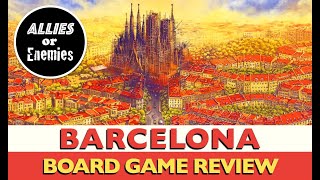
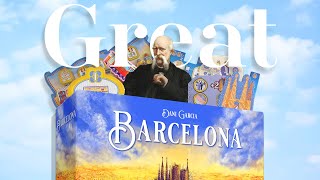









Barcelona Deep Dive
What the Community Thinks About Barcelona
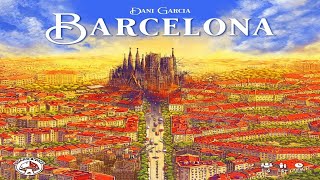
Barcelona has struck a chord with reviewers as a richly thematic Euro game that rewards clever planning and tactical play. The game has impressed even those who initially expected it to be outside their wheelhouse, proving that thoughtful design can elevate a familiar genre into something special. Designer Dani Garcia has created a game where the mid-19th century expansion of Barcelona becomes not just the backdrop but the engine of gameplay, with mechanics that genuinely reflect urban planning principles in a way that feels both elegant and intuitive.
Core Mechanics That Define Barcelona
Grid-Based Worker Placement with Intersection Activation
At Barcelona's heart lies an innovative take on worker placement where players draft citizen tokens and place them on intersections within a grid system. What makes this distinctive is that placing citizens activates not one but two actions simultaneously, drawn from the row and column intersecting at that placement. Players can even trigger a third action if they place on a diagonal. This system creates constant decision trees about action prioritization and sequencing, allowing skilled players to layer multiple effects into single turns. The mechanic transforms what could be a straightforward placement system into something tactically dense without feeling overwhelming.
Simultaneous Scoring and Multi-Purpose Actions
Nearly every action in Barcelona serves multiple purposes, creating satisfying turns where progress cascades across the board. Placing a street does not just add a tile; it scores points for all connected streets of the same type (whether you built them or not), covers bonuses on the board, and may trigger tram movements or intersection benefits. This design philosophy ensures that players rarely feel like they are spinning their wheels. The Cerda scoring system, triggered when citizen tracks fill to threshold points, multiplies accumulated bonuses by the player's position on the Cerda track, creating dramatic swings in fortune that reward long-term planning over short-term gain grabbing.
The Barcelona Experience
Cerebral Puzzle with Tactile Satisfaction
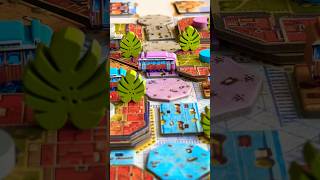
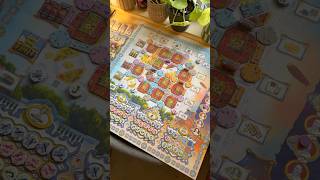
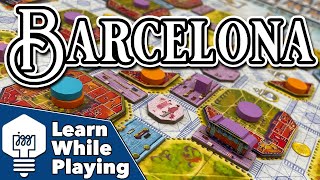
Barcelona feels like solving a multidimensional puzzle where every decision opens or closes future possibilities. The game's colorful board and component aesthetic, combined with its thematic elements (Modernisme tiles, Sagrada Familia track, street networks), creates a warm and inviting atmosphere despite the complexity underneath. Players describe getting genuinely excited about their turns as the interplay between different action streams produces winning combinations and clever engine-building moments. The game manages to be both intellectually demanding and deeply satisfying to execute.
Positive Player Interaction and Tactical Tension
Barcelona avoids the solitary puzzle trap that catches many Euros through meaningful neighbor interaction. Building intersections creates benefits when opponents use them. Placing citizens can enable or block opponents' building opportunities. The citizen placement itself involves a delicate dance of positioning, as leaving good spots open for others must be weighed against controlling where the game progresses. This creates sustained tactical tension without devolving into cutthroat kingmaking, especially at two players where the cat-and-mouse dynamic around building placement and citizen track timing becomes crucial.
What Makes Barcelona Stand Out
Elegant Grid Mechanics with Deep Strategic Reach
The rectangular grid structure serves as more than visual organization; it generates meaningful action combinations through its row, column, and diagonal intersections. This same grid physically represents the Eixample expansion designed by urban planner Ildefons Cerda, making the mechanics and theme genuinely inseparable. Building streets across the grid feels like building a real city, yet each street placement has tactical implications for future turns. The variable action tiles allow different combinations each game, ensuring that path-to-victory strategies shift between sessions without the system ever feeling random or arbitrary.
Multiple Scoring Engines with Genuine Paths to Victory
Barcelona excels at rewarding diverse strategies. Some players focus on building intersections to generate passive income from opponents' actions. Others chase Modernisme projects and Sagrada Familia advancement. Still others optimize street networks and tram placement. Building timing, public service acquisition, cobblestone placement, and passenger placement all provide meaningful victory point generation. The modular Cerda scoring (randomized goals each game) ensures that no single strategy dominates, and the Sagrada Familia track creates compelling decisions about trading short-term progress on the Cerda track for long-term investment. Final scoring compounds these paths with bonuses for cleared cobblestones and passenger placements, making every decision visible in the final tally.
Potential Drawbacks
Complexity and Analysis Paralysis at the Table
The wealth of available actions means turns can stretch long, especially at higher player counts where players must consider how others might respond to open positions. With at least two actions and sometimes three, plus the mandatory building phase, even experienced players occasionally lose track of possibilities. The interplay between Cerda track position, Sagrada Familia advancement, citizen track filling, and available actions creates legitimate analysis paralysis. While the simple turn structure (place workers, execute actions, build if possible) sounds straightforward, the options available during each phase can bog down the game's momentum. Games benefit from players who accept good-enough turns over optimal ones.
Component Organization and Setup Burden
Barcelona arrives in a box full of plastic bags with no storage solution or insert, making setup and teardown a lengthy affair. Single-layer player boards and scattered resource tokens mean everything slides around mid-game. The game would benefit greatly from an insert with dual-layer boards and dedicated token wells. While the box can accommodate one, the base game feels like it is waiting for a deluxe edition to realize its full potential as a table presence. Setup and cleanup time rivals actual play length at some counts, which may deter casual players from reaching for Barcelona on busy game nights.
If You Enjoy Barcelona
Fans of Barcelona appreciate deeply interlocking Euro systems and games that reward long-term planning. Coimbra shares a similar point-salad sensibility with Portuguese thematic richness. Isle of Cats offers pattern building and satisfying tile placement in a lighter package. Windmill Valley provides a comparable action economy without heavy luck elements. Aoria appeals to those who enjoy thematic Euro designs with multiple scoring paths. Players seeking similar production quality with lighter rules might explore Baron Park or New York Zoos. Barcelona exists at the intersection of accessibility and depth, making it a cornerstone title for established game groups who enjoy crunchy Euro experiences.
What Reviewers Are Saying
"There's a lot of stuff to keep in your head and the graphic design does a terrific job of making things as easy as possible. It's a heavy thinky game with a lot to track but the clear design makes bonuses and scoring easy to spot."
— Allies or Enemies
"Barcelona is very Euro in the classiest sense of the word. It's a game where all the actions feel really good and you're not just thinking about a couple different places to place your workers, you're thinking about an entire grid to get those citizens down."
— Neon Gorilla
"The most combo-tastic, point-salad, positive-effect-inducing Euro I've ever played. The grid in the game is basically the outline for new Barcelona, and basically the structure of buildings has all been planned to a tea not only in the way that they're laid out but also the way they synergize with each other."
— Board Game Sanctuary