
Game Info
Year
Players
Age
Playtime
Publisher
Collection
Ratings
Creator Score
Mechanic profile
Waiting on more creator content
Vibe profile
Waiting on more creator content
Description
This is a card game from the 1950-60s. Players set a line-up and draw cards one at a time. Each card shows a result based on the player in the respective line-up slot. Normal baseball rules apply.
Featured Videos


Ask a Rules Question
All mentions
Browse transcript mentions, sentiments, pros/cons, mechanics, topics, quotes, and references.
Total mentions: 3
This page: 3
Sentiment:
pos 2 ·
mix 1 ·
neu 0 ·
neg 0
Showing 1–3 of 3
Video bpJOxIyiks0
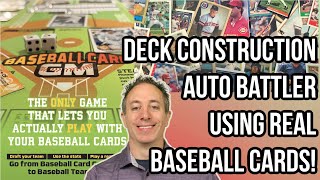
TheGameBoyGeek - Hi Quality Hi Energy Board Game Reviews Review at 0:09 sentiment: positive
video_pk 84079 · mention_pk 304921
Click to watch at 0:09 · YouTube ↗
Overall sentiment (raw)
positive
Pros
- Nostalgic feel
- Brilliant idea combining baseball cards with CCG and auto-battler mechanics
- High agency for an auto-battler
- Many different ways to draft and build a team
- Long-term relevance due to baseball's enduring nature
- Satisfying managerial decisions
- Scalable complexity, from simple to strategic play
- Impressive that it was designed by an eight-year-old
Cons
- Niche game requiring interest in baseball, CCGs, and auto-battlers
- Requires purchasing baseball cards separately
- Some cards may be missing stats, requiring lookups
Thematic elements
- Managing a baseball team using player stats and cards.
- Baseball
Comparison games
- Magic the Gathering
- Yu-Gi-Oh
- Pokemon
- Challengers
- Tag Team
- Star Wars Destiny
- Status Pro baseball
Mechanics (from transcript analysis)
- auto battler — Once the team and lineup are set, the game simulates baseball outcomes using dice rolls based on player stats.
- Deck construction — Players draft or construct their team of real baseball cards and use their stats to play.
- Drafting — There are multiple ways to draft players, including by position, drawing from a deck, or using sealed packs.
- Lineup building — Players set a batting lineup from one through nine, considering player order and strategic matchups.
- Managerial decisions — Players make in-game decisions like pinch hitting, pinch running, stealing bases, and pitching changes.
- Pitching simulation — Pitchers have stats like ERA and wins, and lefty-righty matchups can add modifiers to dice rolls.
- Stat-based resolution — Dice rolls are compared against player stats (e.g., batting average, ERA) to determine the outcome of plays.
Video topics + discussion points
No key topics recorded for this video.
Quotes (from this video)
- This game is designed by an eight-year-old and uh quite honestly and it's blown my mind.
- It's essentially an auto battler with influence.
- This game has even more agency than both of those because not only are you drafting or selecting your team and constructing your deck, you're selecting your lineup of where they go.
- It's a niche within a niche within a niche.
- If you like baseball, this is an absolutely no-brainer game to get for sure.
- I am so impressed it's done by an eight-year-old. Great job.
- It's getting my highest honor. A saxophone serenade.
References (from this video)
No references stored for this video.
Video z5YJkFrmLCI
Rolling Dice & Taking Names Discussion at 1:15:41 sentiment: positive
video_pk 83737 · mention_pk 301832

Click to watch at 1:15:41 · YouTube ↗
Overall sentiment (raw)
positive
Pros
- Fast-playing game.
- Easy to teach to young kids to appreciate baseball cards.
- Very interesting game.
- Enjoyed opening packs and drafting players.
- Players can make thematic teams.
- The math and dice mechanics are brilliantly laid out.
- The game is laid out very well.
- Appreciates the depth and statistical analysis involved.
- Kept the game around for future play.
Cons
- Does not have the level of strategy as APBA.
- Finding baseball cards can be the hardest part.
- Some questions about stats were raised but addressed by the designer.
Thematic elements
- Simulating baseball games using player statistics from baseball cards.
- Baseball
Comparison games
- APBA Pro Baseball
Mechanics (from transcript analysis)
- Advanced Strategy Rules — Includes rules for pitcher-batter matchups, stealing, sacrifice plays, and fielder's choice.
- Card Drafting — Players can draft players from packs to build their own teams.
- Dice Rolling — Players roll dice to determine outcomes, which are then cross-referenced with player card statistics.
- Player Statistics — Uses stats from baseball cards (1980s to present) to simulate game events.
- simulation — Simulates baseball games using player data and dice rolls.
- Team building — Players assemble teams based on player cards, allowing for historical or thematic team constructions.
Video topics + discussion points
No key topics recorded for this video.
Quotes (from this video)
- It's the most wonderful time of the year.
- I hate leaves.
- Hey, his time's money.
- The preventative care is 100% covered because that's kind of a well care visit.
- You know what's not wonderful either is uh going to the doctor and getting blindsided by a charge that you think is absolutely ridiculous.
- Oh, Tony. So tease this holiday creamy vanilla. I don't know that I associate creamy vanilla with the holidays.
- It tastes like cream soda plus.
- I hate to tell you this. Uh Tony Andy Williams died a long time ago.
- It's like, yeah. [gasps] Hey, true capitalism, right?
- I will say after listening to those other two, I think this is an easier game to play and understand.
- So, that's why I think I like them in that order. I think IR is good, but I will personally say try before you buy.
- I love mastermind as a kid.
- This game doesn't do a lot different, except maybe the fact that you can only take two actions per round.
- The rulebook is not very good.
- You got dudes on a map, you got other dudes on the map, you got a bunch of dudes on the map, and they're going to be fighting for some land.
- So, the math laid out brilliantly with the numbers of the dice and having to find that stuff. That was so cool.
- It's like I just got to do one more run. Just one more run. Oh, I just need five more wheat.
- This is so brilliant. Comes out December 3rd. Just kind of dropped out of nowhere.
- It is so much fun. You again, it looks like Breakout except the things that are coming down are like monsters and they're moving down towards you and you shoot these balls towards them to deal enough damage to break them.
References (from this video)
No references stored for this video.
Video 9cYgywupPEc
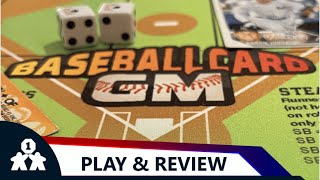
One Stop Co-op Shop Playthrough at 0:03 sentiment: mixed
video_pk 41487 · mention_pk 125792
Click to watch at 0:03 · YouTube ↗
Overall sentiment (raw)
mixed
Pros
- Unique concept: uses baseball cards in a dice-driven gamified framework, offering a fresh take on card-based simulations.
- Accessible to players who already own baseball cards or enjoy retro card collections.
- Solid potential for solo play, with the absence of hidden information allowing self-play.
- Strong appeal for families and players who enjoy light, luck-based play with eventful dice rolls.
Cons
- No true solo mode or automa; solo play relies on self-play without opponent dynamics.
- Certain rules (stealing bases, base advancement, double plays) can be unclear or require house rules for smooth play.
- Stat completeness varies by card set (e.g., some cards may miss walks), which can hamper accurate resolution unless players create custom sheets.
- Learning curve includes navigating numbers that appear in a reverse or non-intuitive order, which can slow early gameplay.
Thematic elements
- Baseball seasons reinterpreted as stat-driven outcomes; emphasis on card-era records and thresholds rather than real-time action decisions.
- A casual baseball simulation using physical baseball cards as the source of player stats, resolved through dice-driven at-bats.
- Informal, demo-first playthrough with improvised commentary and occasional nostalgia for baseball cards.
Comparison games
- Pizza Box Baseball
- Pizza Box Football
Mechanics (from transcript analysis)
- at-bat simulation — Player outcomes (single, strikeout, ground out, etc.) are resolved by comparing die results to thresholds tied to the stat on the card.
- base running rules — Optional rules allow stealing bases and more nuanced base advancement, adding strategic options beyond the basic at-bat results.
- dice-based stat resolution — Two dice are rolled to determine which stat on the card governs the at-bat outcome (e.g., batting average, hits, etc.).
- lineup randomness — Lineups can be random or hand-picked; the game supports quick play with nine players per side and minimal strategic setup.
- solo play possibility — The game has no hidden information, so solo play is possible even though there is no dedicated automa for the opponent.
- stat lookups via cards — The relevant season stat is taken directly from the baseball card (e.g., 1989 season batting average) to inform outcomes.
Video topics + discussion points
No key topics recorded for this video.
Quotes (from this video)
- This game is awesome because how cool is it to use the cards in your collection.
- This is a totally random lineup of players.
- No solo mode, but you can play against yourself.
- It's a dice-based luckathon that’s fun to see if the dice fall your way.
- You can be like me. I was sent some random baseball cards from the 80s and 90s.
- The rules are a little fiddly, but the concept is unique and fun.
References (from this video)
No references stored for this video.
Transcript Navigation
Showing 1–3 of 3