







Battlestations Deep Dive
What the Community Thinks About Battlestations
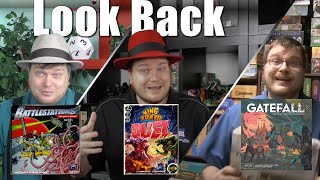
Battlestations, the 2004 cooperative starship game designed by Jeff Siedek, earns its reputation from reviewers who describe it as a genre hybrid with few real rivals. The Dice Tower's Tom Vasel noted in a retrospective Look Back review that the game is "basically an RPG" with ship battles attached, since crews can launch their own ship and then fight on enemy vessels. Vasel lowered the score given in that later look, saying the game had faded, yet still called it a really cool game. In a separate countdown video, Vasel returned to the same idea, calling it "essentially a role-playing game that has board games in it."
Siedek's own interviews with UndeadVikingVideos add a designer's view. In a 2025 interview, Siedek traced the game to its 2004 release and described how the Dirt Side follow-up removes the need for a human game master. Reviewers who played at conventions echo the enthusiasm. Rob's Tabletop World offered a brief but favorable assessment in a stream, and UndeadVikingVideos noted in a later discussion that Battlestations has tripled in price even as Lifeboat continues to sell more copies.
Core Mechanics That Define Battlestations
Modular Board
The play area in Battlestations is built from separate tiles that players arrange for each game, so the layout of the ship and its surroundings changes from one session to the next. Siedek describes the large-format version used at conventions, where the tiles are enlarged to roughly 15-inch squares and players move six-inch miniatures across them. A separate 10x10 hex map with magnets represents the space around the ship, and the ships sit on that map while the crew moves on the tiles. This split between a ship interior and a larger space board is what gives the modular layout its scale.
Asymmetric Enemy Role
One player takes the role of The Enemy, controlling aliens, hostile characters, and surprises, while the remaining players crew the starship. Siedek explains that a human game master is a real barrier because many groups do not want to take that role, which led Siedek to design Dirt Side as a follow-up in which the planet itself generates threats such as grunts, drones, and spreading lava. Siedek also notes that replacing the human Enemy with automated behavior is difficult for the ship-based game, because the Enemy's decisions about boarding, power, and cannon fire require judgment.
The Battlestations Experience
Character Growth Across Sessions
Siedek describes players who return to the game repeatedly to advance their characters. Sessions typically last about two hours, and one regular at Siedek's convention events began a character on Thursday, played through Saturday, and climbed to a high rank by the end of the show. The game blends board game objectives with role-playing progression, so players can track mission goals on the board while their characters grow stronger over time.
Ship and Away Team Tension
The game asks crew members to split their attention between the starship and the characters aboard it. Vasel notes that players can launch their own ship, then fight on enemy ships, so each mission switches between space maneuvers and close combat. Reviewers describe the moment-to-moment feeling as a mix of tactical planning and improvisation, especially when the Enemy player reacts to what the crew decides to do.
What Makes Battlestations Stand Out
Everything Matters
Siedek points to one feature that players value above all: the way each option feels different from the others. In Siedek's words, "one of the things that people love about battle stations is how everything matters." Weapons, character abilities, and ship systems each carry distinct effects, a level of detail Siedek contrasts with the simpler Light Speed variant, which replaces specialized rules with baked-in skill values and a dice-counting check.
Scale and Spectacle
The game's physical presence is part of its appeal. Siedek describes a Gen Con event in which dozens of players flew to a planet and returned to their ship while missiles chased them, a scenario that scaled up because the mission difficulty grew with the size of the crew. Few other tabletop titles can produce that kind of large cooperative spectacle, and Siedek believes no starship game with characters on the ship comes close: "there's no Starship combat game with characters on it that even comes close."
Potential Drawbacks
Length and Complexity
The rulebook is long, and reviewers note that the game asks a lot of time and attention. Vasel said Battlestations dropped off the list because Vasel no longer plays this type of game. Siedek acknowledges the complexity directly, saying that Steve Jackson playtested the game in 2004 and suggested that a simpler version would be better. Light Speed was designed to address that concern, although Siedek says Light Speed is only half as enjoyable while taking roughly a quarter of the time.
Difficult to Run Outside Large Events
The large convention setup can intimidate newcomers. Siedek notes that players who see the full version often say they could never run something like it at home, which is why Siedek suggests running a smaller, simplified version for groups of friends. Preparing the mission, managing the Enemy role, and setting up the tiles all demand effort that casual groups may not want to invest.
If You Enjoy Battlestations
Players who like the blend of ship management and character-driven play should look at FTL, the video game Siedek compares directly to Battlestations. Siedek remembers that playing FTL felt familiar in its ship-based combat, and notes the developers may have had a copy of Battlestations in mind, though Siedek wished it had included more movement across a space map. For a lighter entry point into the same design family, Lifeboat is the natural pick. Siedek describes it as the original, with a social dynamic built on love and hate choices, and argues that its sequel Desert Island balances the psychopath rules more effectively. Lifeboat remains the title that sells more copies, while Battlestations has tripled in price.
What Reviewers Are Saying
"it's basically an RPG, but that has a space battle and ship battles."
— The Dice Tower
"One of the things that people love about battle stations is how everything matters."
— UndeadVikingVideos
"Battle Stations, good game."
— Rob's Tabletop World