


Betrayal at House on the Hill: Widow's Walk Deep Dive
What the Community Thinks About Betrayal at House on the Hill: Widow's Walk
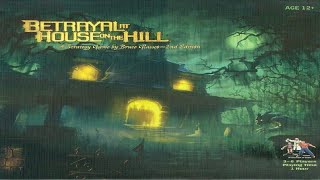
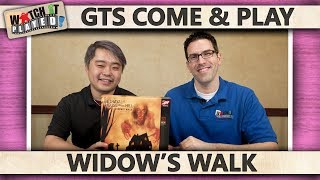
Reviewers see Widow's Walk as the expansion that gives a beloved base game room to grow. Board Game Critique, in a look at expansions that repair their base games, starts from the original Betrayal at House on the Hill and calls its premise one of the most inventive in mainstream gaming before concluding that Widow's Walk "does the obvious thing and does it well." On Watch It Played, Ichao of Wizards of the Coast tells Rodney Smith that a lot of people had been waiting a long time for an expansion, and the conversation treats the release as an answer to a fan base that was already enthusiastic about the original. Board Games UnLocked approaches the expansion as a rules primer, walking through the new roof level and its movement rules at the table with a single player so that the new pieces are easy to follow.
The consensus is that Widow's Walk is less a reinvention than a targeted update. Critics praise it for adding variety to the parts of the game that felt repetitive, while staying faithful to the traitor-and-survivors structure that makes the base game memorable.
Core Mechanics That Define Betrayal at House on the Hill: Widow's Walk
Roof Floor and Dumbwaiter Movement
Widow's Walk adds a roof level above the upper floor, reached through landings that connect the existing house to the new space. Many of the 20 new room tiles carry a dumbwaiter icon, and Board Games UnLocked explains that a player standing on a dumbwaiter space can move to a dumbwaiter space on an adjacent level, which works like a small lift. Board Game Critique describes the same rule as a movement rule that lets a player reach the landing of any adjacent floor for two movement points, and it treats that rule as the core fix for the base game's floor-trapped problem.
Expanded Haunt Library and Haunt Lookup
The haunt is the engine of Betrayal at House on the Hill, and the expansion greatly enlarges the pool. Board Games UnLocked shows how a haunt is found: a haunt roll is made when an omen is drawn, and if it succeeds, the room where the haunt was triggered and the item or omen that caused it are looked up on a chart to find a numbered haunt in the reference booklets. Board Game Critique notes that the combined pool now sits at 100 haunts, plus a locked bonus haunt that requires specific prerequisites to unlock. Because each haunt names its own traitor arrangement and win conditions, the lookup determines who turns on the group and how the round ends.
The Betrayal at House on the Hill: Widow's Walk Experience
Suspicion and Table Drama
Watch It Played emphasizes the social tension in the game, with Rodney Smith describing a game built around "a lot of suspense and mystery and suspicion." Board Game Critique says the reveal of which haunt was triggered "creates reliable table drama every single time," and Board Games UnLocked describes the endgame as a stretch of mind games between each player, where the survivors and the traitor each have partial information and have to read one another. The experience is less about winning a race than about watching a group that has been cooperating turn against itself.
A House That Never Plays the Same Way Twice
The house itself is a source of replay. On Watch It Played, Rodney Smith points out that the layout of the house changes from game to game because the tiles are revealed at random, and Widow's Walk extends that effect upward into a new floor. Board Games UnLocked notes that rooms already entered do not trigger their card draw again, which means a return visit to a familiar space feels different from a first visit. Rodney Smith also jokes that the haunts are unsettling, saying the house holds "never anything good" for the people exploring it.
What Makes Betrayal at House on the Hill: Widow's Walk Stand Out
A Roof Floor That Solves the Trapped-Upstairs Problem
Board Game Critique treats the roof as the most important structural change in the expansion. Its reviewer calls the rooftop floor "the structural fix," and says the dumbwaiter movement "resolves the floor-trapped problem completely." The problem being fixed is specific: during chase-based haunts, a player could end up on the wrong floor with no stairs in reach and lose several turns to walking. Board Games UnLocked supports this reading by showing how the dumbwaiter rule gives players a way to change floors that the base game did not offer, with a speed roll and dumbwaiter spaces doing the work.
Haunts That Break Convention
Reviewers consistently point to the new haunts as the reason to buy the expansion. Board Game Critique says that "the new haunts are weirder and more experimental than the base game scenarios," and gives examples: some haunts put the betrayer on the heroes' side, and some begin with several traitors at once. Watch It Played explains that the expansion's haunts were written by a wide group of contributors, including Pendleton Ward and Anita Sarkeesian, and Ichao describes the designers as people who were excited to bring their own spin to the game. The result is a library where the familiar question of who the traitor is can have very different answers.
Potential Drawbacks
Tokens Are Fiddly to Organize
The Board Games UnLocked host is candid about the physical side of the game. The host finds the tokens very flimsy, notes that they slide around the table with a light bump, and says the game comes with so many different tokens that they are a pain to organize. The host also sets up the demonstration with a single player to keep the explanation simple. For groups that prefer a quick setup, this is the main practical cost of the expansion.
Survivors Only Partly Know the Traitor's Goals
The host of Board Games UnLocked explains that the survivors' secrets book tells the survivors how they win, but it "doesn't tell you exactly what he needs to do" for the traitor. The host presents this as the source of the game's mind games, since the survivors know roughly what the traitor is after without knowing the exact path. Players who prefer full information may find the hidden side of each haunt frustrating, and the base game's finite haunt pool, which Board Game Critique says enthusiastic groups burn through quickly, is only doubled by Widow's Walk rather than removed.
If You Enjoy Betrayal at House on the Hill: Widow's Walk
Widow's Walk is aimed at players who already know the base game and want more of what makes it work. Board Games UnLocked is clear that the original game is required, so the expansion is for owners rather than newcomers. Board Game Critique suggests it is most valuable to groups who have started to feel the base house is too small after many plays, and to players who want haunts that are stranger and more varied than the originals. If the appeal of Betrayal is the moment the traitor is revealed and the table turns, Widow's Walk adds a larger set of those moments and a roof level that makes the house feel bigger.
What Reviewers Are Saying
"We've added a couple of different things. One of the things we got to add is a whole new floor of the house so now you can explore the roof of the house."
— Watch It Played
"The new haunts are weirder and more experimental than the base game scenarios. Some break convention by putting the betrayer on the hero's side."
— Board Game Critique
"If you're in the basement you could go from a dumbwaiter space to another dumbwaiter space and a level above you. So it's kind of like a little elevator."
— Board Games UnLocked