



Boss Battle Deep Dive
What the Community Thinks About Boss Battle
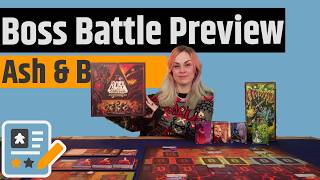
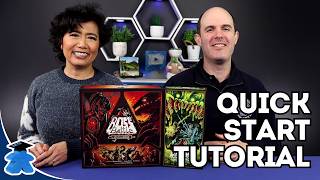
Reviewers present Boss Battle as a cooperative fight with an asymmetric twist: three heroes team up against a fourth player who runs the boss. Meeple University introduces the game as a card driven lane battler in a short tutorial, and it notes that the copy it covered was a prototype, so the final rules may differ. BoardGameCo previewed the game during its crowdfunding campaign and framed the experience around the tension between the heroes and the boss player.
The weekly news and review roundup from BoardGameCo mentions Boss Battle only briefly, describing it as an older title returning with a second edition and an updated rulebook. Its host admitted to knowing little about the game beyond what a colleague had already covered, so that segment confirms the new edition rather than judging how the game plays. The reviewers who went deeper agree that Boss Battle rewards careful planning, and that its difficulty is a deliberate part of the design.
Core Mechanics That Define Boss Battle
Asymmetric One-Versus-Many Play
The central feature of the design from Boss Battle Games is that the heroes and the boss do not play the same way. Each hero player picks a hero and a lane, and heroes can play cards into any lane, but damage dealt to a lane falls only on the hero who controls it. The boss fights across all three lanes instead. Meeple University explains that damage dealt to any boss lane comes off the boss's health. BoardGameCo adds that the boss can draw only up to 12 power worth of cards, even though power can rise above that cap through other effects.
Leveling Through the Round Track
Progression runs along the round track. According to Meeple University, when heroes level up each hero draws three cards from its set-aside cards of the new level, chooses two to shuffle into its deck, and gains a larger hand size while healing. The boss also gains power as it levels. BoardGameCo notes that level-ups arrive at round three and round five, and that the higher-level cards form a whole new deck with stronger effects. Because heroes and the boss advance on the same track, progression is the main way the game shifts from its opening rounds to its finale.
The Boss Battle Experience
Tension Under Pressure
Reviewers describe a game in which nearly every placement carries a cost. BoardGameCo points out that many cards require a bump back or a discard, so paying for one play can slow a lane or remove a card the team needs later. The host calls the planning "really important" and describes it as a "balancing act of what cards to place where." Meeple University emphasizes that speed and precise timing shape the whole experience, since cards in the zero slots resolve in speed order. Boss-side play is described as the opposite of gentle, with the boss pressing the heroes as hard as the cards allow.
Growing Stronger as the Battle Unfolds
The second feeling reviewers highlight is growth. BoardGameCo says that the pacing of the round structure and leveling lets players feel their heroes getting stronger while the boss also grows. Meeple University frames the fight as one that evolves: heroes and bosses strengthen as the battle goes on, and the game runs for up to seven rounds, giving that growth a clear end. Together, these accounts describe a table whose options expand at the same moments that the threat rises.
What Makes Boss Battle Stand Out
Variety of Heroes, Bosses, and Play Modes
BoardGameCo lists six playable heroes and three bosses in the current campaign, naming heroes such as Runa, Emestria, and Aurelius and the dragon boss Tevrog. The same video notes that Runa's battlecry rewards a specific mix of warrior cards in the queue, which shows how each hero plays differently. The variety extends to how the game can be played. BoardGameCo explains that a solo mode exists and that mercenaries can fill in when one of the three heroes is missing. Meeple University adds that the rules automate one or more roles so any combination from one to four players works, and that the expansion Slime and Souls brings a Slime Boss along with the Monk and Bard heroes.
Paced Leveling and a Genuine Challenge
BoardGameCo's strongest praise is for a game that is hard in a way that rewards thinking. The host says the boss "does seem very strong" and that heroes do not always come out on top. The host describes the outcome as a "true battle of wits" in which players decide how to program their cards and how each lane will battle out. Combined with leveling that makes players feel stronger over time, this gives Boss Battle an appeal for players who want a difficult puzzle rather than an easy win.
Potential Drawbacks
Weakened Heroes and the Game-Over Marker
Meeple University describes a hero whose health drops to zero or below as weakened, which triggers immediate penalties. The boss marker advances a round, possibly causing a level up, and the hero must discard a card from hand, bump back a card, or discard an unpaid card from the queue for each card it has in the queue. A weakened hero's hand limit also drops by one until it heals. BoardGameCo notes that weakened heroes can still help in the fight, but that each one pushes the boss forward, so the boss levels faster when it takes heroes out. Meeple University also reports that the game ends in boss victory if the boss marker reaches the game over slot, which means a table can lose before the final round.
A Strong Boss and an Edition in Flux
Reviewers praise the challenge, but the same strength can be a concern. BoardGameCo warns that the boss will "come at you very strongly" and can overwhelm heroes who cannot heal or shield themselves. Heroes must also manage damage tokens that deal harm at the end of each round. The edition itself is still in flux. Meeple University notes that the copy it used was a prototype and that things are not final, and the BoardGameCo roundup describes a second edition with an updated rulebook. Rules described in earlier videos may therefore change before players receive the game.
If You Enjoy Boss Battle
BoardGameCo draws the comparison to Dungeons and Dragons directly. In a game like D&D, players are trying to survive and make it through a story together. In Boss Battle, the boss player wants to defeat every hero, and the heroes want to defeat the boss. That asymmetric fantasy of archetypal heroes facing one formidable foe is the appeal the reviewer identified, so the tabletop RPG tradition is the natural next step for players who enjoy it. Players who like the boss-side role may also want to try the Slime and Souls expansion, which Meeple University describes as adding a new boss and two new heroes to the roster.
What Reviewers Are Saying
"It is a card driven lane battler. As players craftily use, move, and manipulate their cards in a world where speed and precise timing are everything."
— Meeple University
"I do think with the different round structure and leveling up, it's very paced that you find you're getting stronger and stronger as the boss is getting stronger, but the boss does seem very strong where it's going to provide quite a challenge for players every single time."
— BoardGameCo
"And if you're playing as the boss, it's going to mean no mercy, where you're going to come at these heroes as strong as possible."
— BoardGameCo