




Bring Your Own Book Deep Dive
What the Community Thinks About Bring Your Own Book
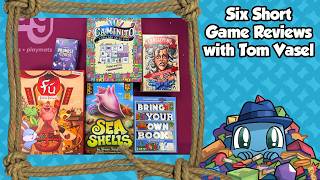
Reviewers keep returning to the same hook: the only thing you need to bring is a book, and almost any book will do. On The Dice Tower's six-game roundup, the game was one of the few standouts in an otherwise mixed lineup, valued less for depth than for how quickly it turns an ordinary shelf of reading material into a source of laughs.
Several channels framed it as a natural companion to Cards Against Humanity. Actualol placed it among alternatives to that game, arguing that it is just as approachable and immediate but without the adult humor. Watch It Played drew the same comparison, describing a format where a topic card gets read aloud and players dig through their own books for answers. Foster the Meeple was more cautious, suggesting the fun depends heavily on who is sitting at the table.
Core Mechanics That Define Bring Your Own Book
The Judge, the Prompt Card, and the Search
Each round begins with a prompt card, such as a request for a favorite candy bar, and one player takes the role of judge. Everyone else races through their own book looking for text that fits. Whoever finds a match first can flip a timer, which gives the rest of the table a short window to finish their own search. Reviewers describe the scramble as the heart of the play, since the answers that surface are rarely the ones anyone planned.
Judging and Book Passing
When the timer runs out, everyone reads what they found, and the judge picks the submission they like best to award the card. The judging role then moves to the next player. As players collect cards, the whole group passes their books to the left and picks up a new one, which keeps every round supplied with fresh source material. The Dice Tower noted that the win can be decided in more than one way, so groups can choose whether the first to find an answer or the judge's favorite decides each card.
The Bring Your Own Book Experience
Silly, Fast, and Loud
Reviewers describe a game that moves quickly and leans into absurdity. Most of the laughs come from reading aloud what turned up in an unexpected book, especially when a phrase lands with an accidental double meaning. Because nobody knows what will appear on the page, the table keeps reacting to each other's finds instead of waiting for a turn.
A Classic Gathering Game
The game is repeatedly placed at holiday tables, dinner parties, and family nights. Actualol called it a classic family party game, and Watch It Played described it simply as the kind of party game that just sounds fun to try. Foster the Meeple linked the appeal to households full of readers, who will enjoy hunting through their shelves for a word that fits the card.
What Makes Bring Your Own Book Stand Out
Almost No Setup
The entry cost is whatever book happens to be nearby. The Dice Tower highlighted that the game asks for nothing special, and a children's picture book and a dense novel can sit side by side at the same table. That flexibility also makes it an easy choice for groups where not everyone wants to spend time learning rules.
A Concept That Grows on Players
The Dice Tower's look-back review said the game has increased in their estimation over time. The same reviewer praised the premise for its educational potential, since it rewards careful reading and quick scanning of a text. "I love this concept where you have your own book" is how the reviewer put the appeal, and that enthusiasm for the core idea runs through several of the reviews.
Potential Drawbacks
The Books on the Table Set the Tone
Because every answer comes from the players' own shelves, the evening's tone depends on what people bring. Actualol pointed out that the books used will govern the tone, so a group with a racy collection will have a very different night than one bringing children's titles. Watch It Played also joked that a rulebook offers few usable answers for a prompt about a favorite chocolate bar, which shows how much a poor book choice can limit a round.
Not Everyone Will Find It a Hit
Foster the Meeple framed the game as a strong pick for families of readers but stopped short of calling it a universal favorite. Reviewers who are less drawn to silly word games may find the search less engaging, especially if their books do not offer much to work with. The game rewards players who enjoy the scramble, and it asks more of the group's willingness to play along than of any particular strategy.
If You Enjoy Bring Your Own Book
Groups who enjoy Cards Against Humanity but want to skip the crude humor will likely find this a comfortable next step, especially for holiday gatherings, dinner parties, and family game nights. It also suits book lovers who like showing off their shelves and players who prefer quick social games where everyone is busy at once. It is a light, social game built for laughter more than planning, and the reviews suggest it works best when the group is ready to be silly together.
What Reviewers Are Saying
"Kind of a mediocre lot in a lot of sense, but one I really liked, which was Bring Your Own Book."
— The Dice Tower
"it's very silly, but if you have a family of book readers of readers, it will be a hit for sure."
— Foster the Meeple
"bring your own book feels like a classic family party game great for dinner parties and Christmas it's as approachable and immediate as Cards Against Humanity but without the adult humor"
— Actualol