


Buds and Blooms Deep Dive
What the Community Thinks About Buds and Blooms
Buds and Blooms is a 2021 card game by designer Mark Tuck, published through The Game Crafter, for one or two players with a typical playtime of about 25 minutes. Reviewers describe it as a small, carefully designed garden puzzle that rewards planning without demanding much table space or setup time. Watch Review, who received a review copy from The Game Crafter, called it a "lovely, clever little card game with a relaxing nature theme and plenty of depth beneath its simple rules." That reviewer awarded it a Silver Cert of Games recognition, arguing that it is a simple yet smart design.
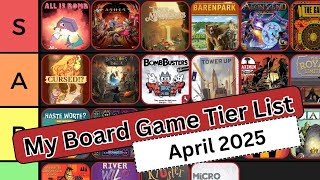
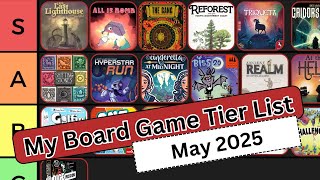
Sir Thecos, whose monthly ranking videos feature the game, has been more measured about its long-term standing. In one video Sir Thecos rated it an A and said it is "a game that I like a lot," while in a later video the rating settled at a B for the time being, with the possibility of moving up with more plays. Both videos stress that Sir Thecos had only played the game solo, and the praise centers on its tactical feel and its growing-flower puzzle.
Core Mechanics That Define Buds and Blooms
Flower Rows Built From Conditions
Each flower is built by laying cards in a row, and the conditions printed on the flower beds determine which rows count toward scoring. Watch Review described the goal as building tall flowers that satisfy these conditions. A row can stay in a single color or alternate between colors, and the values can climb or fall depending on what the flower bed asks for. Each placement narrows the options that follow. The reviewer noted that placing a two rules out a one for that row, so the best rows only come together when the right cards arrive in the right order.
Weather Matching and the Three-Action Turn
Each turn offers three choices: play a flower, discard a card face down, or play a tool card. Growth depends on weather. Watch Review explained that when a discarded card shows a different weather symbol from the card beneath it, the flower can be pushed up a level, which reveals more leaves and bees. A discard that matches the existing weather does nothing except clear the card from hand. The tool cards add flexibility. A watering can lets a player grow one flower two stages or two flowers one stage each, a digging tool lets a player take a card from the discard pile or look at the top three cards of the draw deck, and another tool lets a card be inserted between two cards in a flower. Hand size returns to four after each action.
The Buds and Blooms Experience
A Calm Nature Puzzle With Quiet Tension
Reviewers consistently describe the mood as calm and pleasant. Watch Review said the art style is "simple, but very pleasant and fits the theme nicely," and that the game "captures that calm, relaxing feeling well." The tension comes from how little changes on each turn. Watch Review argued that "the premise and rules are simple, but they're always difficult decisions to make," calling that exactly where games shine. Sir Thecos similarly called the game a very cool tactical experience, even while describing the flower-growing as relaxed.
A Satisfying Solo Puzzle With a Visible Target
Solo play gives the player a clear goal. Watch Review noted that in solo mode "you can clearly see how many points you need to reach at the end," calling that a welcome feature for players who like to plan ahead and aim for high scores. Scoring is straightforward. Each leaf is worth one point, bees score on a sliding scale (two bees for one point, three for two, four for four), and a butterfly matching the color of the top flower adds three. In that playthrough, Watch Review finished at 31 points against a target of 28, a result described as one of the rare winning moments captured on camera.
What Makes Buds and Blooms Stand Out
Information Design That Reads at a Glance
Watch Review singled out the card design as the most clever element of the game. Buds always show three levels and flowers always show two, while leaves and butterflies always appear in fixed positions. The only element that changes from card to card is the bees, so a player can read most of a tucked card without looking underneath. The weather icon is also printed on the front corner as well as the back, which the reviewer said "makes planning so much easier." Watch Review summarized the result as a design where players can approach the game either strategically or tactically, because the predictable structure supports planning while still allowing quick reactions.
Production Quality and a Quick Setup
The Game Crafter's production stands out to reviewers. Watch Review noted that the publisher lets designers choose different card quantities and that this release uses one of the higher-quality options, a detail worth appreciating. The tuck box is sturdy and feels good in the hand, a nice touch for a small box game. Setup is quick: three flower beds are laid out, one worm is placed in solo play, and the number of rocks (zero to three) sets the difficulty. Watch Review said the setup is very quick and that adjusting the difficulty is refreshingly straightforward, which makes the game easy to bring to the table.
Potential Drawbacks
Heavy Dependence on the Draw
Several reviewers acknowledge that luck plays a large role. Watch Review described the game as quite dependent on the luck of the draw, and noted that a card needed near the bottom of the deck may never appear, so not every plan can be carried out. Watch Review found that adding one rock makes the game challenging enough to be engaging while keeping the pace semi-casual and relaxed. Players who want full control over outcomes may find the randomness frustrating, even though the reviewer considered it manageable at the lower difficulty settings.
Limited Long-Term Evidence and Solo Focus
Reviewers are still forming longer-term opinions. Sir Thecos has played the game only solo so far, and in a later video said it was not yet clear how much that opinion would hold in the long run, since it could move up or down with more plays. Watch Review also limited those remarks to solo play, so the two-player experience is less represented in the coverage. For prospective buyers, this means the strongest evidence currently comes from solo sessions, and the long-term replay picture is still developing.
If You Enjoy Buds and Blooms
Buds and Blooms suits players who appreciate compact card games that deliver real decisions in a short session. Watch Review described the game as easy to teach and quick to set up, which makes it a practical choice for players who want a meaningful puzzle without a long rules explanation. It will appeal to fans of nature themes, planning-based puzzles, and solo play, and to anyone who has followed Mark Tuck's small games, since Watch Review stated that there isn't one of the designer's titles that hasn't been enjoyed. Players who dislike luck-driven card draws or who want heavy player interaction should go in knowing that the draw shapes most games.
What Reviewers Are Saying
"Cards with only buds always have three levels. Cards with flowers always have two. And both leaves and butterflies always appear in the same positions. The only element that varies are the bees."
— Watch Review
"It's a game you can play from one to two players. I've only played it solo so far, and you're trying to grow out your flowers. Very cool tactical game."
— Sir Thecos
"I enjoyed my play with it. I only played it once, so I can't say how much I like it in the long run."
— Sir Thecos