
Candy Hunters Deep Dive
What the Community Thinks About Candy Hunters
Candy Hunters is a small-box Halloween puzzle that reviewers present as a smart, quick, and playful alternative to darker seasonal fare. Its appeal centers on spatial puzzle solving and on outmaneuvering opponents rather than on the theme alone. Reviewers agree that the kids, candy, and ghosts are cute rather than frightening, which makes the game a comfortable pick for players who avoid horror but still want something seasonal on the table.
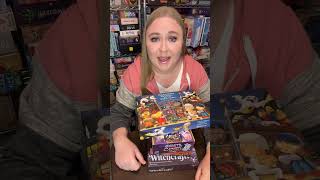
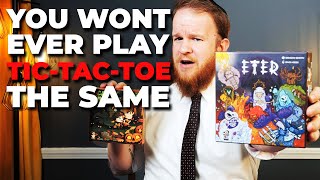
Quackalope offers the most detailed walkthrough, calling Candy Hunters a lovely little spatial game and explaining a full turn step by step. The channel says it personally prefers Ether, the other game in its preview, but notes that the choice depends on whether a player wants more random chaos or more strategic control. Tabletoptiktok approaches the game as a quick, cute puzzle for mixed groups, summarizing its goal as creating patterns while using ghost tokens to block rivals. Both reviewers treat interaction as the main draw, and Tabletoptiktok describes the game as containing a lot of strategy for the player who is building patterns.
Core Mechanics That Define Candy Hunters
Tile Placement
On a turn, a player adds a tile to the shared board so that it matches a pattern the player is working toward from their hand. Quackalope walks through a turn in which a yellow tile is placed to match an existing tile, after which the player moves a ghost up to two spaces. Where that ghost lands decides who gains the tile. A ghost on the tile being matched costs its owner points, while the player's own marker on that tile lets them claim the candy and flip it for later scoring. Tabletoptiktok describes the same loop as creating patterns "that only you know", using the rooms on the board, with kids in some rooms that reward a completed pattern with bonus points.
Compound Scoring
Final scoring draws on several separate tallies. Quackalope lists two points for each completed pattern card, two points for each candy of a given color, one point for each additional candy beyond those four original types, and a penalty of minus one point for every scare token. A quest completed while a ghost sits on the map scores negative points, so players must balance collecting candy against completing patterns and keeping ghosts off the tiles they are scoring.
The Candy Hunters Experience
Tense Opponent Manipulation
Play feels like a running contest of prediction. Quackalope describes choosing a marker location not for its immediate value but for how rivals are likely to respond, because the other players will probably move a ghost onto the marker and push it somewhere unwanted. Each turn asks players to weigh their own scoring options against where rivals will move next. The channel observes that the more a player knows the game, the more thinky and critical the decisions become, and the mood is one of tightening tension rather than random chaos.
Light, Playful Halloween Charm
Against that tension sits a cheerful tone. Tabletoptiktok says the host avoids horror and prefers games that are "tongue and cheek, not the gory kind." Candy Hunters fits that description: kids eat candy and are happy when a pattern lands on their room, and the ghosts function as a nuisance rather than a threat. The result reads as cute and approachable on the table while still rewarding careful play.
What Makes Candy Hunters Stand Out
Ghosts as a Blocking Tool
Reviewers consistently highlight the ghost tokens as the feature that separates Candy Hunters from a plain pattern game. Tabletoptiktok frames the ghosts as the means by which players block rivals from doing what they want, and Quackalope shows how moving a ghost can shift an opponent's marker out of position. Because a ghost on a pattern tile costs its owner points, the same piece is both a weapon and a risk, which keeps every placement open to second-guessing.
Candy Hunter Puzzlers
Quackalope singles out the Candy Hunter Puzzlers system as a strong option for solo players who enjoy spatial recognition. The puzzles are a series of escalating challenges, and players can build the tile layout or work through the problem on paper if they understand the rules well enough. The channel says some of these are genuinely difficult, which gives solo players a way to spend time with the game's pattern logic without an opponent.
Potential Drawbacks
Being Pushed Around by Opponents
The same interaction that makes the game engaging can frustrate some players. Quackalope warns that a rival will often move a ghost onto a player's marker, forcing that player away from a planned scoring spot. Anticipating that move is part of the design, but a player who loses a carefully placed marker may feel that the game took the decision out of their hands.
Pattern-Focused Design May Not Suit Everyone
Quackalope openly says that patterns are not their strength and that they do not always see them clearly, which makes the game's central challenge less comfortable for that viewer. Tabletoptiktok likewise describes the game as very puzzly. Players who find spatial pattern recognition tiring may find the core puzzle more work than fun, even if the cute theme and light tone appeal to them.
If You Enjoy Candy Hunters
Quackalope's most direct comparison is with Ether. The channel prefers Ether personally, but it says players who want more random chaos or strategic depth could reasonably choose either. Ether is described as an escalating take on tic-tac-toe, where cards cover rival plays, face-down cards act as traps, and deity powers twist the board. It suits players who enjoy the same blend of outthinking and manipulation that drives Candy Hunters, at a higher level of tactical intensity.
Tabletoptiktok lists Ghosts Love Candy in the same Halloween roundup, and the two games share a candy-collecting theme. In Ghosts Love Candy, players bid on kids carrying different candies, and each player values those candies differently, so players who enjoy the candy side of Candy Hunters may find a different take on it worth exploring.
What Reviewers Are Saying
"But remember, because the other players will be going, I might want to shift where I put that. I don't necessarily want to put it down on the most obvious place where I'm going to be trying to scoring next because they're probably going to move a ghost on top of me and push me somewhere I don't want to be."
— Quackalope
"Next up we have Candy Hunters, where you are trying to create certain patterns on the board and use the little ghost tokens to block other players from doing things. So, there's a lot of strategy for yourself and you're also trying to block your opponents from doing things that they want to do."
— Tabletoptiktok
"And so, even the games I play are not super scary. They're more fun. Tongue and cheek, not the gory kind."
— Tabletoptiktok