


Castle Raisers Deep Dive
What the Community Thinks About Castle Raisers
Castle Raisers arrives with a paradox that delights reviewers: it wears a children's storybook aesthetic inspired by The Three Little Pigs but delivers a sophisticated tile placement game that captivates adults. The community consensus is one of pleasant surprise. Brains On Games, Tabletop Tolson, TheGameBoyGeek, and independent reviewers all encountered a game that exceeded their initial expectations based on its approachable theme. Reviewers consistently praise the mechanical elegance hidden beneath the castle-building facade and the way Wonderful World Board Games has scaled the classic tale into something that works for players across ages. Where opinions differ slightly, it centers on whether the short playtime is a limitation or a strength. Most reviewers embrace it as an elegant design choice that invites repeated plays, though at least one noted that the brevity leaves less time to fully explore the game's strategic possibilities.
Core Mechanics That Define Castle Raisers
Tile Placement
Castle Raisers is fundamentally about building, and that starts with placing wall tiles onto your player board to construct a multi-level castle. Each tile must overlap with previously placed tiles and remain flat and balanced, creating a physical puzzle that feels tactile and immediate. TheGameBoyGeek emphasizes that this verticality creates amazing table presence, turning abstract strategy into something visible and architecturally satisfying. The placement mechanic locks into a larger strategic loop: where you place a tile determines which action icons you will eventually cover, which determines your future options. Brains On Games highlights the spatial reasoning this requires, describing how players must plan multiple turns ahead to ensure their walls remain stable enough to stack higher pieces. This isn't just placing tiles to score points; it's constructing a three-dimensional defense system where every placement shapes your castle's destiny and your opponents' future threat level.
Drafting
Castle Raisers relies on open drafting from a limited market, where player order matters significantly. Each round, players select one remaining wall tile from the shared market, creating a tension between taking what you need and denying what your opponents want. Brains On Games notes that the first-player advantage is real because there is often one specific tile with just the icon you need, making turn order compete for primacy alongside points. The drafting extends to village tokens, which players acquire by covering specific icons, creating a secondary draft layer where you're selecting both the path of your castle and the villagers who will score bonus points. Tabletop Tolson calls this a well-integrated system where elements are not redundant; nothing feels left out and nothing is added that shouldn't be there. The drafting rhythm combines with action selection to create quick turns that don't sacrifice depth.
The Castle Raisers Experience
Tactical Satisfaction Through Delayed Consequences
What sets Castle Raisers apart is its delayed-action mechanic: you don't perform an action when you place a tile, but only when you cover that tile with a tile on top of it. This inversion of the typical tile placement flow creates an exhilarating planning puzzle. TheGameBoyGeek describes seeing this mechanic as novel and compelling, a design choice that makes every tile placement a commitment to a future turn. You are building not just for this moment but for the set-up opportunities the tile creates in your next turns. TheGameBoyGeek goes further, noting this delayed action has not been seen elsewhere, making it feel fresh and thoughtful. This mechanic generates an exciting arc to the game: your turns become more powerful as the game progresses because you activate more and more of your carefully placed tiles. Early rounds feel cautious; later rounds erupt with action chains and cascading abilities.
Tension Without Meanness
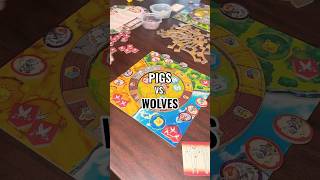
Castle Raisers manages a rare feat in competitive games: players can attack each other without the experience feeling personally spiteful. Brains On Games highlights that the attack mechanism works by having all opponents draw random wolves from a shared bag, making it feel more like shared bad luck than targeted harm. Players aren't choosing a single victim; they're triggering a random draw, which depersonalizes the conflict. This is especially clever because attacking often makes strategic sense for your own scoring, not just as a weapon against rivals. Tabletop Tolson emphasizes that the competitive version still feels light in tone despite the conflict, and that both the competitive and cooperative modes deliver genuine fun depending on your table's preference. The wolf system creates a shared threat everyone must manage, turning what could be a frustration point into a communal puzzle.
What Makes Castle Raisers Stand Out
A Bridge Between Accessibility and Depth
Brains On Games describes Castle Raisers as an excellent entry point for players new to drafting and tile placement games. The theme is approachable, the icons are limited and clear, and a single turn is straightforward: pick a tile, place it, activate the covered icons. Yet beneath this simplicity sits real decision-making. Reviewers consistently note that players must think ahead spatially, manage multiple objectives simultaneously (defending against wolves, scoring village bonuses, controlling first-player position), and balance short-term actions against long-term castle architecture. TheGameBoyGeek captures this balance perfectly: the game is light enough to play casually but includes enough structural depth that adults find it genuinely engaging. It's rare to find a game that welcomes newcomers without boring experienced players.
Engine Building That Evolves Meaningfully
As the game progresses through its three ages, the village tokens you place multiply the effectiveness of your covered actions. Tabletop Tolson and TheGameBoyGeek both highlight this as a source of excitement: the power curve feels natural and rewarding. When you place a village token that gives you bonus points for certain conditions or multiplies your cauldron power, your future turns gain real momentum. The engine builds not through randomness but through deliberate placement, making each decision about positioning feel consequential. Fortifications (pure wall-height boosters) seem innocuous until players realize they unlock the ability to stack higher walls faster, amplifying all future placement options. This forward-looking design makes replayability strong; the short playtime makes learning from each game and trying different strategies immediately appealing.
Potential Drawbacks
A Rulebook in Need of Polish
Brains On Games encountered confusion with the printed rulebook, particularly around examples where icon counting seemed inconsistent and icon positioning (which side of the line a tile sits on) created ambiguity. The reviewer notes that the PDF version addressed some of these issues, but the original box contents presented an onboarding friction that shouldn't exist. Wonderful World Board Games appears to have released updated rules, but this points to a design communication problem that can delay play for new groups trying to learn from the box alone.
Limited Time for Strategic Evolution
TheGameBoyGeek notes that the 45-minute playtime, while excellent for replayability and pacing, leaves short windows to fully explore engine-building strategies. With only twelve rounds of wall placement split across three ages, players don't get to see their constructed engines reach maximum power. For some players, this brevity is a feature; for others seeking deeper strategic arcs, it reads as a limitation. The game is intentionally designed short, which is a choice rather than a flaw, but it does mean that the satisfaction of engine-building peaks quietly rather than crescendos dramatically.
If You Enjoy Castle Raisers
Players drawn to Castle Raisers's tile placement mechanic and spatial puzzle will find similar satisfaction in other grid-building games like Azul or Carcassonne, though Castle Raisers's stacking adds a dimension absent from pure flat placement. Those who relish the drafting tension and player interaction will appreciate Splendor or 7 Wonders, which layer similar decisions into quick playtimes. For the engine-building arc and gentle conflict resolution, Everdell or Calico offer kindred strategic rhythm. Castle Raisers's combination of tactical placement, drafting, and table presence makes it a natural gateway into modern board design for players exploring beyond Eurogame classics.
What Reviewers Are Saying
"It's got a theme that looks like it's for kids, but we were so surprised that there was enough decision-making there in strategy that it was really an interesting game for the grown-ups."
— Brains On Games
"The theme is an absolute home run. Three Little Pigs makes it perfect for the kids. The fact that they've amplified it and made it now about castles defending against an army of wolves, now it's cool for all ages."
— TheGameBoyGeek
"You've got that delayed action. You don't get to perform the action until you put a tile on top of it. That is just a really cool mechanic. I haven't seen that before."
— TheGameBoyGeek