


Catharsis: Divine Wrath Deep Dive
What the Community Thinks About Catharsis: Divine Wrath
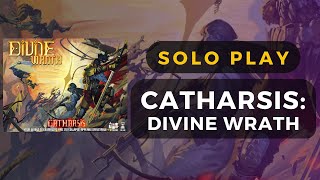
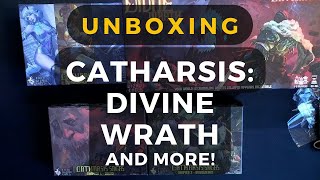
The board gaming community is divided on Catharsis: Divine Wrath, a solo and cooperative dice-rolling adventure that sits somewhere between Dice Throne and something entirely its own. Most reviewers celebrate it as an ambitious, content-rich expansion that takes the original game's foundation and enriches it with thematic depth, narrative variety, and mechanical innovation. However, one critic found the experience frustrating, pointing to balance issues that undermine the enjoyment of what otherwise sounds like a promising system.
The consensus leans toward enthusiasm. Reviewers praise the sheer amount of asymmetrical character design, the thematic variety of boss scenarios, and the solo-friendly difficulty curves that make the game accessible whether you're playing alone or with a group. The expansion's new heroes introduce fresh mechanical systems that set them apart from one another in meaningful ways. Yet the critical voice raises a legitimate concern: some of the game's mechanics feel punitive, with abilities that damage the player using them, creating a balancing act that doesn't always feel fair or engaging.
Core Mechanics That Define Catharsis: Divine Wrath
Dice Rolling as the Foundation
Catharsis: Divine Wrath uses dice rolling as its primary resolution engine. Players roll dice, often up to three times, to generate the random numbers they'll use to activate their powers. The dice themselves become a resource that must be managed carefully. Each hero has unique abilities that require specific dice combinations (pairs, straights, sets of matching numbers, or even arbitrary values), and the goal is to land on the numbers you need. The mechanic injects variance by design, meaning no two rounds play out the same way, and clever re-rolling strategy becomes part of the skill expression.
Dice Placement and Power Leveling
Once rolled, dice are assigned to action spaces on hero ability cards. The pip value of each die determines which abilities become available or how powerful the result is. This is where the expansion truly shines: each hero's power deck is its health pool, but also the source of their capabilities. As powers are used, they exhaust and must be healed through spending morale or completing encounters. Critically, heroes can level up their abilities by spending a resource called Cobble, making each power more effective as the game progresses. This creates a compelling arc where players gradually unlock stronger versions of their core abilities, turning a weak early-game power into a devastating tool by mid-game.
The Catharsis: Divine Wrath Experience
Narrative Immersion Through Boss-Specific Stories
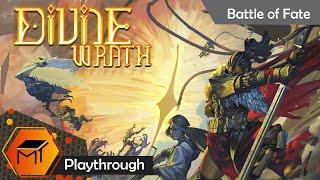
Each boss scenario in Catharsis: Divine Wrath tells a story. The Battle of Fate plays with temporal paradoxes, forcing you to predict which world you'll visit next and manage an ever-growing paradox counter. The Unders City Crab presents a treasure-hunting expedition where you decide whether to dig deeper for valuable loot or retreat to safety before the city collapses. The murder mystery scenario functions like a choose-your-own-adventure story, with the final boss encounter determined by which suspect you identified. These aren't just different rule sets; they're genuinely different narrative experiences that create distinct emotional tones and strategic challenges.
High Replayability Through Asymmetrical Characters
The true engine of replayability is the character roster. Each hero plays by fundamentally different rules. Luia the Tinkerer upgrades her ability cards with Cobble and chooses her six starting powers, creating a planning phase where you build a specific strategy before the game begins. Dur Hawk the Devoted generates Divinity, which she can spend for powerful summoned effects. Gau the Wrestler uses a timing system, building up pressure on abilities before releasing them for massive payoff. Suna the Enchantress summons thralls that block damage but consume her action economy. Playing a dozen different heroes means experiencing a dozen different puzzles, not just variations on the same core system.
What Makes Catharsis: Divine Wrath Stand Out
Asymmetrical Character Design That Goes Deep
The standout feature reviewers consistently mention is the sheer depth of character asymmetry. This isn't cosmetic variation. Each hero has a unique mechanical identity: Ember Hoof the Brew Maiden focuses entirely on cooperative play and drinking, building bonuses through cooperation while risking losing them to bad dice rolls. Lumi the Ice Elf creates resources she gives to other players, making her powerful only when coordinating with teammates. The Wind Dancer requires you to alternate between flying and earthbound states, managing a strict rhythm of movement that no other character in the game enforces. New players can start with a simpler hero like Luia and gradually work toward the complexity of specialized roles, while experienced players can dive into the interlocking mechanics of characters designed for specific team compositions.
Multiple Rich Boss Scenarios with Distinct Mechanics
Catharsis: Divine Wrath ships with multiple boss encounters, each fundamentally different from the others. Some bosses have special rules, like the Thousand Eyed Dragon's exhausting slug-to-the-death with no healing points, or the Mud Elemental that forces you to feed dice into its pool each round, hoping those dice don't roll low and hurt you. The Murder Mystery adds deduction gameplay on top of combat. The Unders City Crab ties treasure acquisition to your exploration depth and available resources. These aren't reskinned versions of a single fight; they're genuinely separate game modes that justify replaying the expansion over and over.
Potential Drawbacks
Keyword Density and Complexity
The expansion introduces a wealth of keywords: reload, partner, burn, incinerate, armor, armor shred, spore, and many others. Each keyword has specific rules that can interact in unexpected ways. Reviewers note that the rulebook is necessary at the table, particularly early in learning the game. Some abilities use underlined keywords, signaling that you must look them up if unfamiliar. This complexity is intentional and makes each character feel different, but it does create a barrier to entry. If you prefer games where you can intuit how powers work, Catharsis: Divine Wrath may feel dense and text-heavy.
Punitive Ability Design and Balance Questions
One reviewer raised a significant concern about game balance. Some abilities in Catharsis: Divine Wrath damage the player using them, creating a self-harm mechanic that's meant to be a risk-reward trade-off. However, this reviewer felt the balance swung too far in some cases, with certain abilities simply never being worth using because the punishment outweighs the benefit. They described the experience as "a chore to play" and felt many decisions were unrewarding. While other reviewers didn't emphasize this issue, it's worth noting: if an ability damages you and the benefit isn't compelling enough, it sits dead on your character sheet, and your toolkit feels smaller than advertised. This is less of a universal complaint and more of a specific design philosophy some players reject, but it's a real tension in the system that deserves consideration.
If You Enjoy Catharsis: Divine Wrath
Players who love Catharsis: Divine Wrath should consider exploring related titles. Dice Throne is the closest mechanical ancestor, though reviewers consistently note that Catharsis is more strategic, less competitive, and richer thematically. For those drawn to variable player powers and asymmetry, Gloomhaven offers a deeper narrative campaign and character progression, though it plays quite differently. Marvel Champions provides excellent cooperative solo play and character-specific decks that reward building around a hero's theme. City of Kings similarly rewards deep character specialization and exploration. Finally, Dione shares the dice-placement core mechanic, requiring you to roll and then assign dice to matching requirements on your tableau, but in a lighter, more abstract puzzle form.
What Reviewers Are Saying
"This game unlike any other game I think I've played is packed to the brim full of some of the most mindblowing cooperative mechanics driven gameplay ever with compelling stories, effective challenge no matter if you're playing solo all the way up to high count multiplayer, and an unyielding amount of potential combinations and opportunities to explore the game system."
— Quackalope
"I think this is kind of like a very elevated Dice Throne game because you do have your changing powers. They count as your health, you know. You don't actually have health. Your powers are your health. And you constantly can get new and heal everything. The variable powers is just so interesting with each of the characters you could choose to play with, which I think makes this game so much fun."
— DaniCha
"Every time you use an ability, you hurt yourself with it. I felt like the balance is a little bit weird sometimes. Like, there's some abilities you just never want to use because they just aren't going to be good enough."
— One Stop Co-op Shop