/pic6973677.png)

/pic6973677.png)


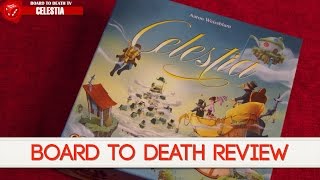



















Celestia Deep Dive
What the Community Thinks About Celestia
Celestia has earned genuine affection from board game reviewers and players across the community. Praised for delivering moments of hilarious tension and unexpected twists, this push-your-luck game consistently generates stories worth retelling. The core appeal lies not in mathematical optimization but in the delightful chaos that emerges when friends must decide whether to trust each other's claims about invisible cards in hand.
Core Mechanics That Define Celestia
Push Your Luck with Dice and Card Matching
At its mechanical heart, Celestia asks one question repeatedly: do you continue forward or jump ship now? The captain rolls dice when the airship arrives at a new location. Those dice show symbols, lightning, clouds, pirates, that the captain must match with cards from their hand. If the captain has the cards, they announce they can proceed and the ship advances to a more valuable treasure location. If they lack the cards, the ship crashes and everyone on board scores nothing.
The brilliance emerges from the asymmetry. Other players cannot see the captain's hand. They know only what the captain claims. This creates the game's primary tension: evaluate the risk, predict the captain's honesty, and decide whether a few points now are worth more than potentially higher rewards later.
Bluffing as the Social Engine
What truly distinguishes Celestia is the legitimacy of deception. A captain may declare they cannot overcome the challenges when they actually can, hoping all passengers will flee so they can continue alone and collect high-value treasures. Alternatively, a captain may claim confidence they don't possess, knowing the ship will crash but trying to convince others their hand is stronger than it is.
The captain cannot leave the ship while passengers remain aboard. This constraint forces interesting dilemmas: should the captain attempt a dangerous advance or deliberately crash to prevent a rival from scoring? Should passengers believe an honest captain who has been trustworthy all game, or assume deception? The game rewards reading your playgroup more than reading the odds.
The Celestia Experience
Chaotic Social Theatre
Games of Celestia tend toward moments that linger in memory. A captain's nervous announcement about approaching storms generates groans and glances around the table. Someone suspects deception and jumps ship, only to watch the captain sail onward successfully. Later, the same captain claims they cannot possibly survive, everyone evacuates, and the ship crashes anyway. Laughter erupts.
The game excels with four to six players, where the captain faces enough skepticism to generate interesting decisions, but not so many voices that analysis paralysis sets in. Play sessions run roughly 45 minutes, making it accessible for casual game nights without demanding a large time commitment.
Surprising Emotional Swings
Celestia manufactures unexpected reversals. The cautious player who jumped early watches from shore as the ship sails to incredible treasures. The bold gambler who trusted implicitly ends up with nothing when an unexpected obstacle appears. The captain performs an act of sabotage or rescue depending on the moment. Each voyage creates its own narrative arc, compressed into single rounds but memorable enough to be referenced throughout the evening.
What Makes Celestia Stand Out
Deceptively Simple Components with Tactile Appeal
Celestia includes a beautiful three-dimensional airship that players assemble at the game's start. This physical model transforms an abstract concept into something tangible. The ship moves forward visibly, reinforcing the metaphor of perilous travel through clouds. Treasure cards serve dual purposes as both victory points and special abilities, some cards grant jetpacks allowing escape even after everyone else has abandoned ship, while others force the captain to reroll dice mid-challenge.
Accessibility Without Shallow Mechanics
Teaching Celestia to new players takes minutes. Passengers decide to stay or jump each turn. Captains roll dice and play matching cards or announce they cannot. The elegance lies in how this simple framework generates genuine strategic dilemmas. Experienced players begin tracking which challenges have already appeared, estimating the likelihood of safe passages and dangerous encounters. New players simply trust their gut and their friends' faces.
Potential Drawbacks
Timing Windows for Special Cards Create Learning Friction
Celestia includes optional power cards that trigger at specific moments in resolution order. Some cards can only be played after the captain announces they will proceed forward. Others activate when everyone has decided whether to stay or jump. The rulebook clarifies these windows, but teaching groups sometimes need practice rounds to internalize exactly when each card type becomes available. Once mastered, the card timing becomes second nature.
Game Length Relative to Mechanical Depth
Some reviewers note that games run longer than the relatively light decision-making might suggest, particularly with larger groups. The special cards and multiple decision points add procedural overhead. Players seeking quick, minimal-text games might find 45 minutes slightly extended for a title they expected to be lighter. That said, the social interaction and bluffing elements sustain engagement for most playgroups even if the mechanical complexity remains modest.
If You Enjoy Celestia
Fans of Celestia generally love games where reading opponents matters more than optimizing numbers. Quacks of Quedlinburg delivers similar push-your-luck tension with a potion-brewing theme and shared token bag. Pan Am offers a lighter, historical option about building airline routes with hidden tile placement. Cloud 9 serves as Celestia's spiritual predecessor, presenting comparable risk-taking in a hotter-air-balloon package before this reprint modernized components and streamlined rules. Each captures that delightful moment when a player must wager trust against reward.
What Reviewers Are Saying
"A lot of fun. 8.5 out of 10. Push your luck style game where you jump off the blimp or pilot it to its doom."
— The Dice Tower
"What I thought I could do, I might not be able to do after the roll. It's a push your luck bluffing game. Everybody I know that's played it just really likes it."
— Rolling Dice & Taking Names
"The excitement and frustration of taking risks is palpable and creates wonderful moments. The 3D ship brings you into the story of the game. Celestia is a great game for a friend who would enjoy the bluffing and social aspect."
— Actualol