

Charcuterie: The Board Game Deep Dive
What the Community Thinks About Charcuterie: The Board Game
Charcuterie: The Board Game has captured the attention of board game enthusiasts with its elegant fusion of strategy and aesthetic appeal. Reviewers and players consistently praise the game's thematic execution, describing it as a delight for anyone who enjoys both the social experience of game night and the visual satisfaction of a well-arranged platter. The game positions players as guests at a party, each bringing their own curated charcuterie board for judgment. This framing has resonated strongly with the community, particularly among players who appreciate games where the visual presentation directly influences gameplay enjoyment.
Core Mechanics That Define Charcuterie: The Board Game
Tile Placement with Aesthetic Purpose
At its heart, Charcuterie employs tile placement as its primary mechanic, but with a distinctive twist: the placement directly shapes both scoring and the visual presentation of your board. Players draft food tiles representing items like strawberries, cheese, cucumbers, and olives, then arrange them on their personal serving board. The tiles are rendered as detailed artwork rather than abstract icons, creating genuine food imagery that makes the board look like an actual charcuterie platter by game's end. This connection between mechanics and theme is deliberate and functional. One notable aspect of the design is that players are not locked into their placements until the final scoring. This flexibility allows players to shift tiles around mid-game as their objectives evolve, a design choice that some see as genuinely special. For instance, a player might initially arrange all fruit to touch other fruit, but upon drawing a new objective card that rewards fruit grouped with cheese, they can reorganize their board accordingly.
Set Collection with Public and Private Goals
The second major mechanical pillar is set collection paired with objective-based scoring. Players pursue both public objectives shared by all players and private objectives visible only to themselves. These objectives create the strategic puzzle: do you chase the shared goal that everyone can see, or lean into your private objectives? Objectives might ask for specific adjacencies (fruit touching fruit, cheese beside specific items) or for the creation of particular groupings across your board. The tension between these goals shapes player decisions throughout the game, and the fact that boards remain mutable encourages players to optimize for whichever objectives they can best satisfy. This creates a relaxed but still genuinely strategic experience where each decision matters without inducing analysis paralysis.
The Charcuterie: The Board Game Experience
Relaxed, Social Gameplay
Players consistently describe Charcuterie as a very chill game, one that invites relaxation without sacrificing meaningful decision-making. The social aspect is reinforced by the premise itself: you are creating something to show others, something meant to be admired. This creates a collaborative tone despite the competitive scoring. The game does not demand rapid decisions or punish downtime, making it accessible to mixed skill levels and play speeds. One reviewer noted that they found it fantastic precisely because it maintains this calm demeanor while still offering genuine strategic considerations.
Visual Presentation as Core Appeal
The aesthetic satisfaction of arranging a charcuterie board is not incidental flavor; it is central to why players enjoy Charcuterie. The tiles look like actual food items rather than abstract symbols, and reviewers have highlighted how this transforms the physical act of playing. Watching a board come together throughout the game provides constant visual reward. The thought of creating something beautiful while also meeting scoring objectives appeals to a broad audience: casual players enjoy the artistic component, while strategic players engage with how placement and arrangement drive victory points.
What Makes Charcuterie: The Board Game Stand Out
Art Serving Game Mechanics
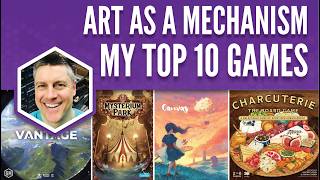
Charcuterie exemplifies a design philosophy in which artwork is not decoration but rather integral to gameplay. The tiles are rendered in a style that makes them unmistakably charcuterie items, and this visual language directly informs player decision-making. Reviewers have noted that the game successfully uses real food artwork where other games might rely on icons or text descriptions. This elevates the thematic resonance: you know a strawberry because it looks like a strawberry, not because a label tells you so. The careful curation of the visual elements ensures that aesthetic goals and gameplay objectives align naturally.
Flexible Placement Mechanics
Unlike many tile placement games where pieces lock in place immediately, Charcuterie allows players to reorganize their boards freely until the final scoring phase. This design choice has been identified as genuinely special, creating a game space where players can experiment and adapt without punishment. The mechanic removes a common frustration in placement games where an early misplacement can haunt a player for the entire game. Instead, Charcuterie invites strategic iteration, rewarding players who thoughtfully coordinate their pieces to meet multiple objectives.
Potential Drawbacks
Scoring System Clarity for New Players
One reviewer expressed curiosity about how the scoring actually translates to visual presentation, wondering whether boards would end up looking beautiful or like a big mess created solely for points. This suggests that the connection between strategic placement and aesthetic result, while elegant in execution, may require some explanation to new players. The objectives drive the placement decisions, but until players see several complete boards, the relationship between the goal cards and the final beautiful result might not be immediately obvious.
Thematic Weight for Highly Competitive Players
Charcuterie's relaxed, social tone and the emphasis on creating something beautiful means it prioritizes accessibility and theme over deep combat or cutthroat interaction. Players seeking highly confrontational or mechanically heavyweight games may find the experience too gentle, even if the strategic layer is more robust than first appearances suggest.
If You Enjoy Charcuterie: The Board Game
Fans of Charcuterie should explore Skyrise, Garden Club, and Wingspan. Skyrise and Garden Club share Charcuterie's focus on set collection paired with aesthetic arrangement, where the visual presentation of your creation directly interacts with scoring. Garden Club in particular has been mentioned as likely to rank highly in discussions of similar games, though one reviewer only had access to the prototype. Wingspan similarly uses set collection and goal-based objectives, with some goals requiring players to pay attention to artwork details, such as the direction birds are facing on cards. All three games reward players who think simultaneously about strategy and visual composition.
What Reviewers Are Saying
"I love the artwork in this game and I love the little the little boards how it looks like actual wooden boards that you're placing your meats and your cheeses and your fruits on it just it looks so fun so I really want to get my hands on a finalized copy see what it ended up looking like."
— Board Game Buzzz
"You are drafting these tiles and then displaying them on your plate in a way that is aesthetically pleasing, but also meets the different goals of the game. One clever thing I think is really special about Charcuterie is you aren't locked into where you place these things until the game is over. So you can shift things around, meeting the goal. You might have been going for one goal where you want all fruit to touch other fruit, but then you get another goal that says fruit should be with cheese, and then you might shift things around, and that is okay, allowed in Charcuterie."
— Stonemaier Games
"It is all about being a guest at a party and bringing the best charcuterie board. You're placing things on your charcuterie board in specific ways in order to score victory points. There's a bunch of different public objectives that you're going for as well as your own private objective. I just think it's fantastic, very chill. I love the theme of the charcuterie boards. I'm a huge fan of charcuterie boards, so I really enjoyed that one."
— The Board Game Garden