



Chronicles of Crime: 1900 Deep Dive
What the Community Thinks About Chronicles of Crime: 1900
Reviewers see Chronicles of Crime: 1900 as a polished, familiar entry in the series rather than a reinvention. Meeple University places it second in the Millennium trilogy after 1400 and says it keeps the app-driven structure the earlier boxes established, adding one new layer on top. No Rolls Barred goes further, calling it the best single Chronicles of Crime box released so far and especially good for newcomers.
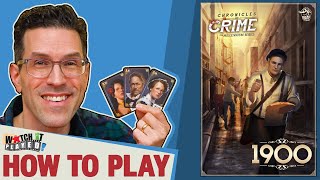
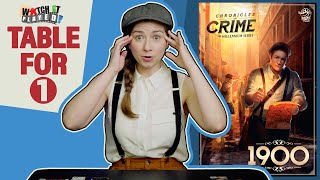
The strongest point of agreement is the new puzzle system. Every channel that covers the game treats the escape-room puzzles as the reason 1900 stands apart from its predecessors. The disagreement is over who will feel that difference most. Watch It Played, hosted by Rodney Smith, presents the box as a complete starting point with a tutorial scenario and four full cases. Another Watch It Played video, Paula's solo playthrough, shows how the investigation unfolds in practice, from a missing senator's daughter to an 1894 death that turns out to be a fake. Meeple University is more cautious about fit: players who enjoy open-ended investigation will likely enjoy the addition, but anyone who already dislikes that style will not be won over by it.
Core Mechanics That Define Chronicles of Crime: 1900
Cooperative case-solving against a scripted clock
Meeple University describes the game as cooperative, which they appreciate because players work toward common goals rather than committing against one another. In practice, the group pools what it finds on a shared evidence board and decides together which suspects to question and where to travel next. The pressure comes from the story itself. In Paula's playthrough, the group realizes that every question costs in-app time and that it only has until the end of the day to solve the case and write its story. Rodney Smith's walkthrough shows how the board supports this teamwork: a red area holds evidence already found, while a blue area holds objects the app has mentioned but the group has not yet located.
App-driven deduction and escape-room puzzle cards
The investigation runs on a free phone app and QR codes. Players scan a location to travel there, scan a suspect to start an interrogation, and scan evidence to learn whether it matters. Meeple University explains that the app reveals information gradually, and a 360-degree view of each room lets players search the scene for generic items to scan. The newer layer sits on top of this loop. Puzzle cards stay face down until the app tells the group to reveal one, and solving them usually means pairing evidence with a special item and entering an answer. Charlotte, the newspaper's puzzle columnist, can offer hints, but each hint reduces the final score by 10 points, and asking for the full solution costs another 10.
The Chronicles of Crime: 1900 Experience
Narrative-Driven
Paula's solo playthrough feels like a serialized mystery in which each answer opens another door. Paula plays a young journalist whose uncle is the police commissioner, and the case grows from a routine missing-person notice into a stolen medieval chronicle, a murder, and a faked death. Each interview reshapes the picture. A photograph of a book becomes a lead to a view of Notre-Dame, which in turn sends the team toward a search warrant. Meeple University points out that the Millennium games share characters across generations, which gives the trilogy the feel of a connected story rather than a set of isolated cases.
Solitary and Puzzly
Paula titles the series "Table for One," and the playthrough does feel like a quiet personal puzzle. Paula works through clues alone, talking through each connection out loud. After entering the safe code wrong, Paula realizes that the newspaper's text was shot in a mirror and that the plate numbers had been read as though they were facing forward. The corrected combination opens the safe. Meeple University also notes how satisfying the puzzles are for players who enjoy reasoning things out, with one of the hosts solving a puzzle almost straight away. For a player who likes working a problem alone, the experience feels like a well-built riddle.
What Makes Chronicles of Crime: 1900 Stand Out
Puzzle cards that elevate the investigation
Every channel that covers 1900 singles out the puzzle deck. No Rolls Barred says the cards lift the series out of a loop of wandering Paris and matching clues to suspects, turning the case into something more substantial. Meeple University calls them the piece that brings the escape-room format into the game without changing its core mechanics. Rodney Smith notes that each puzzle carries its own QR code, so players can ask characters about puzzle items just as they would about evidence. That keeps the new layer consistent with the app-driven system players already know.
A complete, approachable standalone package
The box is designed to be played straight out of the case. Rodney Smith notes that it includes four full scenarios in the app along with a tutorial scenario that suits first-time players, and that scenarios can form a mini campaign when played in order with the same group. No Rolls Barred describes it as very good for the uninitiated. Meeple University adds a practical touch: the app keeps a history that players can open from the bottom left corner, so a missed detail can be checked again without guessing.
Potential Drawbacks
Slow pacing and time pressure
Paula's playthrough shows that the investigation can feel slow. Each question takes in-app time, so the group has to think carefully about whom to question while racing a deadline. Much of the play is a cycle of scanning scenes, checking evidence, and interrogating suspects. Players who enjoy that rhythm will find it satisfying, while others may find the stop-and-scan cadence tedious over a full case. Meeple University's concern is similar in spirit: the format may not suit players who are not already drawn to open-ended investigation.
Look-alike suspects and easy-to-miss details
No Rolls Barred observes that the suspects unhelpfully look the same, which puts more weight on what each character says than on who they appear to be. Paula's safe puzzle shows how a small detail can derail progress, since a mirrored newspaper caused a wrong answer before the correct combination opened the lock. Meeple University also notes that 1900 drops some of the general helpers found in earlier entries, such as the scientist who explains found items in the original scenario. Players who enjoy careful reading will find this rewarding, while those who want more guidance may find the box demanding.
If You Enjoy Chronicles of Crime: 1900
- Chronicles of Crime 1400: Meeple University describes it as the first game in the Millennium trilogy, and Rodney Smith recommends watching the Watch It Played 1400 rules video before starting 1900. Players who miss the loyal dog and vision card from 1400 may prefer that box for its extra guidance.
- Chronicles of Crime (original): Meeple University treats 1900 as built on the same foundation as the original, so players who enjoy that base game's open investigation will recognize the loop here.
- Sherlock Holmes Consulting Detective: Meeple University contrasts the two, noting that the Sherlock Holmes series involves thick books and a lot of reading, while 1900 offers more interaction and bite-sized information. It suits players who want a deduction game with a more tactile, book-based feel.
- Time Stories: No Rolls Barred describes Time Stories as a team-based series where most actions cost time units, and running out ends the run. It is a better fit for groups who want a longer, more punishing story with time as the main pressure.
- Chronicles of Crime: Noir: Meeple University notes that all of the app-driven Chronicles releases share the same investigative system, so players drawn to the dark city streets and morally gray characters of the noir vibe can expect familiar mechanics in a darker setting.
What Reviewers Are Saying
"The main new element 1900 adds are puzzle cards. When the app instructs you to reveal a puzzle, search this face-down stack for the indicated puzzle and reveal it."
— Rodney Smith, Watch It Played
"What makes 1900 so much better are these puzzle cards that you can discover, which are mini escape room style puzzles dotted throughout the game. They're so great, genuinely elevating this Chronicles game from wandering around Paris smashing clues against very similar looking suspects until the case breaks into something a lot more substantial."
— Adam, No Rolls Barred
"If you're an escape room in a box buff and you haven't previously liked the way the Chronicles sort of open plan investigation goes, this is not going to win you over. It's just going to add that little element into the game."
— Meeple University