



Circus Maximus Deep Dive
What the Community Thinks About Circus Maximus
Circus Maximus is a chariot racing game designed by Don Greenwood in 1979 and originally released by Battleline. Avalon Hill later published it as a separate title in 1980. Among the video discussions gathered for this overview, the game draws genuine affection from veteran players, although the views on how well its design holds up are mixed.
The warmest remarks come from BoardGameGeek, where the host recalled buying Circus Maximus upon returning to the hobby and called it phenomenal. On The Dice Tower, Tom Vasel had not played the game but had heard many things about it, describing it as the definitive chariot racing game of its era. Vasel observed that the game has been played at multiple conventions and that people still love it some 46 years after its release.
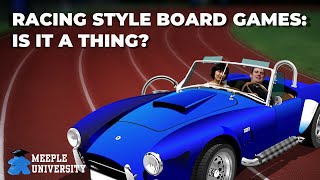
The most critical perspective comes from Meeple University. Its host, discussing racing games in general, recalled Circus Maximus as one of two childhood racing games that never worked for the host. The reservation is specific: progress on the straights was limited by the roll, and the horses periodically went into a frenzy and ran off at random. Taken together, the discussion pairs nostalgic goodwill with the view that the randomness will not satisfy every player.
Core Mechanics That Define Circus Maximus
Roll to Move
The engine of Circus Maximus is movement by die roll. As the Meeple University host described it, a racer rolls a ten-sided die and advances by the result, so the number that comes up sets the pace of the chariot. Roll to move is the oldest and most accessible movement mechanic in the medium, prized for the absence of decision overhead. The Meeple University host saw the trade-off clearly: on the straights, the roll largely decides how far a racer travels, which leaves little room for skill to change the result.
Corner Lane Positioning
The tactical layer sits on top of the roll. The Meeple University host explained that on the bends, a racer on the outside could keep a higher number, while a racer on the inside needed a smaller one. Lane choice therefore became a decision with consequences, and the host described it as bringing "some tactics" to the race, since the distance to the finish had to be managed around the turns. It is the one element in the game's description that gives positioning, rather than the roll alone, a role in the outcome.
The Circus Maximus Experience
Nostalgic Warmth
Circus Maximus feels like a cherished artifact from a formative era of the hobby. The BoardGameGeek host framed the game around the moment of rediscovering board games and buying the title immediately, while The Dice Tower's Tom Vasel pointed to the game's continued presence at conventions decades after it was published. The sensation is less about the precision of play than about the pleasure of a chariot race that has endured, a theme that still resonates with people who came to it early.
Chance-Driven Frustration
For players who want their decisions to matter, the experience can feel out of control. The Meeple University host recalled that the horses' sudden frenzies could send a racer off course, and that the straights offered little agency beyond the roll. That experience explains why a design that evokes fond memories for some players left others unable to get into it at all.
What Makes Circus Maximus Stand Out
A Lasting Reputation
Few games from 1979 are still discussed with this much affection. Tom Vasel described Circus Maximus as the definitive chariot racing game of its time, noting that its fans still play it at conventions despite never having played it personally. The BoardGameGeek host reinforced the point with a personal account of owning the game, which suggests that its reputation rests on players who returned to it over many years.
Corner Positioning With Real Consequences
The corner rule is the element most worth examining in the design. Because a racer on the outside of a bend can use a higher number than a racer on the inside, the race rewards anticipating turns rather than simply rolling. The Meeple University host, who was otherwise unconvinced by the game, acknowledged that this rule introduced tactics into an otherwise roll-driven race.
Potential Drawbacks
Randomness That Overrides Planning
The main criticism is that chance can undo good planning. The Meeple University host described the horses' random frenzies as a moment when a race could go off track regardless of the racer's choices, and found that the roll limited progress on the straights. For players who prize strategic control, this combination of luck and limited agency is the central obstacle to enjoying the game.
Abstraction of Speed and Cost
The Meeple University host also raised a broader concern about racing games: that representing corners and speed on a board is difficult, because braking and accelerating in a real race carry consequences, whereas on a board those choices often cost nothing. The point was that a satisfying racing game needs a meaningful price for each speed decision. Players who share that expectation may find Circus Maximus's movement system lighter on tension than real racing.
If You Enjoy Circus Maximus
Players who enjoy the chariot racing theme and the satisfaction of pushing toward the finish will find a kindred experience in Riata. The BoardGameGeek host named Riata alongside Circus Maximus as a beloved race game, recalling that it came in a plastic foldout box. Players who appreciate Circus Maximus's roll-based movement and its corner positioning will find that comparison a useful route into classic racing design. Readers who share the Meeple University host's preference for racing games in which each speed decision carries weight may want to look for titles that charge a cost for each choice.
What Reviewers Are Saying
"Circus Maximus, I think it was a chariot racing game. You are in a big chariot oval, and you roll, it was roll to move with a d-10, and as you went around the corners, you could keep a higher number if you're out on the outside, where you needed a smaller number if you're on the inside, so there was some tactics there."
— Meeple University
"Circus Maximus was phenomenal. I mean I owned that game. I bought it was like when I got back into games, I bought that immediately."
— BoardGameGeek
"This game here, what, 46 years old at this point. But still, there are still today people who love this game."
— The Dice Tower