


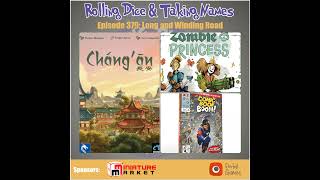
Comic Book Boom! Deep Dive
What the Community Thinks About Comic Book Boom!
Comic Book Boom! has struck a resonant chord with reviewers, particularly those who lived through or cherish the 1990s comic book speculation era. The game's strongest appeal emerges from its seamless marriage of theme and mechanics: you are not just earning money, you are authentically experiencing what it felt like to be a comic book publisher during the boom, complete with the panic of watching trends spike and collapse. Let's Table It praises the game's accessibility paired with genuine strategic depth, while Our Family Plays Games emphasizes the nostalgic immersion and the constant tension of managing risk. The community response centers on a single, powerful idea: this game makes you feel like a publisher, not just a player pushing tokens around a board.
Core Mechanics That Define Comic Book Boom!
Hand Management
The research phase operates on a deceptively simple principle: each card in your hand increases the cost of acquiring the next one. Your first card is free. By the time you have five cards, the sixth costs five dollars. This mechanic transforms every acquisition decision into a genuine dilemma. Do you need that enhancement now, knowing it will make your next purchase exponentially more expensive? The rising cost forces players to think strategically about when to commit to a card and when to hold, and it creates natural tension as your hand fills up. Reviewers note that this system rewards timing and sequencing far more than luck, since you always choose from three cards rather than being stuck with a draw. The genius lies in how this constraint feels authentic to resource management without overwhelming the decision space.
Set Collection
Collecting comic books, stunts, and enhancements drives the scoring engine. Players assemble lines of comic book titles, each with a theme (Ninja, Motorcycle, Robot, Shield, Platinum, etc.). Enhancements add collectibility through diamond icons. Stunts add hype, which pushes a theme higher on the market board and increases its readership value. The interplay between these three card types is where the game shines. A stunt by itself does nothing; it must be played on a book to raise that book's theme on the market. An enhancement adds diamonds, which multiply the final profit calculation. The strategic puzzle emerges: which stunts belong on which books, and when is a combination worth protecting versus abandoning? Reviewers highlight how players must constantly adjust based on opponent actions, since other players' stunts can push themes without requiring your own investment. This transforms set collection from passive accumulation into active negotiation with the market itself.
The Comic Book Boom! Experience
1990s Nostalgia and Theme Immersion
The game succeeds because it does not just reference the 1990s comic boom; it replicates the emotional experience. Reviewers from Our Family Plays Games repeatedly call out specific character names from the game (Burning Rubber, Throwing Star, Trencher, Flack Jacket, Overcoat) with genuine delight, noting that the art captures the aesthetic of actual comic book covers. The components themselves become artifacts of that era: foil covers, hologram variants, die-cut covers, anniversary editions. Each enhancement feels like a real gimmick that comic publishers actually used. This level of thematic detail, grounded in real history, transforms the game from abstract euro-mechanics into a walk through a specific moment in time. Players do not feel like they are managing abstract cubes; they feel like they are publishing comic books alongside rivals chasing the same lucrative trends.
Market Anxiety and the Balancing Act
The bubble burst mechanic creates constant low-level tension. Every round, the market bubble moves up. If a theme gets overhyped and reaches the top of the market board, it crashes; any book tied to that theme gets discarded and profits are lost. This forces players into an uncomfortable reality: you cannot simply chase every trend. You must decide whether to push a theme hard enough to make money before it crashes, or to back off and let competitors overhype while you play it safe. Reviewers describe this as walking a high wire, a constant balancing act where one mistake from an opponent can collapse your entire strategy. The tension is psychological as well as mechanical: watching other players' choices affects your own risk calculus, turn by turn. This creates the feeling of a market, with all its unpredictability and fear.
What Makes Comic Book Boom! Stand Out
Theme-Mechanics Integration
The gap between theme and mechanics is nearly invisible. The cost of researching new cards (based on hand size) reflects the difficulty of scouting new trends when your team is already overextended. The market board functions like a real market: themes rise and fall based on collective demand. The profit formula (readership multiplied by collectibility) mirrors real publishing economics: more popular books (higher readership) with more valuable production values (collectibility) earn more money. Reviewers note that the game teaches strategy through its theme rather than despite it. Every mechanical choice has a thematic reason, and every thematic decision has mechanical weight. This is the hallmark of exceptional game design.
Component Quality and Art Direction
The artwork and component design elevate the experience beyond utility. Each comic book card features a distinct 1990s-themed title with vibrant cover art. Stunt cards reference real marketing tactics (crossovers, signature editions, anniversary editions). Enhancement cards reference manufacturing gimmicks actually used in the 1990s boom (foil covers, hologram variants, die-cut covers). Reviewers repeatedly mention that the art is "done very well" and that they enjoy looking at and talking about the different characters and themes. This level of visual polish makes the game a pleasure to experience and helps sell the fiction that you are genuinely running a comic book publishing company. The aesthetic coherence supports player immersion.
Potential Drawbacks
Theme Dependency
Comic Book Boom! lives and dies by its theme. If you have no nostalgia for 1990s comics and no interest in that era, the game loses much of its charm. The mechanics are solid but not revolutionary; they serve the theme rather than existing independently of it. Players who prefer theme-agnostic euro mechanics may find the constant comic book references distracting rather than immersive. The game requires buy-in to the fiction to shine. Reviewers note that some players may be "okay with" the theme rather than excited by it, and for those players, the experience will feel flatter.
Card Acquisition and Sequencing Complexity
While the rules are easy to follow, the strategic depth emerges from tracking which cards pair well, which themes are rising, and which opponents are vulnerable. New players may struggle with the forward-planning required to make good card decisions. The auction-like quality of the market (where opponents' plays affect your planning) can create analysis paralysis or buyer's remorse, especially when you realize too late that an opponent's move has invalidated your strategy. Reviewers experience moments of genuine panic and regret during play, which is exciting but can also be stressful for players who prefer lighter, more forgiving decision spaces. The balancing act is thrilling but demands engagement and attention throughout the game.
If You Enjoy Comic Book Boom!
Look for games that combine economic simulation with hands-on card interaction. Spin Masters offers similar mechanics of card collection and market management. Comic Hunters shares the specific comic book theme and may appeal if you enjoyed Comic Book Boom! and want more of that genre. More broadly, games like Twilight Imperium or Ameritrash designs share Comic Book Boom!'s commitment to letting theme drive the emotional arc of play. If you are drawn to the hand-management and market-pressure elements, Terraforming Mars and other auction-driven euros will scratch a similar itch. Games that reward aggressive timing and punish overextension (like Coup or Skull) capture some of the psychological tension that makes Comic Book Boom!'s bubble mechanic work so well.
What Reviewers Are Saying
I think what you have to consider is maybe you, you give up some cards and not just do the hype, you know, like, okay, I can do three hype, but do I really need it because my opponent might push it up anyway since the bubble is already up a little bit. It's it's a tight little balance you got to have, this, like you're walking on a a high wire, trying a balancing act, you know, so to speak.
— Our Family Plays Games
It is a game with easy to follow rules and clear instructions on how to play the game but also has some cool combinations with cards matched with other cards mixed with the changing readability with the different themes. So there is some strategic insights to the game that will affect who wins and the luck factor is low as you draw three cards and choose one of the three.
— Let's Table It
I'm like, dude, on theme alone, I, I, we, we lived this. I'm talking, I had a pull list every week in the '90s at a comic shop. I was up on everything. I backed and bagged everything.
— Rolling Dice & Taking Names