/pic249300.jpg)
/pic1180640.jpg)
/pic249300.jpg)










Descent: Journeys in the Dark Deep Dive
What the Community Thinks About Descent: Journeys in the Dark
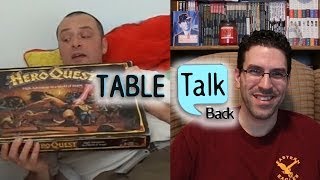
Descent: Journeys in the Dark draws a warm, nostalgic reaction from the community, though not everyone agrees the warmth survives a full campaign. Board to Death TV's review lands as a measured verdict: rich content and an "amazing" combat system, balanced against real reservations about mission difficulty, closing with separate scores of 6 and 7 out of 10 from its two hosts. Board Game Coffee host Mark Maya offers the sharpest swing in tone, calling the game "a fantastic Dungeon Crawler with one huge issue" and describing how a table of rules-savvy players turned an even campaign into a runaway that the group never finished. On Game Night Picks - Pair Of Dice Paradise, one host names Descent as the game that introduced them to dungeon crawling as a genre, a pick both hosts agree belongs among the classic games of 2005. On Our Family Plays Games, a guest designer calls the first edition of Descent: Journeys in the Dark a favorite game of all time despite conceding it produced constant rules questions and long stretches of downtime. Board Game Replay's hosts, ahead of running their own campaign, single out the option to split Overlord duty between two players as one of the game's more appealing social wrinkles.
Core Mechanics That Define Descent: Journeys in the Dark
One Overlord Against a Party of Heroes
Board to Death TV lays out the basic structure: one player takes the role of a game master, called the Overlord, who chooses a scenario from a booklet, lays out the dungeon map, and reveals only the first room before the party of heroes arrives. As the heroes progress, the Overlord reveals new rooms and reads a description of each one, while also controlling every monster, trap, and puzzle standing between the party and the mission's final boss. The review notes that room descriptions can run a little "cheesy," but still help the table picture what is happening in each new space.
Symbol Dice and Mismatched Rewards
Combat runs on custom dice marked with symbols rather than plain numbers, and Board to Death TV calls the resulting battle system "amazing" and "simple," though the same review points out that heroes rarely get to roll dice in their own defense. Board Game Coffee frames a related mechanic as the source of a deeper fairness problem: when the heroes win a mission they keep a permanent reward, such as a flaming sword, while a win for the Overlord only produces a one-use spell card that disappears from the deck once it is played and drawn again before it can be used a second time. Mark Maya argues that mismatch barely mattered until one side started pulling ahead, at which point the imbalance turned the whole session lopsided.
The Descent: Journeys in the Dark Experience
Campaigns Measured in Dozens of Hours
Board Game Replay's hosts, planning their own playthrough, describe a full Descent campaign as something that can run "20 plus hours," a length that has them considering releasing raw, largely uncut footage of entire sessions rather than a tightly edited highlight reel. On Our Family Plays Games, the guest designer recalls spending entire weekends on the first edition and working through every scenario in the box, all while describing the game as full of "millions of rules questions" and stretches of downtime. Board Game Coffee describes turns swinging wildly once one side began to dominate a mission, with a personal turn taking about 20 seconds followed by roughly 30 minutes of waiting through four or five opposing turns before play came back around.
A Dungeon Built From Tokens and Terrain
Board to Death TV spends much of its review on the sheer volume of physical material packed into the box: tokens, three-dimensional monster figures, and interlocking dungeon tiles, along with a scenario builder that lets a group design an original quest and mission. The hosts note they needed a separate box just to organize the pieces, and single out the artwork on items and characters as a design highlight worth the price of admission for a dungeon-crawling group.
What Makes Descent: Journeys in the Dark Stand Out
A Genre Starting Point
Game Night Picks - Pair Of Dice Paradise inducts Descent: Journeys in the Dark into an informal hall of fame for board games released in 2005, alongside titles such as Arkham Horror and Twilight Struggle, with one host crediting the franchise for opening the door to dungeon crawling as a genre they came to love. On Our Family Plays Games, asked which game shaped them the most, the guest designer names the first edition of Descent: Journeys in the Dark above every other dungeon crawler tried since, saying none of the others "really live up to that."
Splitting the Overlord Role
Board Game Replay's hosts point to the option of running the Overlord as a shared job between two players as one of the more appealing social touches heading into their own campaign. Sharing the villain's seat, they reason, softens the sting of a table of four friends losing badly and makes playing the dungeon's side of the table more fun for the people doing it.
Potential Drawbacks
Runaway Leader Once the Balance Tips
Board Game Coffee's clearest criticism centers on what Mark Maya calls a "runaway leader type of thing," where a group of experienced players began exploiting the fatigue and exhaustion rules against the Overlord and each other until the outcome felt like a foregone conclusion well before the campaign's end. The group ultimately walked away without finishing the story, and the host says they would want house rules limiting those tactics before trying it again.
Rules Overhead and Downtime
Board to Death TV describes the opposite side of the same coin, reporting that missions were often too easy for the heroes and too hard for the Overlord to win, and recommending players go online for community rules changes and house rules to rebalance sessions. On Our Family Plays Games, the guest designer, despite naming the game a favorite, does not dispute the cost of playing it, describing "millions of rules questions" and long downtime as a real and lasting part of the experience.
If You Enjoy Descent: Journeys in the Dark
Board to Death TV frames the game as an easy recommendation for anyone already running Dungeons & Dragons or another tabletop role-playing game, pointing to the sheer amount of usable material packed into the box. Board Game Coffee draws a different comparison while unboxing a copy of Claustrophobia, arguing that its head-to-head dungeon fight "feels fair" in a way the host's own Descent campaigns never quite managed.
What Reviewers Are Saying
"It seems balanced until one side starts to win. At least when the heroes start to win, then it's like a steamroller and the wizard just can't catch up."
— Mark Maya, Board Game Coffee
"The battle system is just amazing. The dices you get are marked with different symbols and describe what you roll. I love the battle system, it's simple, it makes it fun to attack."
— Board to Death TV - Board Game Reviews
"It had so many problems. It had millions of rules questions. It just, it was, there was a lot of downtime, but I loved it. It was just a great game and I've tried lots of other dungeon crawlers."
— Our Family Plays Games