




Dino Dynasty Deep Dive
What the Community Thinks About Dino Dynasty
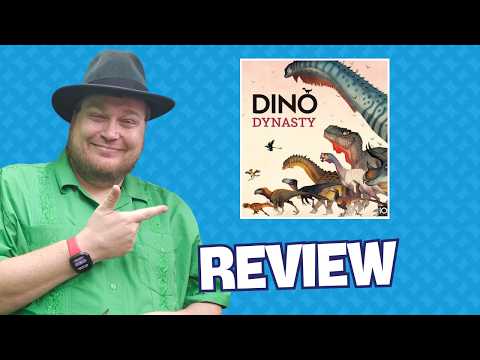
Dino Dynasty attracts passionate but divided opinions. Reviewers consistently admire the game's grounding in real paleontological science and its creative evolution mechanics, but several feel the execution falls short of the concept's promise. Let's Table It delivers an upbeat, welcoming breakdown focused on the game's accessibility and strategic depth. The Dice Tower's coverage, however, pulls no punches: reviewers found the game sprawling, unclear in places, and ultimately underwhelming despite its ambitious design. The consensus leans cautiously negative, with praise reserved mostly for what the game attempts rather than what it delivers.
Core Mechanics That Define Dino Dynasty
Evolution and Customization Through Spatial Sliders
At the heart of Dino Dynasty lies the evolution grid, a pair of intersecting axes that define your dinosaur's four core traits: size, reproduction, diet, and adaptability. By moving evolve markers along these sliders, you shift the intersection point that determines your action frames, and those frames govern everything you can do. Moving one slider up might boost your combat power but shrink your egg production, forcing constant trade-off decisions. One reviewer praised this as "amazing," yet also noted the math often makes one extreme preferable to the other, reducing the actual toughness of your choices. The system promises strategic variation but frequently channels players toward similar endpoints.
Tile-Based Map Building and Event Cascades
Players gradually expand the board by placing biome tiles, which interlock like a growing landscape. Each placement is optional: you can draw a territory tile or activate an event biome instead. Events trigger cascades of effects, from one-time regional disasters (craters, volcanoes) to permanent climate shifts (tundra, deserts, flood plains) that fundamentally reshape how herds can survive there. Morph tokens scattered by events become special abilities, adding an evolutionary "what if" layer. This mechanic ensures no two games follow the same spatial logic, though critics noted the sheer randomness of tile draws and event placement can overwhelm planned strategy.
The Dino Dynasty Experience
A Slow-Burn Strategic Puzzle That Tests Adaptation
The game unfolds as a series of small, methodical decisions: spread your herd, migrate to a new tile, evolve a trait, or compete for territory. You're not racing toward a single goal but collecting challenge tokens by adapting your dinosaur and herd composition to whatever scenario the cards and events demand. The Let's Table It reviewer found this compelling: "It's not always the big and better fighting dinosaur that wins this game, but it's really a game of making strategic decisions according to what challenges are out there." The experience hinges on reading the board state and shifting your priorities between turns, though some felt the random events undermine planning.
A Feeling of Randomness That Overwhelms Intent
For all its moving parts, the game tilts heavily toward luck and reaction. Where tiles land, which events trigger, which morph tokens emerge from the bag, and what challenges the game throws at you all lie beyond your control. One reviewer summarized the sensation as: "It just feels very random and just moving around and you're next to me. I'll attack you. Ah, I'll go over here. I'm going to pull an upgrade from the bag. This upgrade, what does it do again? I have to look it up." The rules themselves contribute to this fog; multiple reviewers noted unclear wording that forces mid-game lookups and second-guessing.
What Makes Dino Dynasty Stand Out
Grounding in Real Paleontology
Dino Dynasty stands apart for its commitment to actual dinosaur science. Each playable species represents a real Cretaceous dinosaur with behaviors and traits that reflect current paleontological understanding. Rather than generic "fight bigger" fantasy, the evolution system lets players explore what-if scenarios constrained by biology: a plant-eater doesn't gain predatory teeth, and a small species doesn't suddenly dwarf its rivals. This scientific foundation gives teeth to the customization system. One reviewer noted the elegance: "Each action represents about 100,000 years so when herds move or they change, this is really change that has taken years and years and years to be able to do." It's a thematic throughline that other dinosaur games don't attempt as rigorously.
Replayability Through Events and Morph Tokens
Because every game draws different event tiles and spawns different morph tokens, the board's layout and available abilities shift wildly between plays. Combine that with multiple scenarios and campaign mode (which lets you switch dinosaur species within a dynasty across five consecutive games), and the game promises fresh challenges each session. The Let's Table It reviewer was impressed: "Events happen in the game that change things up so it's not always the same thing over and over again, and big events can cause a devastating change to occur to make a little swing in the game in another direction." This variability is genuine, though whether it yields consistently engaging gameplay remains the sticking point.
Potential Drawbacks
Too Much Science and Mechanics That Don't Cohere
Dino Dynasty suffers from overreach. The designers packed in 60 scenarios, dynasty mechanics, campaign modes, legendary play, team variants, and intricate event rules all in one box. One reviewer observed: "This game has a lot of science in it. It's iron game design, so I applaud that part of it, but too much. And by too much, I mean there's a lot of things in this game that sound interesting, and I don't really care. They're like, start with one of 60 scenarios. That means the starting tiles. That doesn't really change much at all." The game aspires to do everything and ends up feeling bloated. What sounds innovative in text (legendary mode, extensive scenarios, multiple campaigns) often translates to incremental variation that doesn't justify the rules overhead.
Boring Execution and Unclear Rules
The core complaint centers on a paradox: the game sounds far more interesting than it plays. Battles between dinosaurs of different sizes are not particularly interesting. The board is visually boring, despite good dinosaur artwork. And the rules, for all their intricacy, often lack clarity. One reviewer summed it bluntly: "The whole game just sounds so much more interesting than it is. And in reality, it just feels very random... The rules aren't particularly well written. Everything kind of is a little hazy. It feels like I'm playing almost a war game." Another called it "the cardinal sin of board games: boring." Players spend their turn moving adjacent to an opponent, rolling dice, subtracting casualties, and looking up what a morph token does. The rhythm feels laborious rather than tense or rewarding.
If You Enjoy Dino Dynasty
Given Dino Dynasty's identity, similar games worth exploring fall into two categories. First, other dinosaur-themed board games that prioritize evolution and survival over direct combat: games with a biological or ecological bent will appeal to fans of the science-grounded approach. Second, tile-placement and map-building games with event-driven chaos and variable board states: games where the board's layout shifts and reshapes, forcing continuous adaptation, mirror Dino Dynasty's strongest structural moment. While no direct comparison games emerged in reviewer commentary, the combination of dinosaur theming, evolutionary progression, and tile-based exploration suggests games that layer survival strategy atop dynamic environments would resonate with Dino Dynasty's core appeal.
What Reviewers Are Saying
"I like how the game is based off of real facts so the dinos act like their real type of dinosaur and then they can change and adapt as time goes on. Each action represents about 100,000 years so when herds move or they change, this is really change that has taken years and years and years to be able to do."
— Let's Table It
"This game has a lot of science in it. It's iron game design, so I applaud that part of it, but too much. And by too much, I mean there's a lot of things in this game that sound interesting, and I don't really care."
— The Dice Tower
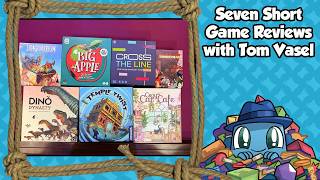
"Dino Dynasty, again about dinosaurs. I'm all in favor of dinosaurs and building them up and moving around and upgrading your dinosaurs and traits. And this one though just didn't really work for us, because at the end of the day the whole mechanisms aren't necessarily terrible, but the game commits that cardinal sin of board games in which they are, well, boring."
— The Dice Tower