





































Diplomacy Deep Dive
What the Community Thinks About Diplomacy
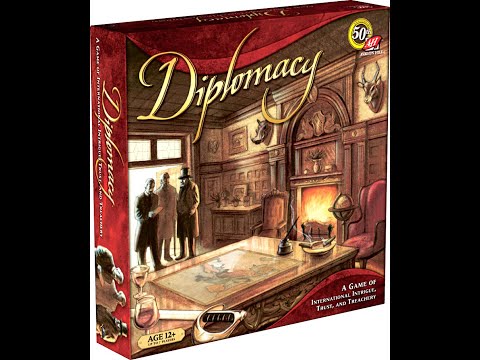
Diplomacy holds a unique place in board gaming culture. Designed in 1959, it remains one of the most psychologically intense and socially disruptive games ever created. Reviewers consistently emphasize its reputation for ending friendships, not through mechanics alone, but through the raw emotions it generates. The game is praised for being utterly uncompromising in its focus: where other games add complexity and mechanisms, Diplomacy strips everything down to its core intention. Players and critics alike recognize it as a singular achievement in game design, a framework for human conflict that has remained relevant for over six decades.
Core Mechanics That Define Diplomacy
Negotiation Without Enforcement
At Diplomacy's heart lies a deceptively simple mechanic: negotiation between all players is completely open and unconstrained. During the diplomacy phase, which can stretch 15 minutes to half an hour or longer, players discuss, bargain, and form alliances with absolute freedom. They can say whatever they want, make any promise, and propose any deal. What makes this brilliant is that nothing is binding. Once negotiation ends, each player writes their orders in secret. When orders resolve simultaneously, the game reveals whether anyone told the truth. This structure creates an inherent disconnect between what players promise and what they actually do. Community reviewers note that this is where Diplomacy finds its genius, the negotiation phase creates a social contract that the resolution phase systematically betrays.
Deterministic Conflict Through Area Control
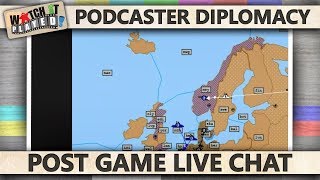
Diplomacy operates in the years leading up to World War I, with each player controlling one of seven great European powers: England, France, Germany, Austria-Hungary, Italy, Russia, and Turkey. Each power commands armies and fleets positioned across the board, and the goal is to control 18 of 34 supply centers to achieve dominance. Players move their forces simultaneously, with no dice, no randomness, and no hidden information about unit positions. What reviewers emphasize is that this creates a game of perfect information and imperfect trust. Everyone can see the board. Everyone knows what everyone else could theoretically do. But no one knows what they will do until orders are revealed. The system forces cooperation, isolated players cannot expand or survive, yet the mathematics of victory demand that alliances eventually collapse. With seven players and one winner, perfect cooperation is mathematically impossible.
The Diplomacy Experience
Betrayal as the Core Emotional Engine
Reviewers universally identify betrayal as Diplomacy's defining emotional experience. The game creates a carefully calibrated cycle of trust and mistrust. A player might spend hours building a genuine alliance with another, sharing notes, whispering strategies, even buying them pizza as one reviewer recounted. Then, at the moment when coordinated victory seems within reach, the ally's secret orders move armies into the betraying player's territory. The psychological impact is deliberate and intense. Reviewers describe it as "brutal," "personal," and "premeditated", not because the game forced betrayal through rules, but because a trusted human being chose to break their word. The community recognizes that this emotional impact is exactly what Diplomacy was designed to create. As one reviewer noted, the game doesn't betray you; the player across the table does. This transforms Diplomacy from a mechanical puzzle into a social experience about human nature itself.
The High-Stakes Social Negotiation
Community voices consistently highlight how Diplomacy becomes a test of reading people and social positioning. Players must evaluate not just the board state, but the reliability of each player, their historical behavior in previous turns, alliances that have proven solid, and vulnerabilities they can exploit. A player on the verge of dominance naturally becomes a target for everyone else, the person in first place is almost always destroyed. Reviewers describe a delicate balance where success comes from being in second or third place, positioned to strike when leaders overextend. The game rewards psychological acuity and adaptability. Players watch each other's tendencies, listen to the tone of negotiations, and make calculated bets about honesty and future betrayal. This is not about optimal play in a traditional sense. It's about reading the room, understanding fear and ambition, and predicting human behavior.
What Makes Diplomacy Stand Out
Singular Design Focus on a Universal Human Experience
Diplomacy stands apart because it stripped away everything extraneous to reach one core question: what does negotiation and betrayal feel like? Reviewers emphasize that this is not a game trying to be everything. There are no other mechanics layered on top, no additional win conditions, no secondary systems to create strategic variety. Just alliances, armies, and the moment when someone stabs you in the back. Critics note that every single rule serves the betrayal experience. The long playtime doesn't weaken the game; it amplifies it. The deeper players invest in alliances, the sharper the knife in the back. Player elimination, which by modern standards seems like a design flaw, actually adds psychological weight, you watch your former ally win with your land. The game's flaws in contemporary design terms become features that enhance the core emotional arc. Reviewers suggest that this unwavering focus on one experience, executed perfectly, is precisely why Diplomacy has endured when more ambitious games have been forgotten.
Freedom Within Structure
Community reviewers highlight how Diplomacy provides an unusual kind of creative freedom. The game doesn't tell you how to play. It doesn't prescribe which alliances should form, which powers should dominate, or how long any partnership should last. Every combination of players produces completely different political landscapes and outcomes. The same seven players could play Diplomacy ten times and experience ten entirely different narratives based on the precedent of previous betrayals, remembered promises, and ongoing grudges. This replayability isn't driven by card draw or random events, it's driven entirely by human variation. The game is a framework within which human nature unfolds. Reviewers appreciate this as a form of radical player agency. The board changes based on what you decide to do, and what you decide to do depends entirely on how you read the people at the table.
Potential Drawbacks
Playtime and Player Elimination
The most consistent criticism from reviewers concerns Diplomacy's structural problems by modern standards. Games regularly last 4 to 10 hours or longer. The playtime isn't a flaw to be fixed; it's integral to the experience. But reviewers acknowledge it's a genuine barrier to accessibility. Additionally, the game features brutal player elimination. A power can be completely eliminated and forced to sit out the rest of the game, possibly several more hours of play, watching their territory divided among the surviving players. One reviewer noted this isn't a casual game night affair. It requires seven committed players who understand what they're signing up for and accept psychological intensity as part of the entertainment.
Emotional Stakes and Table Dynamics
Reviewers also note that Diplomacy isn't suitable for every group or moment. The game explicitly advertises betrayal as the core mechanic, but there's an unpredictable gap between intellectual agreement to that concept and emotional response to actually being betrayed by a friend. One reviewer pointed out that not everyone discovers this until they're playing. A person might say they're comfortable with deception and backstabbing in theory, but experiencing a spouse or close friend lie directly to their face creates a different feeling. Some players find genuine joy in this emotional arc. Others find it damages their evening or their friendship. Reviewers recommend clearly communicating beforehand that Diplomacy is fundamentally a game about strategic deception, not about collective problem-solving or shared victory.
If You Enjoy Diplomacy
Players drawn to Diplomacy typically love games where human interaction drives the experience. Game of Thrones: The Board Game shares some DNA, area control, negotiation, and the constant threat of betrayal, though it uses hidden simultaneous orders differently. Root captures some of the dynamic asymmetry and forced conflict that Diplomacy creates. Pax Pamir features shifting loyalties and the possibility of outmaneuvering opponents through psychological play rather than pure mechanical optimization. Blood on the Clock Tower generates a different flavor of social intensity through paranoia and hidden roles rather than explicit betrayal. Dune shares Diplomacy's willingness to embrace thematic authenticity over mechanical balance, trusting players to self-regulate through social pressure. Risk and Cosmic Encounter both feature area control and negotiation, though neither achieves Diplomacy's singular focus on the betrayal experience. Even Catan and Lords of Waterdeep, which are far lighter, share the negotiation element, though without the psychological intensity.
What Reviewers Are Saying
"Diplomacy is a very messy game. It's often tedious. Player elimination sucks. The gameplay is just kind of boring, but it's the perfect betrayal simulator. And sometimes being perfect at one thing makes for a much more interesting experience than trying to be good at everything."
— BigPasti
"The players themselves drive all of the fun and interaction of the game. I think diplomacy by email is one of the purest area control games or really one of the purest games period where the players themselves drive all of the fun."
— The Cardboard Herald
"Diplomacy is a unique experience and its influences can be found in games like A Game of Thrones. The great thing about Diplomacy is its core idea is so refined and so simple within the game that you can't distill the concept really any further, so all its imitators have simply been Diplomacy with this extra added thing. And that's a sign of a really well-designed game."
— 3 Minute Board Games