


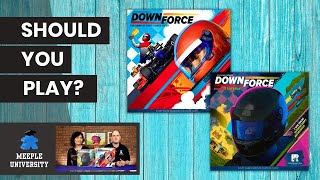

Downforce: Wild Ride Deep Dive
What the Community Thinks About Downforce: Wild Ride
Reviewers embrace Downforce: Wild Ride as a thoughtful evolution of the base game that adds layers of strategic depth without overwhelming the light, accessible feel that makes Downforce appealing to both casual players and serious gamers. The expansion's two new tracks keep the racing fresh while introducing mechanics that shift how players think about winning: speed management becomes crucial, timing matters more, and the temptation to hang back before making your move, rather than pursuing a straightforward lead, adds genuine tension to every race. Critics describe the expansion as a natural extension that rewards multiple plays and experimentation, especially for groups that find the base game's two-sided board too familiar.
Core Mechanics That Define Downforce: Wild Ride
Variable Map
Downforce: Wild Ride introduces two completely different tracks, each with its own character and strategic demands. The Aloha Sands track features water jumps represented by 3D ramps that crisscross the circuit, allowing fast-moving cars to leap over competitors when conditions align. These ramps reward speed and careful hand management, since players must play cards that give them enough movement to activate the jump at the right moment. By contrast, the Savanna Stretch track is alive with wild animals, elephant, snake, and antelope, that wander the course as obstacles. Unlike the static jumps of Aloha Sands, the animals move dynamically after each car passes them, creating a constantly shifting landscape. This variable approach means every track demands a different rhythm of play and different tactical decisions about which cards to hold and when to deploy them.
Catch-Up
The wild animals on Savanna Stretch embody a subtle but powerful catch-up mechanic. Lead cars encounter the full brunt of animal obstacles, becoming blocked and slowed as they navigate an increasingly congested track. Trailing cars, by contrast, enjoy clearer paths since the animals shift position after the leaders pass. This asymmetry turns the traditional racing instinct on its head: hanging back strategically can become the winning move, especially combined with savvy betting calls on which car will ultimately cross the finish line. Reviewers note that this mechanic preserves the light, unpredictable feel of the base game while giving skilled players real levers to pull: ways to influence outcomes through positioning and timing rather than pure luck.
The Downforce: Wild Ride Experience
Dynamic and Interactive
The expansion transforms racing from a fairly orderly progression into a lively, ever-changing contest. The 3D ramps on Aloha Sands and the roaming animals on Savanna Stretch create moments of excitement and surprise. Reviewers describe racing feeling less like a predetermined march to the finish and more like navigating an obstacle course where the unexpected is always possible. This keeps players engaged turn-to-turn, since what looked like a strong position can shift dramatically when an animal blocks a key path or an opponent threads a ramp perfectly.
Tight Decision-Making
Both tracks demand that players stay sharp about card sequencing and timing. On Aloha Sands, knowing which ramps you can hit with your current hand and whether the speed is worth the risk creates small but meaningful choices each turn. On Savanna Stretch, watching where the animals are and anticipating where they'll move next adds a layer of tactical reading that rewards familiarity with the track. Reviewers appreciate that the expansion preserves the party-game accessibility of Downforce while introducing enough wrinkles to keep returning players thinking.
What Makes Downforce: Wild Ride Stand Out
Three-Dimensional Racing
The physical ramps on Aloha Sands are more than a visual flourish. They change how players interact with the board, introducing height and verticality to what was previously a flat race. Reviewers consistently highlight how cool it feels to execute a successful jump, leaping over competitors who are stuck in traffic below. The ramps also create a skill-testing moment: the right speed is needed to make the jump, which means card play becomes about prediction and precision, not just lucky draws.
Savanna Stretch's Clever Asymmetry
The Savanna Stretch track stands out for flipping the traditional racing incentive structure upside down. Most racing games reward staying ahead; Savanna Stretch sometimes penalizes it. Reviewers praise how this single mechanic, animals blocking and then moving, creates psychological tension and encourages different strategies within a single game. New players learn to question whether leading is always winning, and experienced players enjoy the strategic puzzle of when to push forward and when to wait.
Potential Drawbacks
Track Complexity Over Time
With two original tracks plus Downforce: Wild Ride and the earlier Downforce: Danger Circuit expansion, players now have four tracks to master. While reviewers appreciate the variety, some note that each track has its own optimal card management strategies. Learning the nuances of all four can take time, and new players might feel overwhelmed if they encounter multiple tracks in quick succession rather than learning the base game thoroughly first.
Animal Placement Volatility
The Savanna Stretch animals create catch-up dynamics, but their placement can sometimes feel arbitrary. A player in the lead might suffer a series of unlucky animal blockages, while a trailing player races through clear lanes. Reviewers note that this volatility is intentional, it keeps the race unpredictable, but it can occasionally overshadow more skillful card play, especially in close games where a few lucky or unlucky animal positions swing the outcome.
If You Enjoy Downforce: Wild Ride
If the Aloha Sands ramps and Savanna Stretch animals capture your interest, try Downforce: Danger Circuit, the earlier expansion that precedes Wild Ride. Both expansions share the philosophy of making track design the star, and Danger Circuit brings its own obstacles and strategic wrinkles to the racing formula. Players who love the dynamic nature of Wild Ride's animal herds may also find the tactical positioning demands of Flamme Rouge and Mississippi Queen rewarding, since those games similarly blend racing and positioning with player interaction and catch-up mechanics.
What Reviewers Are Saying
"It's blocking, and then once a car goes past this track they go thundering off to the next space, so it just basically moves the blockages down the field. It's kind of a catch up as well, because it means the lead cars are getting stuck behind this elephant. All the trailing cars don't have that, they can just run straight through, so a little bit more of a catch-up than the base game has as well."
— Meeple University
"Managing your hand speed cards to take advantage of these ramps is gonna be crucial. The other map is called Savanna Stretch which features wild animals that are just wandering around traversing the track blocking the way. These animals move ahead after a car passes them, making the track more difficult to navigate for the lead car and opening up through the trailing cars so it can pay to hang back a bit before making your move."
— Game Night Picks - Pair Of Dice Paradise
"There's also some 3D aspects that jump into this one. One track, one track is, the can't remember what it's called, but it brings in ramps, so your cars will actually ramp and jump and stuff. And then the other track, the other track is the savannah, and there's wild animals that run around throughout the streets that you can't hit either."
— Board Games UnLocked