










Dune: Imperium – Immortality Deep Dive
What the Community Thinks About Dune: Imperium – Immortality
Dune: Imperium – Immortality arrives as the second major expansion to the base game, introducing the Bene Tleilax faction and their disturbing approach to genetic innovation. Reviewers recognize the expansion as a meaningful addition that expands the game's scope and thematic depth, though opinions diverge on whether it strengthens or complicates the experience. The expansion draws praise for its elegant integration into the base game through the starter deck, for the family atomics mechanism that addresses a long-standing complaint about staleness in the card market, and for mechanics that feel fresh without requiring players to abandon existing strategies. Simultaneously, some reviewers note that Immortality spreads the game's focus across too many viable paths, potentially diluting the synergistic depth that made the base game compelling.
Core Mechanics That Define Dune: Imperium – Immortality
The Research Track and Specimen Economy
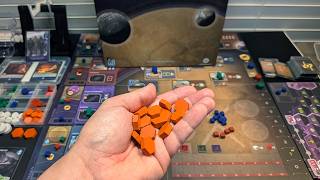
At the heart of Immortality lies the Bene Tleilax research track, a new avenue for generating resources and unlocking benefits as players advance along it. Whenever a card bearing the microscope icon enters play, the player moves their marker forward, progressively unlocking permanent genetic bonuses and other rewards. The mechanism hinges on specimen tokens, colloquially called jelly blobs by the community, which represent genetic material harvested from troops. These tokens become currency for purchasing Bene Tleilax cards from a dedicated row, cards unavailable through traditional Imperium market acquisition. By integrating specimens into the economy, the expansion creates a parallel resource system that rewards players who commit to the Tleilaxu agenda without forcing a singular strategic path.
Grafting: The Fusion of Card Abilities
The grafting mechanic introduces a compelling layer of combinatorial play. A card bearing the graft keyword cannot be played alone; instead, the player pairs it with another card from their hand. When assigned to a worker placement, the agent can be sent to any location on either card, and the player gains all abilities from both cards simultaneously. This mechanic creates moments of synergistic excitement when planned combos align, transforming ordinary plays into powerful sequences that feel both tactically rewarding and narratively resonant with the expansion's theme of genetic manipulation and enhancement.
The Dune: Imperium – Immortality Experience
Thematic Immersion in the Grotesque
Immortality deepens the thematic grounding of Dune: Imperium by bringing the Bene Tleilax to the table. These genetic engineers, who occupy the shadowy margins of Frank Herbert's universe, arrive not as simplified villains but as agents of a darker evolution. The flavor of creating specimens, researching genetic innovations, and grafting genetic material into agents transforms the expansion from mechanical addition into a window into the philosophical cost of power in the Dune universe. Reviewers who engaged deeply with the source material found Immortality elevated their sense of playing within that world.
Managing Complexity Without Overwhelm
What distinguishes Immortality as a design achievement is that despite introducing significant new systems, it does not break the game's accessibility. The systems integrate smoothly with existing mechanics, allowing players to engage with the research track, specimens, and grafting at their own pace. A player focused on combat and alliances need not overcommit to genetic research. Conversely, a player drawn to the Tleilaxu can pursue that agenda without abandoning the core strategic tensions that make Dune compelling. This modularity creates a game that feels expanded rather than fractured.
What Makes Dune: Imperium – Immortality Stand Out
The Starter Deck Integration
One of the expansion's most elegant design choices involves replacing a base-game starter card with Experimentation, a card that automatically triggers a research action whenever played. This seemingly minor change accomplishes something subtle: it gives players a passive entry point into the research economy without requiring them to redirect worker actions away from other strategies. The result is that engagement with the Tleilaxu becomes accessible on the first hand drawn, not an optional detour that demands early commitment. Reviewers consistently highlighted this as a stroke of design clarity that prevents the expansion from feeling tacked-on.
Family Atomics: Addressing a Persistent Pain Point
Since the base game's release, players complained that the Imperium card row, the market of cards available for acquisition, would sometimes stagnate, displaying few cards worth purchasing and creating a sense of wasted opportunities. Immortality introduces family atomics, one-time-use tokens that any player can activate to clear the entire Imperium row and refresh it with new cards. This modest mechanic carries outsized satisfaction: it returns agency to players when the market freezes and feels like a welcome quality-of-life fix that earlier expansions had not addressed.
Potential Drawbacks
Widening Without Deepening
Immortality expands the game horizontally, with more cards, more mechanics, and more viable strategies, but some reviewers questioned whether it deepens the game's strategic foundation. The base Dune experience hinges on tight worker placement and a carefully tuned deck-building tension. By introducing so many new cards and optional paths, Immortality can shift play toward a more tactical, moment-to-moment optimization, diluting the long-term planning that defines tighter designs. Players who cherished that taut tension may find themselves managing more variables without a proportional increase in meaningful strategic depth.
Card Pool Dilution and Synergy Loss
Deck building in Dune relies on synergistic combinations, cards that amplify each other's effects and create reliable engines. Each new card added to the Imperium market increases the statistical noise, meaning players cycle through more mediocre options in search of cards that work together. Immortality adds dozens of new Imperium and Intrigue cards, some powerful and some situational. The expanded card pool can make it harder to reliably construct a coherent strategy, pushing the game closer to tactics and luck than to the architectural satisfaction of assembling a purposeful deck.
Not Strictly Necessary Compared to Rise of Ix
Rise of Ix, the first expansion, fundamentally restructures Dune's economy by introducing new tracks and factions, adding new dimensions to the allegiance system and making the technology layer a rewarding path to victory. Immortality, by contrast, offers an alternative agenda rather than a core restructuring. For players who own Rise of Ix and are satisfied with its additions, Immortality may feel like a lateral expansion, more options rather than evolutionary design. Some reviewers noted they would recommend Rise of Ix to someone seeking a more substantial change, reserving Immortality for players already deep in the game who want additional flavor and customization.
If You Enjoy Dune: Imperium – Immortality
If Immortality resonates with you, the natural next step is Dune: Imperium, the base game and the essential foundation without which Immortality is unplayable. In pairing the two, you experience the core tension and beauty of the design: asymmetric player powers, persistent resource scarcity, and the interlocking systems of worker placement and deck building that make every turn consequential. Rise of Ix pairs well with Immortality if you want the expansion strategy to feel complete; playing with both expansions does escalate complexity, as the board becomes crowded with decision points and turns can tax your ability to plan. But if you thrive on managing multiple simultaneous strategies and reveling in political maneuvering, both expansions together deliver that experience in abundance.
What Reviewers Are Saying
"A stroke of genius that kind of saves this expansion is that you don't have to spread your worker focus to go and chase after the research, because you have these cards that are integrated in your starter deck that are just as good as the card it replaces, except it also automatically triggers a research action when you utilize the card."
— The Cardboard Herald
"It's not overwhelming, you would think it would be, it's not. The systems integrate really, really well, but the only issue really from that perspective is there's so much more to do and there's so many things to choose from, and it's kind of hard to choose a strategy when there's so many cool things you can do."
— The Discriminating Gamer
"The game is designed in such a perfectly tight way that it pushes you to come up with creative strategies. If you just go with what's in your mind, you are going to lose. You need to come up with new plans on the fly as the game board develops."
— BigPasti