/pic2411495.png)
/pic6685018.jpg)
/pic2411495.png)




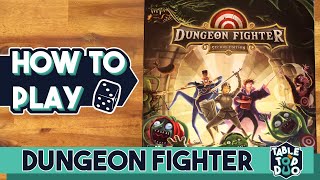
























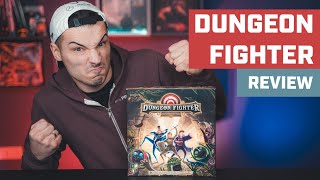






Dungeon Fighter Deep Dive
What the Community Thinks About Dungeon Fighter
Board game reviewers consistently praise Dungeon Fighter as a unique cooperative experience that defies traditional categorization. The game resonates strongly with both hardcore gamers seeking accessible fun and casual players who typically avoid traditional board games. It occupies a distinctive space , not quite a full dungeon crawler, not entirely a party game, but a clever hybrid that delivers on both fronts with equal enthusiasm.
The game stands out for its accessibility alongside meaningful gameplay. Players appreciate that the barrier to entry is remarkably low; even non-gamers can sit down, be told their basic character abilities, and jump in without understanding every rule. Yet those who engage deeply discover satisfying tactical decisions about item combinations and ability timing. This balance makes Dungeon Fighter a reliable choice for mixed groups with varying gaming experience.
Core Mechanics That Define Dungeon Fighter
Dice-Throwing Dexterity Combat
At its heart, Dungeon Fighter replaces traditional dice rolls with physical skill challenges. Players bounce colored dice off the table onto a target board to determine attack success and damage. This simple rule creates cascading complexity as the game progresses; starting with basic throws, players eventually perform under-the-leg shots, over-the-shoulder flicks, and bounces off their foreheads. The mechanic transforms every combat round into a moment of tension, laughter, and genuine celebration when a difficult shot lands. Reviewers note that this dexterity element is absolutely crucial to the game's identity and charm , it is not a cosmetic addition but the foundation of what makes Dungeon Fighter feel fundamentally different from every other cooperative game.
Expanding Ability Requirements
Monsters escalate difficulty not only through increased hit points but through bizarre throwing constraints tied to each enemy. The early-game Goblin requires vanilla throws, but as players venture deeper, they encounter creatures demanding shots while crouching, jumping, or spinning. Weapons add further layers: hitting with the Infamous Blade requires underhand throws; the Horned Helm demands bounces off the player's forehead. These constraints can stack, creating situations where a monster simultaneously requires multiple contradictory actions. Reviewers celebrate this design as brilliantly absurd , the game encourages creative problem-solving and collaboration as players physically work together to achieve the seemingly impossible.
The Dungeon Fighter Experience
Lighthearted Comedy and Absurdist Humor
The game's tone is deliberately silly and never takes itself seriously. Artwork parodies fantasy tropes with exaggerated character designs and creature names. The core loop of failing hilariously creates constant laughter; misses result not only in damage to the party but often in immediate, comical consequences. Reviewers consistently emphasize that good vibes flow naturally from gameplay , whether hitting a bullseye or watching someone spectacularly fail a ridiculous shot, the table remains engaged and cheerful. The humor emerges organically from the mechanics rather than being forced through flavor text or puns.
High-Moment Delivery and Triumphant Victories
What elevates Dungeon Fighter beyond a novelty is its capacity to create genuinely spectacular moments. Landing a bullseye with the correct face-up symbol triggers an instant-kill on any monster, no matter how much health remains. These moments of perfect execution deliver genuine triumph; the table erupts because the feat required genuine skill and daring. Between these peaks, smaller victories accumulate: clearing a monster through combination shots, successfully executing a complex weapon combo, or pulling off a near-impossible throw when the group seems doomed. Reviewers note that few games generate comparable emotional highs, and these moments justify repeated plays despite the game's difficulty.
What Makes Dungeon Fighter Stand Out
Accessibility Within Complexity
Dungeon Fighter achieves something rare: a game with a massive box, significant content, and meaningful decisions that remains trivially easy to teach. The rulebook is straightforward, turn structures are transparent, and nothing requires referee arbitration beyond creative interpretation of combined weapon/monster effects. The experience feels gamer-centric due to items, character abilities, and tactical positioning options, yet newcomers never feel lost because turn mechanics are self-evident. Reviewers praise the Collector's Edition for maintaining this accessibility while adding enormous variety; the additional items and weapons are immediately available and integrated into play without slowing setup or explanation.
Unique Cooperative Mechanics
The game eliminates analysis paralysis and quarterbacking because physical execution dominates outcomes. Once a player chooses a die color and weapon combination, they step up and throw; the decision was simple, but execution is individual and visible. This structure keeps focus on the active player while others experience genuine suspense. Unlike many cooperative games where powerful players can dominate strategic decisions, Dungeon Fighter distributes agency equally , anyone can miss, anyone can get lucky, and luck often matters more than planning. Reviewers highlight this as liberating; the game maintains cooperation and group celebration while reducing the potential for alpha-player dynamics that plague heavier cooperative titles.
Potential Drawbacks
Dexterity as a Barrier
For players with limited interest in physical games or motor skills, Dungeon Fighter simply is not the right fit. This is not a casual flaw but a fundamental characteristic; without the dexterity element, the game loses its identity entirely. Some players prefer cooperative games that emphasize pure strategy where luck plays a supporting role. For those groups, Dungeon Fighter's reliance on throwing accuracy creates frustration rather than fun, as gameplay feels determined by external skill rather than decision-making. Reviewers acknowledge this straightforwardly: if you dislike dexterity games, the Collector's Edition with all its additional variety will not change your mind about the core mechanic.
Punishing Difficulty on Higher Settings
The easy difficulty remains genuinely challenging, and harder difficulties become brutally difficult to the point where wins feel lucky rather than earned. Some plays devolve into early losses where the party runs out of dice before reaching the first shop. Reviewers note this means players must embrace loss as part of the experience; those seeking consistent victories will find frustration. The game's design philosophy seems to celebrate desperation and narrow escapes, which creates excitement for some groups but exhaustion for others. Additionally, longer campaigns across multiple dungeon levels amplify difficulty significantly, requiring sustained skill for forty-five-minute sessions rather than quick five-minute confrontations.
If You Enjoy Dungeon Fighter
Fans of Dungeon Fighter typically gravitate toward Ice Cool and Looney Quest for dexterity-focused play with similar quick-playing fun. Escape: Curse of the Temple offers cooperative dungeon crawling with real-time pressure but without the throwing mechanic. For those who love the game's absurdist tone and chaotic moments, Galaxy Defenders and Mech Versus Minions provide cooperative scenarios where humor and spectacle combine with meaningful decisions. If the dungeon-crawling aspect appeals more than dexterity, Descent: Journeys in the Dark and King of Tokyo explore monster combat in tactical map-based systems. For pure cooperative magic with high-moment potential, Mysterium, The Quest for El Dorado, and Last Bastion share Dungeon Fighter's ability to create surprising victories despite apparent doom.
What Reviewers Are Saying
"It's just one of the most efficient like deliveries of enjoyment in a Cooperative game there is no fat on this game lean lean fat lean yes so there you go double endorsement for escape the curse of the temple love it."
— Rolls in the Family
"It's such a unique experience of again a Cooperative uh game where you are dungeon crawling but it's a very light-hearted and funny all the artwork and everything you're doing is very funny but the way you fight the monsters in each room is by bouncing dice on the table and trying to land them on a Target."
— Rolls in the Family
"This game doesn't take itself seriously neither should you the artwork is super silly it parodies a lot of stuff the basic gameplay mechanisms are like super silly this is a funny game Good Vibes it just feels good it's a feel-good game hilarious every time I played it."
— Board Game Hangover