/pic280668.jpg)
Dust is a strategy board game of conquest and control. Seize power sources and capitals, develop your infrastructure, and build and wield vast, high-tech armies in your bid for global domination.
Players will probably recognize the map as that of Earth, but what they will not see are any borders or nations. In the world of Dust, the unending war and the new technologies have altered the political face of Earth beyond all recognition.
At the beginning of each turn, players select a card from their hand. This card represents their strategy for the coming turn and to a large extent dictates the actions a player can take.
During their production phase, players spend production points to buy additional factories and units. Each individual unit type has its own unique statistics and effects, so players have to carefully consider the composition of their armies.
In combat, players alternate rolling dice and destroying units until one side has been eliminated (either due to casualties or retreats) or a cease-fire is declared.
At the end of each game round, players score victory points for power sources, capitals, and majorities they control. The player who controls the most land areas earns bonus victory points, as does the player who controls the most sea areas and the player who controls the most production centers. The first player to amass a set number of victory points while also controlling a capital is the winner.
Only once a player has amassed at least half the victory points required to win can he or she attack an enemy capital. Once the war has been so escalated, however, then all players are free to attack capitals.
Dust English Rules Premium Version http://www.fantasyflightgames.com/ffg_content/Dust/Dust_Rule...
Dust English Rules Epic Version http://www.fantasyflightgames.com/ffg_content/Dust/Dust_Rule...
Backstage http://www.kaleidosgames.com

- I think DASM is good
- It's just not a game we're going to play a lot
Mechanics (from transcript analysis)
Video topics + discussion points
Quotes (from this video)
- Anacrony is a cooperative game for one to four players. So it's a cooperative game where you're working together to stop that end game timer.
- You're constantly making choices about how you're gonna spend your next X turns, and you've got to have enough resources.
- You've got to plan for months ahead. You've got to plan how you're gonna spend your next X turns.
- This is a really good cooperative game. I've played it a couple of times.
- It's a very thinky game. So you've got all these different tracks and your different workers and your different ways to score points.
References (from this video)
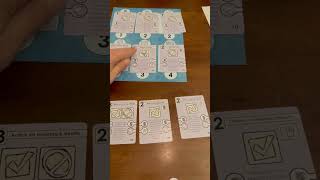
- Strong thematic integration tying gameplay to historical context
- Distinct asymmetrical roles that create varied strategic paths
- Flavorful flavor text and card design that echo the era’s tensions
- Subject matter can be sensitive or controversial for some players
- Asymmetry and deck/tableau complexity may present a steeper learning curve
- Corporate influence versus public health advocacy; the moral and political struggle around smoking.
- Late 20th century, anti-smoking controversy era (1980s-1990s), featuring a cigarette corporation and the anti-smoking movement.
- Historically-informed, quasi-polemical narration with embedded real-world tensions and tactics from the era.
Mechanics (from transcript analysis)
- asymmetrical_deck_building — Corporation builds a deck to generate actions and money; each side pursues divergent win conditions.
- opponent_interaction — Direct interaction through card effects that hinder or help the opposing side, maintaining tension between asymmetrical strategies.
- resource_and_action_payment — Actions for the movement are paid by flipping tableau cards or spending tokens, while the corporation pays for actions by discarding cards.
- tableau_building — Movement constructs a tableau of cards whose effects are amplified by flipping and sequencing.
- token_mechanics — Doubt tokens influence audience reach and effectiveness of actions; tokens are placed strategically by the corporation.
Video topics + discussion points
Quotes (from this video)
- The game's title is manifested in doubt tokens placed by the corporation
- the corporation's television card targets children but print media targets the middle-aged and elderly
- flavor text is also rich in content with hidden nuggets about how this struggle really went down in the 80s and 90s