





























Eldritch Horror Deep Dive
What the Community Thinks About Eldritch Horror
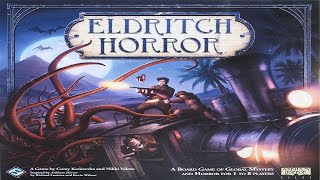
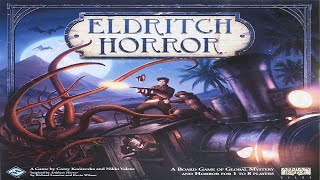
Across the channels that cover it, Eldritch Horror lands as one of the defining globe-trotting cooperative horror games. The Discriminating Gamer ranked it fifth on a personal top ten of Cthulhu Mythos games, describing it as close to the quintessential game of investigators moving around the globe to close gates and stop the old ones from coming through. Dungeon Dive picked it as the definitive overland adventure game, crediting Fantasy Flight Games and designers Corey Konieczka and Nikki Valens for turning the 2013 release into what the channel called adventure game perfection. Rolls in the Family gave the base experience a 9.5 out of 10 twice over, from both hosts, praising the sheer variability of a randomized Ancient One paired with randomized investigator decks. slickerdrips, running an ongoing series on the game, keeps returning to it specifically because of how much table presence it commands, warning viewers there will be so much to keep track of by the end of a session.
The clearest disagreement comes from Shelfside, whose review is explicitly mixed. The channel still lands on an 8 out of 10 personal score and calls the components and Lovecraftian theme excellent, but spends much of the review on structural complaints: encounter decks that feel disconnected from the Ancient One in play, a mythos deck that does not differentiate itself enough between bosses, and balance issues between investigators. Where Rolls in the Family frames the game's randomness as its biggest strength, Shelfside frames the same randomness as something that can make individual sessions feel arbitrary rather than earned.
Core Mechanics That Define Eldritch Horror
Three Phases of Global Investigation
Shelfside lays out the structure directly: each round runs through an action phase, an encounter phase, and a mythos phase. In the action phase, investigators perform two actions such as buying items, acquiring tickets, or moving around the world map. In the encounter phase, investigators are forced to confront a card based on their current location, testing skills against monsters, mysteries, or the wider world. In the mythos phase, a card flips that progresses the world state, often advancing the doom tracker or spawning gates and monsters. Rolls in the Family frames the same loop from the player side, noting the game rewards players who can consistently weigh their options and optimize actions, while still coming down to how well the group rolls the dice and draws fortunate cards.
Double-Sided Cards and a Ticking Mythos Deck
Shelfside singles out the double-sided condition and spell cards as central to how the game creates tension: players know what is printed on the front of a card but have no idea what waits on the back until it triggers, whether that is a spell backfiring or a personal condition degrading into something worse. Rolls in the Family describes the mythos deck in similar terms, calling the game "a cooperative game where your opponent is very unpredictable" since every mythos phase can produce terrible and unexpected effects that the team then has to adapt around rather than plan for in advance.
The Eldritch Horror Experience
Dread That Builds Rather Than Announces Itself
Shelfside connects the game's difficult healing to its sense of unease, pointing out that investigators can recover only one health and one sanity by default during a rest action, which makes the game's tendency to deal damage in spikes rather than a steady drip feel scarier. Rolls in the Family echoes that same feeling from the strategy side, describing sessions where a situation seemed absolutely impossible before an unlikely chain of events pulled off "the most miraculous of victories," and noting that in Eldritch Horror there is always a chance no matter how grim the odds get.
A Pulp Globe-Trot, Not a Rigid Puzzle
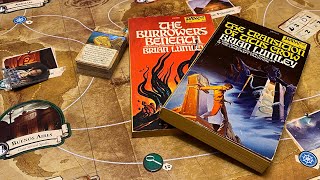
Dungeon Dive frames the whole experience as a globe-trotting pulp adventure rather than a strict Lovecraft adaptation, arguing the game "doesn't feel lovecraftian and that's fine," landing closer to Brian Lumley's pulpier take on cosmic horror. Shelfside makes a related point about scale, appreciating that the global events let players watch the entire world slowly fall apart at the seams as investigators fly and sail between continents, rather than confining the cosmic threat to a single city or house the way many other games in the genre do.
What Makes Eldritch Horror Stand Out
Setup Variability Nobody Else Matches
Rolls in the Family calls it "the epitome of setup variability," pointing to a randomized Ancient One, randomized investigator decks, and encounter decks that get seeded with their own random ordering every time. The channel frames this as a sandbox of endless possibilities, a game capable of generating countless memorable moments that never feel the same from one session to the next.
Investigators Who Feel Like Individuals
Shelfside praises the roster of investigators for feeling like distinct people rather than interchangeable pawns, with active and passive abilities that usually match their backstory and stats. The channel highlights how character progression deepens that feeling over a campaign, as investigators gain items, spells, and allies at the cost of sanity, and even keeps mattering after a character dies, since a fallen investigator drops their belongings on the map for the group to retrieve and gains a final encounter to close out their story.
Potential Drawbacks
The Same Randomness Cuts Both Ways
Rolls in the Family is direct about this tension, framing the game's biggest strength as also its biggest weakness because of its potential for lackluster games. The channel notes that the same randomness that raises the ceiling for exciting moments can just as easily swing the other way, either letting the team win too easily or grinding them down with a string of bad mythos cards until a three-hour session feels like a loss the players never had a real chance at avoiding.
Content That Can Repeat Before Expansions Arrive
Shelfside's most detailed criticism is that the base game's encounter decks are simply too small, with the general encounter deck at only twelve cards and the research and location encounter decks each holding just eight, so repeat plays start surfacing the same cards. Rolls in the Family raises a related complaint about pacing rather than content: reckoning can require resolving upwards of twenty or more effects across monsters, the Ancient One, mythos cards, and player conditions, and while experienced groups can move through it quickly, the channel still calls it "a bit of a chore."
If You Enjoy Eldritch Horror
Arkham Horror, according to Rolls in the Family, who describe it as the game that originally got their group started in this style of cooperative horror before Eldritch Horror replaced it at their table. Arkham Horror second edition is Dungeon Dive's pick for players who want the same globe-trotting pulp adventure feel, since the channel frames Eldritch Horror as taking the best elements of that game and streamlining them.
What Reviewers Are Saying
"Eldritch Horror is a Sandbox of Endless Possibilities. It's one of those games that is capable of generating countless memorable moments that never feel the same."
— Rolls in the Family
"Eldritch Horror truly becomes a globe trotting pulp adventure game of the highest order. It takes all of the best elements from Arkham Horror second edition, streamlines them just enough to make a difference, adds some things, removes some things, and it's basically a recipe for adventure game perfection."
— Dungeon Dive
"Eldritch, I really like you. I know you're flawed, but every time we hang out it's just so memorable and furthers memorable experiences. I can't rate you lower than an 8 out of 10, a great game for me."
— Shelfside