


España 1936 Deep Dive
What the Community Thinks About España 1936
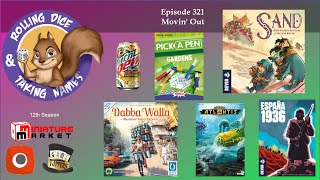
Reviewers approach España 1936 as a compact two-player wargame about the Spanish Civil War, and they judge it mostly on whether its card play and area control hold together in a real session. Rolling Dice & Taking Names came away impressed by the design‘s cleverness despite its heavy historical subject, while still describing the base game as basic in its goals. Foster the Meeple was more openly enthusiastic, calling it totally the kind of game the group enjoys and expecting it to be great. Rolling Dice & Taking Names also described the gameplay as the main draw, with the strategy resting on unit movement, card timing, and attack decisions.
Core Mechanics That Define España 1936
Dual-Use Cards in a Card-Driven Design
Rolling Dice & Taking Names describes España 1936 as a card-driven game in which each card can be spent on its event text or held for combat. In battle, a card can add value to an attacker‘s die or, when defending, subtract value from the attacker‘s die. The reviewer identifies the central decision as timing, asking whether a strong event should be played now or saved for a fight that may be coming. Foster the Meeple places the game in the same realm as Shores of Tripoli, noting that the card-driven structure is very much in line with how that title works.
Generals, Bluffing, and Support Units
Area control begins with movement. Units that enter a city can create a potential conflict, but a fight only occurs when a general is committed to that space, so moving in can be a bluff. Rolling Dice & Taking Names points out that a player may move into a city without wanting to fight there, and the opponent will not be forced into combat unless they also place a general. Once battle begins, tanks raise the value of one die by the number printed on the token, and planes contribute additional dice. Planes in the same space fight each other first, and the reviewer notes that attackers get one strike per unit while defenders can defend repeatedly, which keeps battles moving quickly.
The España 1936 Experience
Clever Strategy Beneath a Historical Surface
The feel of España 1936 is one of abstraction that still rewards careful planning. Rolling Dice & Taking Names found the gameplay clever for a historical title and argued that most of the strategy sits in three places: how units move, how cards are played, and when to attack. That framing makes the game feel more like a tactical puzzle than a campaign history, and the reviewer said the two-player session was enjoyable despite its length.
Fast, Fluid Battles Within a Long Session
Combat is where reviewers say the game moves fastest. Rolling Dice & Taking Names describes the battles as straightforward and calls the combat very fluid once units are in place, with the board resetting quickly between rounds. The reviewer praised the quick-to-resolve nature of the fighting, along with the options for reducing the luck that comes from dice. Even so, the reviewer‘s overall verdict is that the game still runs long.
What Makes España 1936 Stand Out
A Two-Player Design Built on Asymmetric Factions
Foster the Meeple stresses that España 1936 is a two-player only war game in which each player commands a different faction. Rolling Dice & Taking Names reaches a similar verdict, calling the design a really cool two-player area control game. That narrow focus is a strength for reviewers who want sharp, head-to-head decisions, and the same review notes that the rules include scenarios with different unit setups and an advanced rules set for players who want more to explore.
A Historical Hook Tied to Real Politics
The Spanish Civil War setting gives the game a clear point of reference for the reviewer. Rolling Dice & Taking Names connects the conflict to the recent controversy over the film Oppenheimer, as the reviewer recalled the accusations that the physicist had supported revolutionaries in Spain. The reviewer then lays out the two sides in the game: a Nationalist faction backed by fascist powers, and an opposing side made up of moderates and Communists trying to take control. That framing turns the historical conflict into a readable, two-sided struggle for territory.
Potential Drawbacks
A Three-Hour Runtime With No Short Variant
The most consistent concern is length. Rolling Dice & Taking Names notes that BGG lists a play time of 180 minutes, and the reviewer‘s session ran close to three hours. The reviewer enjoyed the game but found that it was the only mode of play, and was disappointed that the rules did not seem to offer a variant that cut the number of rounds. The reviewer says that runtime is what will keep them from getting the game to the table often.
A Base Game Some Find Basic
Reviewers describe the core game as very basic in its objectives, even while praising the cleverness of its card play. Rolling Dice & Taking Names frames this as a trade-off: the base rules are quick to grasp, and the strategic depth comes from how cards and units are used in each turn rather than from an extensive rules set. Players who want a large number of distinct systems may find the base experience thinner than the historical theme suggests.
If You Enjoy España 1936
Players who like España 1936 should look at Shores of Tripoli, the title Foster the Meeple uses as its closest reference for card-driven, two-player wargames. The same reviewer also brought up Polis, another two-player only design that pits Sparta against Athens and shares the focus on direct, head-to-head play. Both suit players who enjoy hand management, tactical timing, and the sharp decisions that come from a game built for exactly two people.
What Reviewers Are Saying
"Even though it‘s a historical themed game, the gameplay is really clever in being a really cool two-player area control game, okay, with quick to resolve combat, and that‘s what I‘m all about is it quick to resolve combat."
— Rolling Dice & Taking Names
"The problem is this is the only mode of play you have. I wish they would include a variant in the game to where you only play half the number of rounds and cut it to 90. I think a 90 minute game with this would be amazing."
— Rolling Dice & Taking Names
"It‘s totally our type of game. It‘s a two-player only war game where you are playing out the Spanish Civil War, so obviously you‘re playing as two asymmetrical factions, one side versus the other."
— Foster the Meeple