










Fabled Fruit Deep Dive
What the Community Thinks About Fabled Fruit
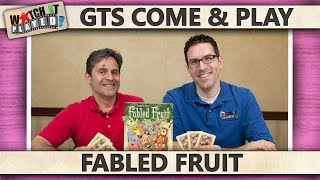
Fabled Fruit, the 2016 release from Freedman Freeze, reaches reviewers as an unusual kind of game: a light worker placement title whose rules shift as you play. Most of the coverage is warm. Watch It Played presented it as a fresh idea in design, and TheGameBoyGeek placed it on a personal top 100 list, calling it an entry-level favorite that never plays the same way twice. Board Game Sanctuary keeps a copy on display and says it is a game they want to play more often.
The dissent is real. BoardGameCo wanted to like the game but came away disappointed, describing it as fast and light but with too little decision making and too much swing. That reviewer also questioned why public ratings were so high, noting that they seemed to split between players who shared that experience and players who loved the game. The disagreement is less about whether the design is clever and more about whether its shifting structure produces choices that matter.
Core Mechanics That Define Fabled Fruit
Worker Placement on Shifting Locations
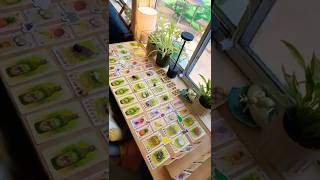
Players move a small animal piece onto a location card and take that location's action. Watch It Played explains that landing on a location where other animals already stand means handing each of them a fruit from your hand, which keeps players from crowding the same spot. The available actions are never fixed. A stack of location cards empties as people complete juices, so that when one runs out, the next card introduces a new recipe and a new action. Reviewers tend to describe the placement as worker placement on a board that keeps rearranging itself.
Set Collection and Juice Recipes
The second pillar is set collection. Fruit cards are the currency, and the recipe for each juice sits beneath its location. Watch It Played identifies set collection and action selection as the base mechanics, with other systems added as the game opens up. Players can also claim a location by discarding matching fruit, and a wild smoothie symbol lets any fruit count toward the cost. Each completed juice is flipped into the player's area as a scoring card.
The Fabled Fruit Experience
A Game That Grows Over Many Sessions
Reviewers consistently describe a game that begins small. Watch It Played describes a rule set of just four pages, with a glossary covering the locations and advice to learn only the first six at the start. The rest of the locations sit in a fixed stack and enter play as the game progresses, so early games draw from one range of animal cards and later games feel entirely different. Watch It Played notes that the designer's simulations suggest about 22 to 24 plays to see the whole system. TheGameBoyGeek adds that the designers deliberately leave in combinations that can be broken, and players must watch for them before others do.
Quick, Friendly Table Time
Despite the layered design, the play itself is light. TheGameBoyGeek calls it brilliant but easy, and praises the cute, approachable feel that makes it a natural first worker placement game for newcomers. Watch It Played describes the game as moving at a nice clip, with a lot of interaction between players, and highlights the charming artwork. The small trades that come with visiting other animals create friction without much weight, which keeps turns quick and conversation going.
What Makes Fabled Fruit Stand Out
A Legacy Feel Without Permanent Changes
Reviewers repeatedly compare the game to Legacy design, then take care to separate the two. Watch It Played describes it as non-destructive Legacy: you do not mark or tear cards, and you can reset the whole system at any time. TheGameBoyGeek likewise stresses that the game is not destructive and that you can reset it and play from game one again. That reset is what separates Fabled Fruit from a campaign that cannot be undone, and it is why reviewers describe it as a replayable puzzle rather than a single story.
Part of a Fable Family
Board Game Sanctuary points out that Fabled Fruit belongs to a wider run of games built on the same system. Titles such as Fable Sand and Fable Flea share the fable framing, even though the other games were not all branded with the word. The reviewer admits they only recently learned how many games used the system, which is part of why the design now feels like a family worth exploring. TheGameBoyGeek praises the designer for consistently working outside the box of conventional game design, and that reputation shapes how reviewers approach each new release.
Potential Drawbacks
Thin Decisions and Swingy Outcomes
BoardGameCo offers the sharpest criticism. The reviewer felt the game was fast, light, and simple but not easy, with very few choices carrying real weight. Some sessions, in this reviewer's account, left players feeling slapped hard by luck, and the outcomes seemed random rather than earned. For this critic, the shifting locations did not add the meaningful decisions the design promises, and the game felt like it rewarded fortune more than planning.
Learning Curves, Broken Combos, and Doubts About Ratings
Even supporters flag friction. Watch It Played recommends reading the instructions for your current locations before starting a first game, which means new players face a glossary to work through. The designers' intentional combinations can also reward whichever player spots them first, which some groups may find frustrating. BoardGameCo additionally questioned the strength of the public ratings, which were split between players who shared the critic's experience and players who loved the game.
If You Enjoy Fabled Fruit
Readers who enjoy evolving systems, light trading, and accessible worker placement will find the most in common with these titles and designs:
- Fable Sand and Fable Flea, the other titles built on the same fable system, as Board Game Sanctuary notes.
- Other Freedman Freeze designs, which TheGameBoyGeek describes as consistently inventive, with fresh ideas in each release.
- Non-destructive Legacy-style games, the category Watch It Played places Fabled Fruit beside, for players who want discovery without permanent changes to the components.
Players who want decisions with more weight may want to read the critique from BoardGameCo before committing.
What Reviewers Are Saying
"It's not destructive. You can just reset it and play from game one again. But because things leave and come at different times, every time you play through it's going to feel different."
— TheGameBoyGeek
"As one of the animals living in this Forest rich with Savory fruits it's your ambition to collect the ones necessary to create the fabled fruit juices which are sought after by all of the animals. But as you do you'll unlock new abilities not just for that game but also for future ones as well."
— Watch It Played
"It is a fast, light, simple game, but it's also not easy and it's also incredibly so little decision making in this game. You're making so few decisions that have any genuine meaning to it."
— BoardGameCo