Game Info
Year
2020
Players
3-20
Age
17+
Playtime
60 min
Complexity
1/5
Collection
Ratings
Creator Score
Mechanic profile
Not enough video data yet
Vibe profile
Not enough video data yet
Description
An adult party game featuring cards for truth-or-dare challenges and rapid-fire prompts designed for girls night gatherings and bachelorette parties.
Featured Videos

Playthrough
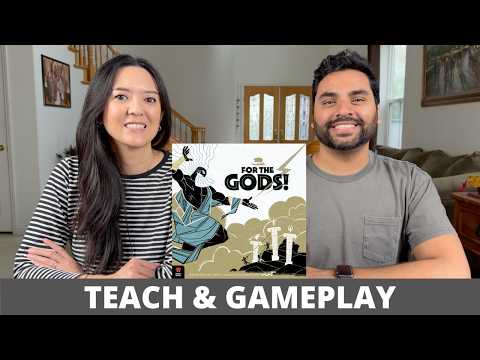
For the Gods! - Teach & Playthrough
Ask a Rules Question
All mentions
Browse transcript mentions, sentiments, pros/cons, mechanics, topics, quotes, and references.
Total mentions: 2
This page: 2
Sentiment:
pos 2 ·
mix 0 ·
neu 0 ·
neg 0
Showing 1–2 of 2
Video CS8l9WMkroU
Before You Play Playthrough at 0:05 sentiment: positive
video_pk 41568 · mention_pk 126024
Click to watch at 0:05 · YouTube ↗
Overall sentiment (raw)
positive
Pros
- Strong variability from 12 gods, enabling rich strategic diversity across plays
- Two-player balance with meaningful decisions and tense region competition
- Clear height-based scoring with intuitive cornice/foundation cues
- Prototyped components and rules provide a solid sense of the game's feel and potential improvements for production
- Fast-paced turns in a two-player setting keep tension high while maintaining accessibility
Cons
- High complexity and hidden information from secret hands can be intimidating for new players
- Prototype copy means some components and balance will change in final production
- Endgame timing requires careful stone management; mistakes can swing a game dramatically
- Some god interactions (Athena, Poseidon, Zeus) can create non-obvious planning and potential for stalemates if not managed carefully
- As with many area-control games, player count and setup can significantly alter pacing and feel
Thematic elements
- Temple construction and dedication to Olympian gods
- Ancient Greece, island archipelago
- mythic strategic
Comparison games
none
Mechanics (from transcript analysis)
- Area Control — Regions on the board award glory to the player whose temple is the tallest in that region, creating competitive tension and positional play.
- dedication to gods — Players may dedicate temples to gods to gain ongoing or situational benefits; some gods modify positioning or allow special actions.
- Endgame trigger and scoring — Game ends when a player cannot draw the required number of stones; all other players get one final turn, then regions are scored to determine glory tokens.
- foundation stones and cornices — Some gods place foundation stones or cornices (the top piece indicating the temple’s value) to reflect height and grant powers.
- movement and harbor costs — On a turn you move to ports via connected routes; each port moved to costs discarding a stone, introducing a resource management element.
- Movement Points — On a turn you move to ports via connected routes; each port moved to costs discarding a stone, introducing a resource management element.
- Poseidon pre-build movement — Poseidon allows moving the ship to any harbor before the build step, representing fast relocation; requires dedication to Poseidon that turn.
- temple building rules — Temples are built from a base, then one or more stones of the same value can be added; temple height is the critical measure for scoring.
- tie-breaking and glory — In region ties, the temple with the higher value wins the glory token; higher token values (e.g., Aphrodite’s silver token) can swing totals.
- tile/stone management — Each player has a pool (bag) of stones with values 0–3; players draw, discard, and place stones to construct temples.
- Unique Player Powers — 12 different gods grant unique abilities and can be combined differently each game, driving asymmetric strategies.
- variable player powers via gods — 12 different gods grant unique abilities and can be combined differently each game, driving asymmetric strategies.
- Zeus foundation mechanic — Zeus provides foundation stones to other temples on the island, effectively lifting two other temples by one height when used.
Video topics + discussion points
No key topics recorded for this video.
Quotes (from this video)
- This is an area control game for two to four players that plays in about 30 to 60 minutes.
- There are 12 different gods, each with their own unique ability.
- The object of the game is to build the tallest temple in each of these different regions in order to claim its glory token.
- This is a prototype copy, so things have already been changed from the copy that you're going to see here.
- It's a game of chicken.
- Everything is swappable.
- The game ends as soon as a player needs to draw stones from their bag and is unable to draw the full amount of stones.
- Poseidon allows me to take my ship and basically go to any single harbor.
- Athena lets me swap the position of that temple with another one on the same island.
- Zeus provides a foundation stone to the other two temples on the other regions.
References (from this video)
No references stored for this video.
Video S7vG3-KLAKI
The Broken Meeple Rules Teach at 1:13 sentiment: positive
video_pk 29400 · mention_pk 86335
Click to watch at 1:13 · YouTube ↗
Overall sentiment (raw)
positive
Pros
- quick, snappy gameplay with gateway-level rules
- god powers add variety and strategic depth
- interactive, in-your-face area control
- bag-building introduces tension and planning
- accessible to lighter game audiences
Cons
- prototype artwork and components look sparse; production will improve
- god cards lack titles to easily identify gods
- depth may be limited and luck via bag draws unavoidable
- endgame can feel lengthy at higher player counts
Thematic elements
- mythology and god-powered strategy
- abstract area control on a mythic island with temples and towers
- thematic abstraction with predefined god powers shaping play
Comparison games
- Manhattan
- Skyrise
- Santorini
Mechanics (from transcript analysis)
- Area Control — move ships to regions and build temples; tall towers score and endgame rewards your control
- area_control — move ships to regions and build temples; tall towers score and endgame rewards your control
- Bag Building — draw five stones from your bag to pay actions; stones have pip values that constrain movement and building
- bag_building — draw five stones from your bag to pay actions; stones have pip values that constrain movement and building
- Card Crafting — preset god powers that modify rules; dedicating a tower to a god grants its power
- god_cards — preset god powers that modify rules; dedicating a tower to a god grants its power
- Tile Placement — build temples by placing a base and stacking stones with matching pit values
- tile_placement — build temples by placing a base and stacking stones with matching pit values
Video topics + discussion points
No key topics recorded for this video.
Quotes (from this video)
- This is basically a gateway level game.
- 30 to 60 minutes for two to four players, quick and snappy.
- There is a definite luck element from bag drawing, but it's balanced by decisions.
- The god powers add variety and are integral to the design.
References (from this video)
No references stored for this video.
Transcript Navigation
Showing 1–2 of 2