
















Frostpunk Deep Dive
What the Community Thinks About Frostpunk
Board game reviewers consistently praise Frostpunk as one of the finest video game adaptations ever created for tabletop, striking an unusual balance between mechanical sophistication and thematic integrity. The consensus positions it as a standout survival game that appeals equally to solo players and groups, though with very different experiences. Reviewers emphasize that Frostpunk's appeal rests not on whether you win, but on the dramatic stories and agonizing choices you make along the way. It's a game that demands your full attention and emotional investment, rewarding players who embrace its bleak, unforgiving setting with unforgettable moments of tension and narrative payoff.
Core Mechanics That Define Frostpunk
Worker Placement with Heat
At its mechanical heart, Frostpunk is a worker placement game with a critical twist: not all actions are equally accessible. The game ties action locations directly to heat generated from a central generator. Players must gather coal and fuel this generator to make action spaces heated, avoiding sickness and death among their workers. The interplay between resource scarcity and the heat mechanic creates constant tension. Do you spend limited coal to heat actions, knowing you also need it for warmth during the night phase, or risk your workers getting sick from the cold? This mechanic transforms standard worker placement into a system of hard compromises, where every decision cascades into consequences.
Events and Moral Choice
Each round brings morning and evening card draws that present the game's moral dilemmas. Morning cards force players to choose between competing options, each adding consequences to a dusk deck revealed later. These aren't mere mechanical adjustments; they're narrative moments with teeth. Do you send children to labor camps to increase productivity? Do you execute criminals to maintain order? Do you invest resources in medicine for the sick or in weapons for defense? The game records your choices through the dusk deck, making consequences unpredictable and meaningful. This creates a feedback loop where early decisions ripple forward, forcing players to live with the weight of their governance.
The Frostpunk Experience
Oppressive Beauty
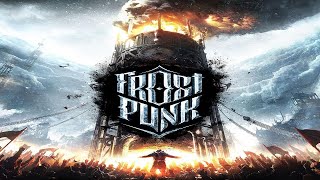
Frostpunk is a beautiful game that makes you deeply uncomfortable. The box is enormous, requiring significant table real estate. The components are detailed and thematic. When you add the official soundtrack in the background, as multiple reviewers strongly recommend, the atmosphere becomes immersive in ways few board games achieve. But this beauty serves the game's oppressive theme: a frozen apocalypse where your only hope of survival lies in brutal calculation. Reviewers describe it as crushing, demanding, and occasionally heartbreaking. The aesthetic design and careful pacing reinforce the fiction that you and your society are perpetually on the brink of collapse.
Dramatic Tension Over Victory
Many harsh cooperative games reward learning and optimization. Frostpunk refuses this comfort. Reviewers report that even experienced players lose regularly, and this is by design. The game's difficulty isn't a bug; it's core to the experience. The satisfaction comes not from winning, but from reaching the final round with a dramatic, desperate story to tell. Whether your generator exploded, your people starved, or you eked out survival by the thinnest margin, Frostpunk crafts emergent narratives that resonate long after the game ends. This shift in what constitutes success, from mechanical victory to compelling storytelling, sets it apart from typical Euro and American board games.
What Makes Frostpunk Stand Out
Faithful Video Game Adaptation
Reviewers consistently call Frostpunk one of the best, if not the best, video game adaptations ever made for board gaming. Rather than translating detailed mechanics, the design captures the essence of the digital game: the relentless cold, the impossible choices, the sense that your decisions matter even when failure feels inevitable. The board game strips away some systemic complexity from the video game but concentrates the experience into critical decision points each round. This selectivity ensures that playing Frostpunk feels like the video game distilled into its most meaningful moments, not a pale imitation chasing complexity for its own sake.
Escalating Difficulty and Progression
Frostpunk avoids static difficulty. Instead, the game itself grows harder as players advance. Early turns let you explore and gather resources with relative safety. As rounds progress, the cold deepens, the environment becomes less forgiving, and your society's needs grow more desperate. Yet this escalation isn't arbitrary; it's tied to player success. Overcoming each challenge unlocks new options (technologies, buildings, laws) that feel genuinely powerful. The game gives you the satisfaction of progression while ensuring that growing capability never translates to ease. This dance between empowerment and increasing danger keeps tension high across the entire game.
Potential Drawbacks
Physical and Mental Burden
Frostpunk is not a casual game in any sense. The box is massive, requiring a large table. Solo play involves constant physical movement, tracking multiple boards (weather, hope and discontent, population sickness, generator stress, resources, buildings, laws, and more). Reviewers report that playing solo can be exhausting, requiring you to stand and move frequently just to access all the information you need. Beyond the physical component, the game demands intense focus and emotional investment. You cannot play this while half-paying attention; the moral weight of your choices and the complexity of system interactions require your full cognitive engagement.
Difficulty and Learning Curve
The rules are dense and the learning curve is steep. Teaching new players takes considerable time. The game's brutality means that even experienced players lose regularly, which can frustrate groups expecting a more balanced difficulty curve. For players seeking a cooperative experience where good decision-making leads to reliable victory, Frostpunk will disappoint. Additionally, the theme (forced labor, starvation, death, and impossible moral compromises) is not suitable for all tables. The game leans into psychological and ethical darkness, making it unsuitable for younger players or groups uncomfortable with grim subject matter.
If You Enjoy Frostpunk
Players who enjoy Frostpunk's punishing survival mechanics and moral complexity will find similar satisfaction in Robinson Crusoe, which shares the brutal resource management and sense of perpetual crisis. Both games reward dramatic survival against odds rather than optimized play.
Those drawn to Frostpunk's dark, thematic storytelling should explore This War of Mine, which matches its grim tone and forces equally agonizing ethical choices in a war-torn setting. The branching campaign structure and emergent narrative echo Frostpunk's approach to consequence.
For a lighter take on survival and resource management, Don't Starve captures the escalating difficulty and sense of scraping by with limited resources, though it focuses more on puzzle-solving than moral consequence.
What Reviewers Are Saying
"For me, Frost Punk is the perfect video game adaptation because it takes the bleak setting and stories from the video game but concentrates the gameplay into a handful of critical meaningful decisions each round, which is what board games do best."
— Totally Tabled
"Like all the great survival games, I think Frostpunk hits a nice balance of giving you upgrades that you feel awesome but ratcheting up the tension to match over and over again. It never feels easy."
— One Stop Co-op Shop
"It's a very depressing game if you don't want to see your people have to put children in labor camps or send someone off to their death knowing that it's for the greater good. It's just such a behemoth on the table and it makes for a really good solo storytelling session."
— The Broken Meeple