








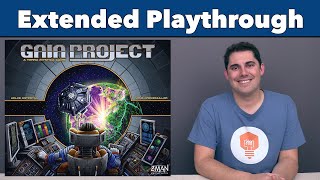





















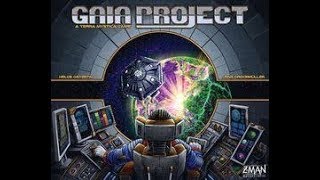







Gaia Project is a new game in the line of Terra Mystica. As in the original Terra Mystica, fourteen different factions live on seven different kinds of planets, and factions are bound to their own home planets, so to develop and grow, they must terraform neighboring planets into their home environments in competition with the other groups. In addition, Gaia planets can be used by all factions for colonization, and Transdimensional planets can be changed into Gaia planets.
All factions can improve their skills in six different areas of development: Terraforming, Navigation, Artificial Intelligence, Gaiaforming, Economy, Research; leading to advanced technology and special bonuses. To do all of that, each group has special skills and abilities.
The playing area is made of ten sectors, allowing a variable set-up and thus an even bigger replay value than its predecessor Terra Mystica. A two-player game is hosted on seven sectors.
—description from the publisher
- Simple yet effective solo mode
- Bots interact believably and provide meaningful challenge
- Large game with high replayability
- Steep learning curve for new players
- Complex setup and long playtime
- Science fiction empire building and terraforming-style expansion
- Space, galactic civilizations with faction-specific goals
- Array
- Wingspan
- Scythe
Mechanics (from transcript analysis)
- Deck-driven solo mode — Automa-style bot uses a card deck to determine opponents' actions; front and back of the card interact with the player's turn sequence
- Faction-specific cards — Each faction has a unique card that changes how that faction operates, altering strategic options
Video topics + discussion points
Quotes (from this video)
- the solo mode is so simple, but works so well.
- It is amazing because the bot actually makes sensible decisions.
- the puzzle in all the different puzzles because every spirit that you use is just such a different puzzle.
- It is so much randomness. It is so much randomness. But it is surprisingly interesting and surprisingly a really like emergent narrative from a game that's really just random dice rolling.
References (from this video)
- one of the authors' favorite space games
- tight system with lots of depth yet approachable at two players
- expansion adds refinements that improve a tremendous base game
- rules overhead can be dense for new players
- faction and map variety may be overwhelming initially
Mechanics (from transcript analysis)
- asymmetric factions with tight interaction — players explore sectors and advance on tech tracks; mutual proximity affects building costs.
- Asymmetric Mechanics — players explore sectors and advance on tech tracks; mutual proximity affects building costs.
- tight resource/energy economy — resources are carefully managed; timing and placement are critical to maximize points.
Video topics + discussion points
Quotes (from this video)
- it's a pretty simple game cuz you're just drafting a thing a card or a tile and then you're adding that to your tableau, but every time you add something it kind of triggers a bunch of other little things and turns are super quick
- there are so many dice that are used and so many different things that you can do with those dice that it never feels like a wasted turn
- this is one of those games that feels like you feel like you've played something, it's like an event
- the mechanism where you've got a bunch of different cards that are your action cards when you play them everyone else gets to do that action but you get to do a slightly better version of that action
- it's based on the novel Red Planet apparently
- these Transformer Dice... it's such a clever mechanism
- Gaia Project is one of my all-time favorite games
References (from this video)
- Excellent component quality with thick player boards, vivid minis, and satisfying tactile pieces
- Deep, multi-path strategy with many viable routes to victory
- 14 distinct factions with unique abilities, increasing replayability
- Well-designed solo mode (Automa) that provides testing grounds without extensive setup
- Balanced scoring with multiple ways to accumulate points (round, federation, tech, end-game bonuses)
- Very steep learning curve and punishing for rookies on first plays
- Rulebook can be dense and lacking introductory guidance (no quick-start, no FAQ, no index)
- First game can be long and slow due to information overload and the perfect-information nature
- Two-player games may feel slower with less interaction and downtime is still significant
- Theme sometimes feels abstract; planet spaces and tiles lack vivid narrative flavor
- Expansion, federation, and strategic resource management in a macro-scale sci-fi setting
- Spacefaring civilization in a galaxy focused on peaceful colonization and federation-building
- Macro, strategic, abstract science-fiction flavor
- Terra Mystica
Mechanics (from transcript analysis)
- Automa solo mode — A deck-driven AI system (Automa) simulates opponents for a proper solo experience
- end game bonuses — Earn points during rounds for meeting specific conditions and receive end-game bonuses for top positions in various categories
- Federations — Form federations by linking buildings on the board; federation tokens grant bonuses and strategic advantages
- Power cycle / power tokens — Power tokens are earned and moved from tier 1 to tier 3, spending requires careful timing and can create a mini-game of token management
- QIC cubes and action economy — QIC cubes provide points and can temporarily extend colonization range; managing them is key to planning and execution
- Resource income and conversions — Income comes from mines, trading posts, and other structures; many resources can be converted into others through gameplay decisions
- Resource management — Income comes from mines, trading posts, and other structures; many resources can be converted into others through gameplay decisions
- Round bonuses and end-game bonuses — Earn points during rounds for meeting specific conditions and receive end-game bonuses for top positions in various categories
- Round boosters and tile stack — Each round, players select boosters; unused boosters join a pool for other players to leverage later
- Technology tracks and sideboard progression — Advance along research tracks on a large sideboard to unlock new capabilities and access higher-value tech tiles
- Terraforming and Gaia formers — Terraform planets to green and use Gaia formers to transform purple planets into colonizable green planets
Video topics + discussion points
Quotes (from this video)
- this game has great components
- the power cycle system is like a mini game in itself and how nuanced it is
- Gaia Project excels at having a lot of clever conversions here basically any resource can become a resource at one point or another
- actions really do speak louder than words in Gaia Project because you're not really encouraged to speak much at all in this game
- the game just feels incredibly balanced and fair due to all these strategies and faction specialties
- Gaia Project is punishing if you make rookie mistakes
References (from this video)
- Deep strategic depth
- Thematic space setting with a grand scale
- Array
- Space-themed strategy game with abstracted space exploration
- Abstract/strategic with emphasis on planning and development
- Eclipse
- Twilight Imperium Fourth Edition
- Star Wars Rebellion
- Castles of Burgundy
Mechanics (from transcript analysis)
- Tech trees — Tech upgrades form a central euro-style progression.
- Technology upgrades — Tech upgrades form a central euro-style progression.
Video topics + discussion points
Quotes (from this video)
- ameritrash games are just better than euro games they just are
- minis the minis
- this is ameritrash
- you might as well just all play your little crossword puzzle or just play actual solitaire
- dead of winter this is this frigid iceland there's so many things to fight other humans zombies mutated monsters
- twilight imperium the fourth edition
- i can control imperial star destroyers atats and there's even a death star
- you travel across the globe from london to rome to africa to solve these mysteries to defeat the legendary Shub
References (from this video)
- Rich asymmetric faction design with varied strategies
- Deep strategic depth and modular rules
- Detailed rules and setup guidance in video
- High complexity and long play time for first game
- Steep learning curve
- space empire building, terraforming, federation mechanics
- galactic space, terraforming and colonization
- procedural/strategic with faction asymmetry
- Terra Mystica
Mechanics (from transcript analysis)
- Area Control — control of planets and space on a modular board
- federation formation — forming federations to gain tokens and points
- power/bowl management — managing power tokens across bowls and phases
- tech tracks and tiles — advancing on research tracks and acquiring tiles
- terraforming and habitat rules — changing planet types and making them habitable
- tile placement — placing structures and tiles to gain resources and abilities
- Track advancement — advancing on research tracks and acquiring tiles
Video topics + discussion points
Quotes (from this video)
- Terra Mystica is the greatest game ever made
- Gaia Project a network building resource management game
- it's awesome
References (from this video)
- Heavy but rewarding engine-building
- Strong asymmetry between factions
- High complexity and setup
- Steep learning curve
- Engine-building/space empire with asymmetric factions
- Galaxy colonization with terraforming and expansion
- Strategic, legible long-term planning
- Concordia
- Brass Birmingham
- Power Grid
Mechanics (from transcript analysis)
- Area Control — Expansion and placement affect scoring goals
- area-control/territorial scoring — Expansion and placement affect scoring goals
- engine building — Assemble a network of buildings to generate resources
- engine-building — Assemble a network of buildings to generate resources
Video topics + discussion points
Quotes (from this video)
- it's a wonderful starter game for nearly anyone.
- how have I not played dominion
- when I played Dominion I just felt like an absolute idiot
- the quintessential racing game out there
- it's an absolutely brilliant game
- the best network builder of all time
References (from this video)
- sci-fi empire-building and terraforming-like mechanics
- spacefaring civilizations building and expanding across planets
- epic, large-scale space operation vibe
- Brass: Birmingham
- Concordia
- Food Chain Magnate
Mechanics (from transcript analysis)
- action drafting — players choose actions to perform via a structured action set
- action selection/rounding — players choose actions to perform via a structured action set
- area majority — control influence over planetary regions
- engine building — developing systems to generate better resources over time
- engine-building/resource management — developing systems to generate better resources over time
Video topics + discussion points
Quotes (from this video)
- I'm definitely into Dragon Eclipse right now
- I just have to bribe my youngest son to play 12 games with me on that
- Primal The Awakening I actually have here on my desk I'm playing it right this second
- I've never taken money for a preview
- if you're not consistent you're never going to get seen
References (from this video)
- Familiar terraforming depth in a space setting
- More accessible than Terra Mystica
- Strong production values
- Less variety than Terra Mystica and Terra Nova
- Can feel repetitive with a focus on tech tracks
- Sci-fi terraforming and planetary development
- Spacefaring civilizations colonizing planets
- Space opera with streamlined space terraforming mechanics
- Terra Mystica
- Terra Nova
Mechanics (from transcript analysis)
- Adjacency bonuses — Adjacency yields power similarly to Terra Mystica but with space variants.
- Board and piece placement — Modular boards with different planetary systems and pieces.
- Power/energy economy — Energy/power tokens used as currency and for actions.
- Resource management — Energy/power tokens used as currency and for actions.
- tech tracks — Tech tracks influence abilities and progression.
- Terraforming in space — Terraform space planets and develop space infrastructure.
Video topics + discussion points
Quotes (from this video)
- Two of the greatest games ever made
- I prefer the fantasy theme to Space theme
- The rule book is better than Terra Mystica but not as good as Terra Nova
- setup and rule book is boring
References (from this video)
- deep brain-burning strategy with no luck after open draw
- strong theme of terraforming and planetary expansion
- expansions add substantial variety
- very crunchy; not suitable for casual players
- Terra Mystica
- Gaia Project expansions
Mechanics (from transcript analysis)
- combo-driven actions — actions synergize when combined with specific resource types.
- engine building — multi-species engine with map expansion and complex interactions.
- engine-building — multi-species engine with map expansion and complex interactions.
- variable setup — board layout and resources differ between games.
Video topics + discussion points
Quotes (from this video)
- the central mechanic of pulling chips and push your luck is so much fun
- it's a brain burner because everything is connected
- the dice mechanism... it's tight and open information
- the narrative tension of Final Girl keeps delivering memorable moments
- the balance of speed versus efficiency in Great Western Trail is brilliant
- Race for the Galaxy remains a fantastic quick puzzle with a strong core system
References (from this video)
- deep, polished engine builder with strong player interaction
- excellent track design and faction variety
- heavy and lengthy compared to lighter Euros
- table presence can be significant
- asymmetric factions building a galactic network
- space terraforming and planetary development
- Terra Mystica
- Terra Mystica-inspired titles
Mechanics (from transcript analysis)
- engine building — players develop their faction’s network with asymmetrical abilities
- engine-building and terraforming — players develop their faction’s network with asymmetrical abilities
- shared ecosystem and planetary expansion — players expand and connect across a shared galaxy
- tech tracks and advancement — research tracks provide long-term advantages and milestones
- Track advancement — research tracks provide long-term advantages and milestones
Video topics + discussion points
Quotes (from this video)
- We’re obsessed with board games.
- I freaking love Unstoppable.
- This game is great because there’s also it's a very open game where when a threat is out there, you can know what's on the other side of that.
- You can see from the other side like what is on the other side.
- Terra Mystica is getting a giant crazy big box version.
References (from this video)
- well-regarded strategy game
- deep mechanics
- space theme not compelling to presenter
- Terra Mystica
Mechanics (from transcript analysis)
- area control / engine building — space-themed engine with resource management
- engine building — space-themed engine with resource management
Video topics + discussion points
Quotes (from this video)
- Castles of Burgundy oh my goodness I love this game so much
- Cascadia is definitely one of the lighter of the bunch
- I would freaking love in the future to compete in this
References (from this video)
- condensed but dynamic board with multiple interacting systems
- strong asymmetry and strategic depth
- improved power system relative to Terra Mystica
- higher accessibility than Terra Mystica while retaining depth
- high complexity; steep learning curve for new players
- rulebook ambiguities requiring clarifications
- expensive components and lengthy play sessions
- colonization and terraforming across multiple planets
- Space/galactic terraforming
- Distant, scientific
- Terra Mystica
Mechanics (from transcript analysis)
- area control / territory development — players position and expand across a modular board to claim space and build structures
- asymmetric player powers — each player has a unique power that modifies core actions or limits
- Power economy — power is charged along tracks and spent to activate actions and gain benefits
- round structure with income phase — each round reveals new resources and players manage income and spending
- Species-based asymmetry — each player has a unique power that modifies core actions or limits
- Tech trees — advanced technologies and tracks grant ongoing bonuses and new capabilities
- tech trees / upgrade paths — advanced technologies and tracks grant ongoing bonuses and new capabilities
- terraforming and color-based planet interactions — terraform planets to enable placement of your own mines/structures and access special zones
Video topics + discussion points
Quotes (from this video)
- Gaia Project is in space and in space there isn't enough space
- the real icing on the cake is the advanced technology trial
- it's a complicated but most importantly highly competitive game
- Gaia... like an interstellar tractor or maybe a cumbersome Space Marine Rhino
- absolutely extraordinary reviewers shut up and sit down have accused the changes in going up to be mostly fat
References (from this video)
- High replayability due to changing faction roles and map layouts
- Strong engine-building elements with macro and micro pacing decisions
- Steep learning curve for asymmetric systems
- Can feel grindy if players chase endless income loops
- territorial expansion, federation scoring, and board positioning
- Asymmetric sci-fi faction exploration and terraforming in space.
- variable map, variable factions, point salad style scoring
Mechanics (from transcript analysis)
- Area Control — Control and upgrade across a changing board with federation options.
- asymmetric factions — Each faction has unique abilities and starting conditions.
- territory/area control — Control and upgrade across a changing board with federation options.
- tile/board manipulation — Place and upgrade buildings, gain incomes, and unlock bonuses as the board evolves.
Video topics + discussion points
Quotes (from this video)
- We absolutely adore this game. It's super super fun.
- the big Mayan calendar in the middle
- you can place a worker on the symbol that matches the god card.
- This is a big deck building game where you are going to have a different nation.
- Every game I feel like is a little bit different because the board map will change.
- Civolution is very good.
References (from this video)
- elegant evolution of Terra Mystica concepts
- strong strategic depth
- complex rules
- longer setup
- science-fantasy empire-building
- spacefaring evolution of terraforming factions
- epic, strategic progression
Mechanics (from transcript analysis)
- engine-building / area control — Advance tech trees while expanding influence across planets
Video topics + discussion points
Quotes (from this video)
- yelling is cathartic, it's good for you
- my asian parents won't be too disappointed
- it's the warm-up, but you're doing great
References (from this video)
- Deep, highly replayable engine with strong variability
- Rich in strategy and planning
- Very heavy; long teaching time
- Can be brain-burning and lengthy for many groups
- Planetary development with root Terra Mystica lineage
- Spacefaring terraforming; modular tech with variable setup
- Brain-burning, highly strategic
- Terra Mystica
- Terra Mystica variants
- Age of Innovation
Mechanics (from transcript analysis)
- Compound Scoring — Score heavily from production, track advancement, and special powers
- Highly variable tech/board interaction — Strong variability with different faction setups and tech tracks
- Scoring from multiple tracks — Score heavily from production, track advancement, and special powers
- worker placement — Place workers to gain resources and take actions; interact with varied tech tracks
- Worker placement / resource conversion — Place workers to gain resources and take actions; interact with varied tech tracks
Video topics + discussion points
Quotes (from this video)
- I actually like all these games so uh and that is something I actually do too something with us getting rid of games is we often get rid of games that we actually like quite a bit
- it's super group dependent; one group this might be their favorite party game and another group this is like their worst nightmare
- I rate Wingspan an 8 out of 10; I have a great time with it
- Age of Innovation is a little better; Gaia Project is leaving but it's a great game
References (from this video)
- Deep engine-building and long-term planning with high mastery potential
- Strong replayability due to multiple factions, tech paths, and federation strategies
- Satisfying balance of expansion, income management, and technology advancement
- Very heavy and not a casual game; steep learning curve for newcomers
- Long playtime and extensive decision space can be daunting
- Requires several sessions to reach system mastery
- Terraforming, technology advancement, federation-building
- Interstellar space, a galaxy-wide race to terraform worlds and form federations
- Tech-driven, system-centric with evolving world states
- Terra Mystica
- Space Corp
Mechanics (from transcript analysis)
- Asymmetric Mechanics — Form federations by clustering planets and flipping federation tokens for lasting bonuses
- Federation mechanics — Form federations by clustering planets and flipping federation tokens for lasting bonuses
- network building — Connecting planets into networks for scoring potential and strategic positioning
- Network/route building — Connecting planets into networks for scoring potential and strategic positioning
- Power management — Power sits in three bowls; moving and spending power enables actions and redirects energy flow each turn
- Round boosters and QICs — Using boosters and QICs (power-ups) to extend range, accelerate actions, or gain power
- Tech trees — Advancing along tech tracks grants abilities, costs vary by track and world type
- Tech trees and upgrades — Advancing along tech tracks grants abilities, costs vary by track and world type
- terraforming and Gaia-world conversion — Transforming worlds into Gaia worlds using Gaiaformers and power costs, affecting scoring and reach
- Unique player powers — Each faction has different starting worlds and unique abilities affecting strategy
- Variable player powers — Each faction has different starting worlds and unique abilities affecting strategy
Video topics + discussion points
Quotes (from this video)
- Gaia Project is a heavy game with a colossal decision space and so many options on what you can do each game
- this is not a game you can just casually pick up and play easily
- a quick jolly party time game it is not
- the best thing about this game is sitting down to play and thinking 'where the hell do I start?'
- Gaia project is a three minute board games gold medal game
- not a quick party time game, it rewards repeated plays and system mastery
References (from this video)
- Four-player tense and strategic experience
- strong theme integration and production quality
- Steep learning curve
- heavy rulebook and setup
- territorial expansion, tech advancement, and empire management
- spacefaring civilizations expanding in the galaxy
- tense, competitive euro with tight decisions
- War of the Ring
- Terraforming Mars
Mechanics (from transcript analysis)
- area_control — players control hexes/regions to grow influence
- engine_building — combo-driven actions to generate resources and points
- tile_placement — placing and upgrading colonies to unlock abilities
Video topics + discussion points
Quotes (from this video)
- Advertising revenue goes to charity, every single penny.
- The one thing I would change at Essen Spiel? I don't know—it's hard to alter a huge convention.
- I would love to do more collaborations with other content creators, but time is the real constraint.
- Galactic Cruise is in alpha on Board Game Arena and the interface is amazing.
References (from this video)
- Removed from top 10
- Terraform planets with different factions
- Space colonization
- Euro space game
Mechanics (from transcript analysis)
Video topics + discussion points
Quotes (from this video)
- Board Game Geeks top 100 sometimes feels like random people voting random stuff
- This is the way by two random people from Latvia
- Your mind feels like a fog after playing Spirit Island
- Frodo really doesn't want to destroy ring at the end he's like nah I'll go home
- It's a fine game it's super boring it just the same thing over and over
- Wrongfully not in the top 20 yet
References (from this video)
- Complex system
- Tech tree
- Potentially overwhelming
- Alien species territory control
- Space
Mechanics (from transcript analysis)
- Building upgrade — Upgrade buildings to bigger buildings with tech tree
Video topics + discussion points
Quotes (from this video)
- the most complex games are insane to get into
- constantly while you're playing even after the millionth time you still keep checking the rules
References (from this video)
- deep strategic depth
- strong thematic feel
- complex to learn
- steeper learning curve for newcomers
- Galactic empire building
- Sci-fi terraforming on alien planets
- Asymmetric, engine-building strategy
- Terraforming Mars
Mechanics (from transcript analysis)
- area_control — control territories and optimize planetary development
- engine_building — developing a production engine across turns
- worker_placement — place workers to enable actions and build engines
Video topics + discussion points
Quotes (from this video)
- we over printed terraforming mars going into 2020 with no obviously no knowledge of the year
- campaign style board games have peaked
- Gen Con will run
- 50 is the new 40
- Red Lobster is better than Olive Garden
References (from this video)
- Deep, integrated strategy with meaningful sequencing
- Great thematic cohesion and replayability
- Tight integration between tech tracks and production
- Steep learning curve
- Longer playtime for many groups
- colonization and resource competition across planets
- Space-based evolution of terraforming concepts in a sci-fi milieu
- deep, highly strategic with modular variability
Mechanics (from transcript analysis)
- engine building — Compete on tech tracks to unlock resources and capabilities
- Engine-building and tech tracking — Compete on tech tracks to unlock resources and capabilities
- Randomized setup and scenario variety — Setup variability increases replayability and decision complexity
- Resource management — Tight control over diverse production types and limits
- Resource management and production tiles — Tight control over diverse production types and limits
Video topics + discussion points
Quotes (from this video)
- the moment there you are just deciding the path you're gonna go and you just have all this amazing stuff in front of you
- it's such a fun part of terraforming Mars
- this pacing of your hurting your cattle all the way through the path to Kansas City
- the order of actions is critical and you have to plan ahead
- it's the type of game that makes your brain mush in a good way
- it's a really accessible Cooperative game that I can play with just about anybody
References (from this video)
- Known for deep strategic planning (the speaker notes it's intricate).
- The speaker plans to learn with a friend to master it.
- Described as 'pretty damn hard to learn', indicating a steep learning curve.
Mechanics (from transcript analysis)
Video topics + discussion points
Quotes (from this video)
- Kia ora Lotou and welcome to my shelf of Shame update for July 2019
- it's ballooned up to about 25 at the moment
- this is the mechanically most complex game in the set
- I really should give it at least one go over
- this ties into that whole getting a campaign together exactly we want it to play the whole damn thing
References (from this video)
- deep strategic space 4X feel
- ample depth for long sessions
- can be table-heavy for new players
- space conquest and colonization
- space 4x in a sequel-ish frame to Terra Mystica
Mechanics (from transcript analysis)
- area control / terraforming style — Religion/tech track and resource placement influence growth and expansion.
Video topics + discussion points
Quotes (from this video)
- we are giving away over 50 games across those 24 episodes
- the description is where we will post the winners, never in the comments
- Concordia is a must-have, it's easy to learn but has amazing depth
- this is a gorgeous prototype, they did a great job
- it's easy to get into and has depth—Deserved of our boarding coffee seal of approval
References (from this video)
- great organization with gaming trunk insert
Mechanics (from transcript analysis)
Video topics + discussion points
Quotes (from this video)
- sick kids hospital saved my life I wouldn't be here to give you these games if it wasn't for Saint Kitts hospital
- most of them are projects yes this is our Shelf of haven't put away yet
- we have a lot of prototypes we have some prototypes of games that were never released
- you're probably not even supposed to mention some of these but you know what we never said an NDA let's do this
- we can't do this I'm working all the time and I just can't get them done seven days a week 24 hours a day
- I was very upset with that because it was confusing it was because yeah I didn't read the all in
- he's like I'm done I'm gonna walk away you tell me what happens at the end
- it's a turntable yeah it will use the Lazy Susan and we did one of those like uh That 70s Show
- the loudest thing on the planet like it was a big Hollow 10 year old the dice
References (from this video)
- space theme, deep strategic choices
- heavy for two-player only play without a table of four
- space empire building and planetary expansion
- space, terraforming and tech development
- tech-tree progression with strategic depth
- Terra Mystica
- Terraforming Mars
Mechanics (from transcript analysis)
- engine-building — develop a tech tree and build systems to score VP
- tile/area control and resource management — manage actions and resources to optimize growth
Video topics + discussion points
Quotes (from this video)
- i love mansions of madness every time we talk about this game you make me feel like you think i don't like it
- i love this game it is a polyamino tile placement game where you are rescuing cats from this island
- i have such a good time playing this game very thematic you're upgrading your character you're uncovering new planets and new storylines
- my number seven brass birmingham
- my number six favorite game of all time is dune imperium
- vast crystal caverns is a purely asymmetrical game wherein you have one sole objective
- my number one game of all time is root
- my number one game is villainous this was my number one game last year as well
References (from this video)
Mechanics (from transcript analysis)
Video topics + discussion points
Quotes (from this video)
- It's like a humongous library of games that you can try and somebody will teach them to you.
- You don't even have to learn the rules, which is great.
- There are seven holes all together, all full of games and cool stuff. Just so much to see and we just barely scratched the surface.
- If you're into playing stuff, making stuff, you can find something here.
- This video is sponsored by Mandleleep.
- The stage looks pretty freaking epic.
- Remember how said he's not going to buy anything? He saw this cover and said, 'I want to buy this'.
- Welcome to Essen.
References (from this video)
- Deep strategic gameplay
- Improved with repeated plays
- Complex initial experience
- Space Exploration
- Alien Civilizations
- Terra Mystica
Mechanics (from transcript analysis)
Video topics + discussion points
Quotes (from this video)
- If Jamie wins a game the first time we play it is an asterisk win if I win a game the first time we play it it is not an asterisk win
- I absolutely love this game
- We understand why everyone loves this game, in our playthroughs it just did not work for us
- Instant love for me
- Jason dominated our January
- He's an undercover competitive person and he's just really good at games
- We are even stevens
- If one of us have no chance of winning and I'm hell-bent on making sure Jamie doesn't win
- You should see us play ping pong
- I feel like you were surprised that I liked this game
References (from this video)
- Strong alignment with Terra Mystica fans
- Solid official follow-up/variant
- Similar to Terra Mystica, may feel repetitive for some
- Territory control and engine-building
- Sci-fi space terraforming analogue to Terra Mystica
- Strategic, modular
- Terra Mystica
- Ark Nova
Mechanics (from transcript analysis)
- Collective terraforming-like progress — Advance terraforming-like tracks for points
- Track advancement — Advance terraforming-like tracks for points
- worker placement — Place workers to activate actions
Video topics + discussion points
Quotes (from this video)
- I think it might just be the most underrated feature on Board Game Geek.
- I found it to be very very helpful for myself.
- the analyze feature is actually built into every game page.
- Lisboa might be one that I want to check out.
References (from this video)
- Rich strategic depth
- Good for longer gaming sessions
- Complex to teach
- Setup can be lengthy
- Engine-building and territorial control
- Spacefaring civilization expansion
- Strategic, sci-fi scope
- Scythe
- Root
Mechanics (from transcript analysis)
- Worker/engine development with action tracks — Players optimize efficiency via multiple action tracks and synergies.
Video topics + discussion points
Quotes (from this video)
- Our goal is to make this world a better place one board gamer at a time
- Cards are incredibly versatile tools near Arsenal—they're cheap, you can hold a lot of game data while reinforcing the theme with immersive artwork
- Make it a habit to treat service workers better like be patient when they are providing a service
References (from this video)
- Complex resource management
- Player interaction
- Deep gameplay
- Visually unappealing
- Heavy and difficult to learn
- Resource management and technology
- Terraformystica
Mechanics (from transcript analysis)
- resource upgrading — Build and upgrade buildings using increasingly complex resources
- Technology tree — Large technology progression system
Video topics + discussion points
Quotes (from this video)
- We played the best resource management games in the world and then we ranked them
References (from this video)
Mechanics (from transcript analysis)
Video topics + discussion points
Quotes (from this video)
- we're selling our house and we wanted to do this before we had to pack everything up
- we're just going to show you what we got probably won't have too many new games coming in
- innovation is a game we adore
- jamie's favorite game brass birmingham
- gaia project tara mystic on space
- we have root so the og base game
- this is one of jamie's absolute favorites and that is innovation
- we love it it's so good
References (from this video)
- Deep engine-building depth with strong interdependencies
- Excellent scalability and interaction between modules
- Very high complexity; lengthy decision trees
- Steep learning curve; mastery takes many plays
- engine-building and territorial development on a galactic scale
- Science fiction space civilization expansion and interstellar logistics
- comparative framework with other Eurogames; emphasis on strategic planning
- Terraforming Mars
- Underwater Cities
Mechanics (from transcript analysis)
- engine building — Action placement on a modular track grid to power engine components across categories
- Grid-based engine-building — Action placement on a modular track grid to power engine components across categories
- Resource management — Careful balancing of multiple resources to optimize actions and progress
Video topics + discussion points
Quotes (from this video)
- one of the deceptively clever things about underwater cities each turn you're really only making one decision
- it's a game that's absolutely ruinous for people who are stuck on one path
- the fundamental core of why underwater cities is a great game
- you have to adapt to what's in your hand
- there's always going to be spaces blocked up that you can't use
- the pressure that comes with the game to make good decisions in bad circumstances
- start off with a blank slate a board like this which is full of possibilities and the decisions you make shape what turns up on the board
- you cannot take the action you want to take each and every time you play that you have to make the best of a bad situation continuously
- you have to suck it up and do a bad move because you know it will allow you to do a good move later
- this is better than terraforming mars in that regard
References (from this video)
- rich thematic integration
- beautiful components
- deep strategic depth
- steep learning curve
- heavy time investment
- space empire building with terraforming
- space civilization terraforming and colonization
- space opera with modular board
- Terra Mystica
Mechanics (from transcript analysis)
- engine building — efficiently chaining actions to maximize scoring
- Modular board — modular planets and variable setup
- Resource management — terraform planets and balance resources
- terraforming and resource management — terraform planets and balance resources
- tile/board modularity — modular planets and variable setup
Video topics + discussion points
Quotes (from this video)
- Twilight Imperium is tops
- the final dice roll is mitigated well in Black Orchestra
- Through the Ages is a game that I don't play nearly enough
References (from this video)
- deep strategic planning with tech-tree integration
- compares favorably to Terra Mystica
- excellent end-game scoring
- heavy weight; long teach time
- terraforming and expanding alien races
- Galaxy/space civilization expansion
- tech-tree-driven strategy
- Terra Mystica
Mechanics (from transcript analysis)
- asymmetric factions — each player starts with a unique faction and goals
- board-building / terraforming on planets — buildings on planets and manage terraforming to score points
- Tech tree progression — advancing on a tech track unlocks stronger actions
Video topics + discussion points
Quotes (from this video)
- it's like a TV show, you're going from one episode to the next
- this is my number one game of all time
- it's a true point salad game
- money equals points
- the life cycle of everything
- the auction phase and the multiplayer solitaire space
References (from this video)
- deep strategy
- tight design
- high replayability
- steep learning curve
- heavy rules
- galactic engine-building
- space expansion and empire building
- abstract, strategic
- Eclipse: Second Dawn for the Galaxy
- Twilight Imperium
Mechanics (from transcript analysis)
- action selection — Choose actions to optimize turns.
- engine-building — Improve your engine by acquiring ships and tech.
- Resource management — Manage resources to build engines and ships.
- tile placement — Expands empire with resource tiles.
Video topics + discussion points
Quotes (from this video)
- sanity
- you are hundred percent in this so far
- the components are great
- cloud nine
- it's an epic, but heavy
References (from this video)
- Space theme
- Unique gameplay
- Creates desire to play more
- Euro game mechanics
- Complex and confusing at first
- Difficult to understand from explanation videos
- Hard to grasp what type of game it is
- Space colonization and expansion
- Space, planets, terraforming
Mechanics (from transcript analysis)
- Area Control — Take over planets
- Terraforming — Terraform planets for growth
Video topics + discussion points
Quotes (from this video)
- These go to 11 - just like in Spinal Tap
- I literally started this video by saying everything will be cute and animal related, and the first one is murder war counts
- You're basically Bilbo Baggins trying to steal Smaug's treasures
- The only reason this game is on your list is because you always win
- It's like clue but cooler and more dynamic
- I love space... love space theme games... any space related games I'm in love with
- I have Disney tattoos all over my arms
- 1v1 all day, give me that
- It is uncanny how lucky Jamie is
- Mansions of Madness is so good like I love it
- Jaws of the Lion was a great compromise where Gloomhaven is super heavy
References (from this video)
Mechanics (from transcript analysis)
Video topics + discussion points
Quotes (from this video)
- Say Anything board game challenge with a board gamey twist
- That is the say anything board game challenge definitely try this at home and let us know
- It's not as easy as people probably think it is
- We cheated maybe we should have draped something over them
- Both said Chronicles of Crime at least four times
- We were talking about the expansions in our heads
References (from this video)
- deep, strategic space 4x feel
- ugly art and graphic design according to the speaker
Mechanics (from transcript analysis)
Video topics + discussion points
Quotes (from this video)
- the heart and soul of your channel. And don't attempt to change it.
- I'm not excited or intrigued at all.
- boring, boring, playing it safe.
- That's why I don't do top 10 lists on my channel anymore really. It's not a passion.
References (from this video)
- Huge depth and replayability
- Accessible entry points with easier factions and harder ones for veterans
- Tight integration with Terra Mystica concepts while delivering new twists
- Long playtime for new players
- Rulebook can be dense
- Terraforming, race-based asymmetry, planet colonization
- Galactic terraforming with planetary factions
- strategic, highly interactive, highly tactical
- Terra Mystica
Mechanics (from transcript analysis)
- Asymmetric powers — each faction has unique abilities and paths to victory
- Engine-building / terraforming progression — progress through terraforming steps with track advancement
- Terrain control / area influence — leaders control and score on territories
Video topics + discussion points
Quotes (from this video)
- I dare say this is the best game that they have ever put out
- it's actually interesting variation of strategy
- I love the asymmetric play, it's really cool
- I walk away from that game thinking about what I did and how I could have done better
- I am a huge mind Clash fan
References (from this video)
- vast strategic breadth and modular progression
- satisfying space-themed engine-building
- very long playtime and heavy learning curve
- rule interactions can be dense
- terraforming and interstellar expansion
- spacefaring civilizations in a distant galaxy
- science-fiction engine-building
- Lisboa
- On Mars
- Through the Ages
Mechanics (from transcript analysis)
- dice_allocation — dice drive action costs and capabilities similar to other heavy euros
- engine_building — developing your faction's technological engine for scoring
- tile_placement — placing and upgrading space tiles for territory and production
Video topics + discussion points
Quotes (from this video)
- Lisboa was about a 4.57 and on mars was 4.64 and through the ages was 4.41 so oh wow
- Viticulture viticulture yeah this is viticulture from the essential edition
- Navigator assured us that the island was indeed as yet uncharted
References (from this video)
- Better design than predecessor Terra Mystica
- Good tech track system
- Variety of races with different abilities
- Variety of paths to victory
- Very thinky gameplay
- Unbalanced races requiring pre-game bidding
- Punishing game that's easy to get eliminated from
- Complex planetary distance rules (fiddly)
- Very high skill ceiling
- Not suitable for playing with experts as newbie
- Space Exploration
- Alien Races
- Planetary Expansion
- Terra Mystica
Mechanics (from transcript analysis)
- Area Control
- Efficiency Puzzles
- Race
- Race selection
- tech tracks
Video topics + discussion points
Quotes (from this video)
- it delivers what it promises and it does have that true epic feel to it
- bless you you've got you've got a game that's tailor-made for you
- you can be set for life playing Magic with your group but yeah it's not for me
- this is a game where if you are playing with somebody who knows the game they are going to absolutely trounce you
- I think you'd cut 30% from this game and it wouldn't be a worse game for it
- taking myself out of the equation this is like 10 but with my own enjoyment into it it's definitely significantly lower
References (from this video)
- Deep strategic options and high replay value due to many factions
- Elegant upgrade mechanic creates meaningful choices
- Rich end-game scoring adds layers of planning
- Steep learning curve and long rules explanation
- Can be time-consuming and expensive for some players
- High level of micromanagement can be daunting
- Interstellar colonization and resource economy
- Spacefaring civilizations expanding across a galactic map and terraforming planets to support colonization
- Systems-driven, highly strategic with emphasis on optimization
Mechanics (from transcript analysis)
- action selection — Players choose one action per round; turns proceed around the table until all players pass.
- Gaia Projects / special objectives — Completing Gaia Projects provides end-game points, rewarding dedicated setup and planning.
- multi-resource management — Players manage several resource types to perform actions and construct structures.
- Racial/faction asymmetry — Each race has a unique ability set that enables different strategies and playstyles.
- Upgrade system — Buildings can be upgraded to generate different resources, replacing the previous generator and adding strategic depth.
- Variable scoring tiles — Round-specific scoring tiles provide bonuses that influence strategy and pacing.
Video topics + discussion points
Quotes (from this video)
- Gaia Project is a great game for gamers looking for something a little more advanced.
- it's got loads of strategy and all the different races add tons of replay value
- the Gaia Project is a big complex machine that demands your respect and every last bit of your attention
- there are a lot of roads to victory in Gaia Project
- and when all is said and done I really like playing Gaia project
References (from this video)
- Refined space strategy with tighter rules than predecessor Terrmystica
- Clean mechanics and strong scale at two players
- Some players find Gaia Project less thematic than Terramystica
- Space conquest with resource and planet focus
- Sci-fi 4X-influenced strategy universe
- Strategic and macro-management oriented
- Terramystica
- Terra Mystica: Gaia Project edition
Mechanics (from transcript analysis)
- Tile/tech tree expansion with engine-building — Expansion via tech and planetary development; core engine-building
Video topics + discussion points
Quotes (from this video)
- One list to rule them all. the greatest list since last year's list.
- This is Batman the Dark Knight Returns.
- I started from scratch.
- I like this arc of Batman quite a bit.
- This game is fast, which I think helps you. You play a lot of rounds, but the rounds are so fast.
References (from this video)
- deep strategic depth and high replayability due to faction variety and random round scoring tiles
- dynamic neighbor bonuses and federation mechanics create tense, competitive play
- tight integration of resource conversion and tech tree progress
- excellent components and clear player aids that reduce rule overhead once understood
- rules overhead and complexity can be daunting for new players
- two-player game with a neutral bot can feel less dynamic than higher player counts
- tracking multiple resources, income effects, and power charging requires careful attention
- Terraforming, colonization, and political federation among alien factions
- Galactic terraforming and federation-building in a shared planetary system
- Grueling, tactical resource conversion with asymmetric factions; tableau-building feel
- Terra Mystica
Mechanics (from transcript analysis)
- action spaces and boosters — Players take actions from a shared action grid, with boosters offering round-specific bonuses.
- asymmetric faction setup — Each player has a unique starting setup and abilities; impacts strategy and tile placement.
- building upgrades and neighbor bonuses — Buildings upgrade to higher levels; nearby opponents can trigger neighbor bonuses via power tokens.
- end game bonuses — Round scoring tiles and end-game tokens provide varied scoring levers; booster tiles affect scoring and power economy.
- end-game scoring and boosters — Round scoring tiles and end-game tokens provide varied scoring levers; booster tiles affect scoring and power economy.
- federations (satellites) — Form federations by connecting clusters of buildings; earning federation tokens with points and tactical benefits.
- gaia phase / gaia project — Gaia phase transforms purple planets into green planets; resets resources and unlocks new build opportunities.
- tech tree and tactiles — Progress along knowledge tracks by spending knowledge; acquiring tactile bonuses and advancing on tech trees.
- Tech trees — Progress along knowledge tracks by spending knowledge; acquiring tactile bonuses and advancing on tech trees.
- terraforming, distance, and gaia formers — Movement costs, distance increases, and gaia-formers convert trans-dim planets to green planets.
Video topics + discussion points
Quotes (from this video)
- turning these purple planets into actual planets
- power is another kind of resource that you can utilize to either take free actions
- neighbor bonuses and gaia formers can create a tense meta around the table
References (from this video)
- deep strategic depth
- strong integration between mechanics
- high replayability with variable setup
- steep learning curve
- can be lengthy to teach and play
- space empire-building and terraforming
- Space colonization and planetary development across multiple worlds
- abstract eurogame mechanics with open-ended progression
- Terra Mystica
- Age of Innovation
Mechanics (from transcript analysis)
- Area Control — players expand influence and build on spaces to gain resources and points
- area control / territorial development — players expand influence and build on spaces to gain resources and points
- engine building — player boards and actions generate ongoing benefits and capabilities
- engine-building / board development — player boards and actions generate ongoing benefits and capabilities
Video topics + discussion points
Quotes (from this video)
- I want to show you how the game plays and not to sell you the game.
- I’m one of the more genuine content creators.
- Mage Knight is the best game ever.
- Gaia Project beats Age of Innovation for me.
- I don’t like the idea of being a used car salesman.
- Star Trek: Captain’s Chair is an exciting licensed approach with lots of thematic promise.